Alazar Designs

Have a project in mind?

Book a call today?

Nucleus OS

Summary

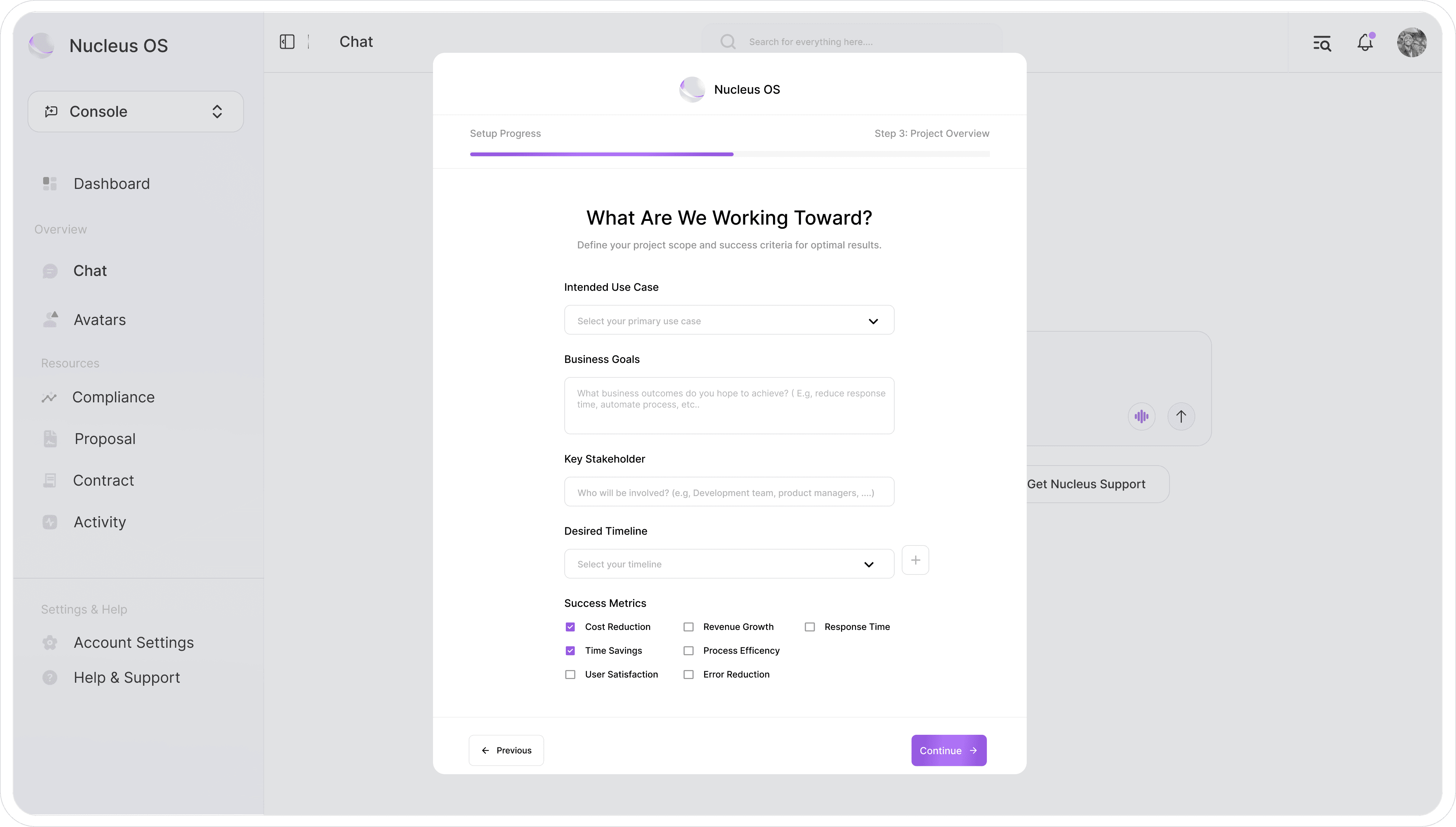
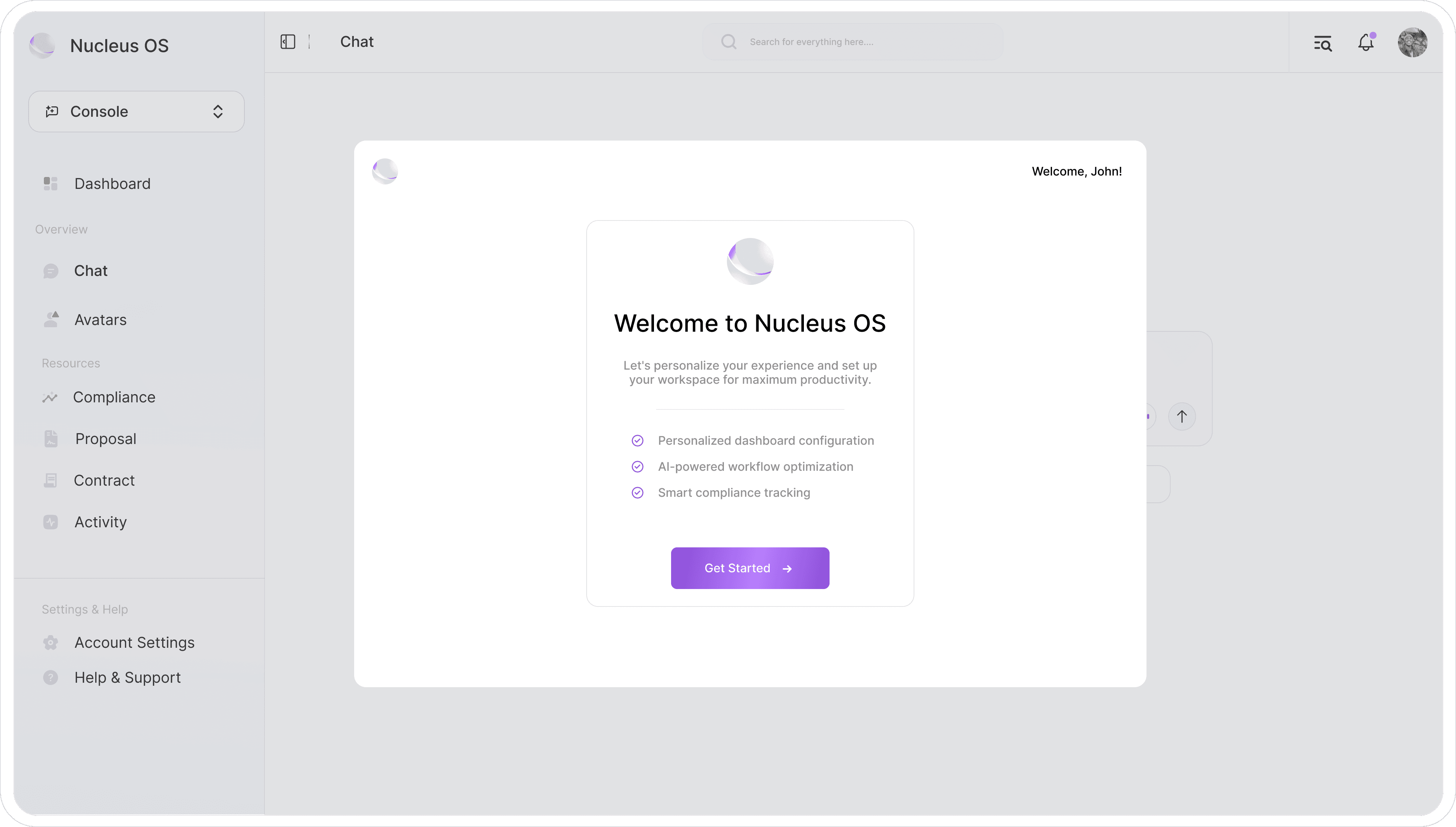
Nucleus OS is a client onboarding and project tracking platform designed to streamline how Nucleus communicates with its clients throughout the lifecycle of an AI project.

Role

Product Designer

Product Designer

Client

Nucleus

Year

2025

Overview

Project Overview

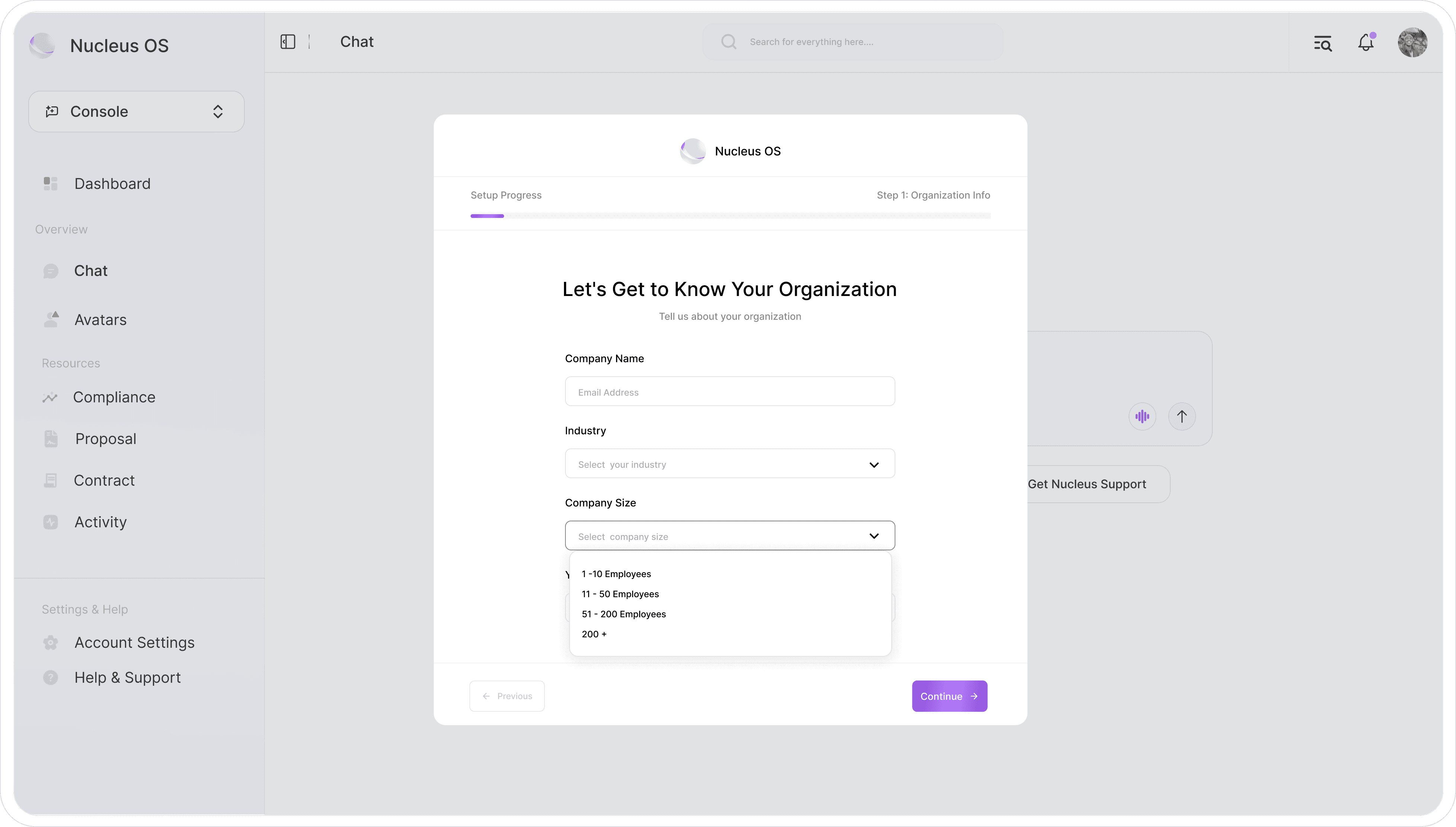
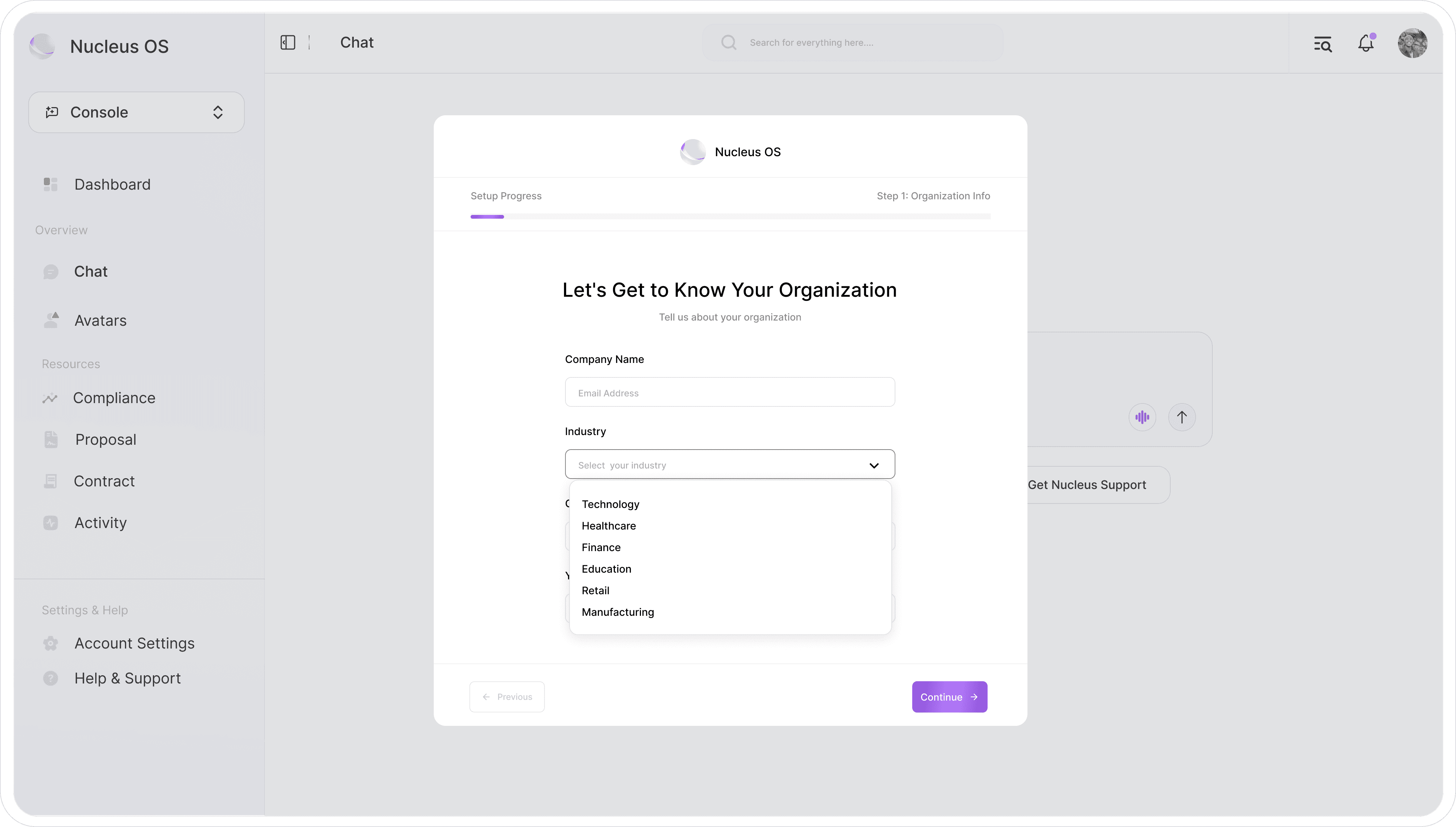
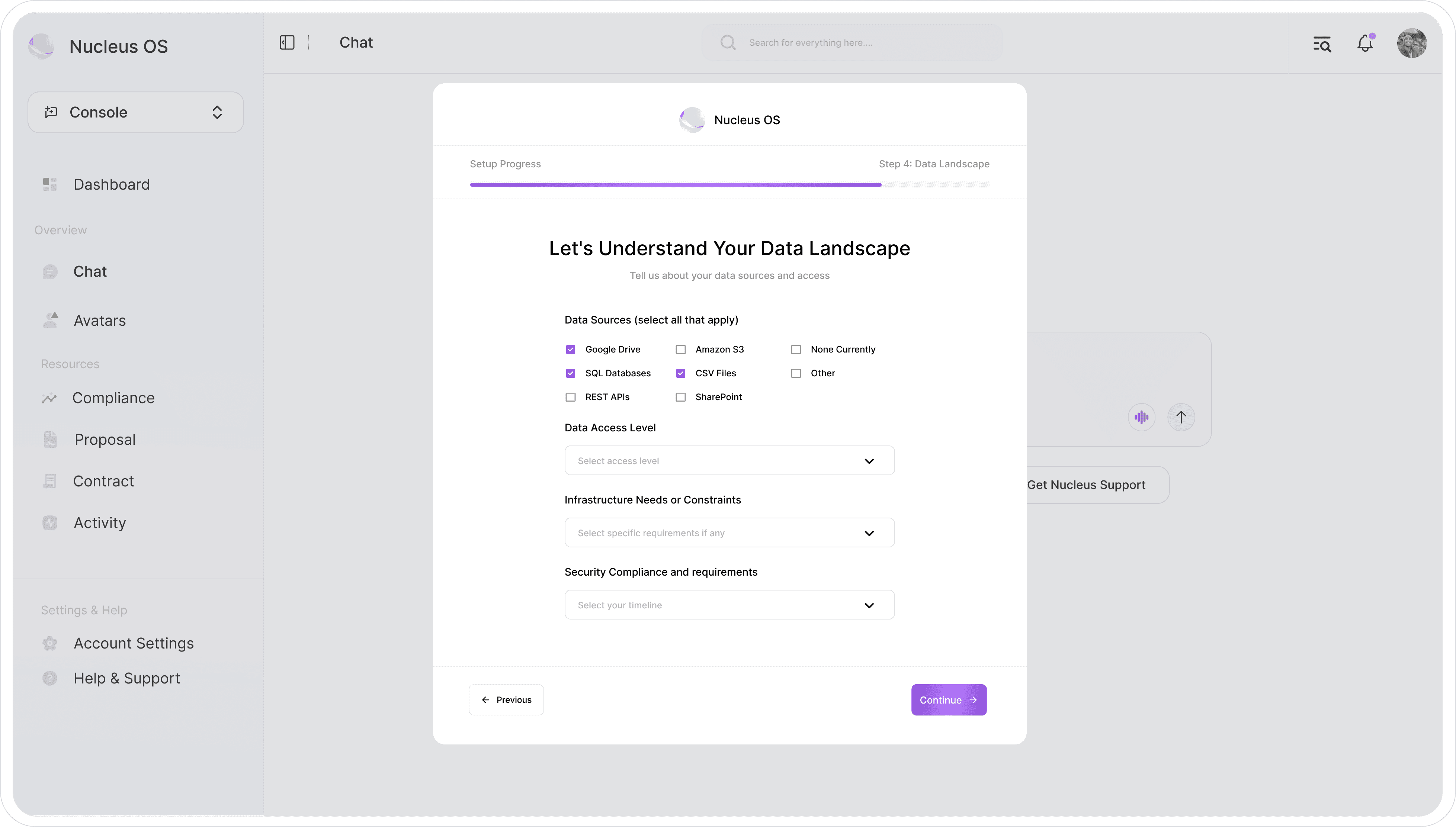
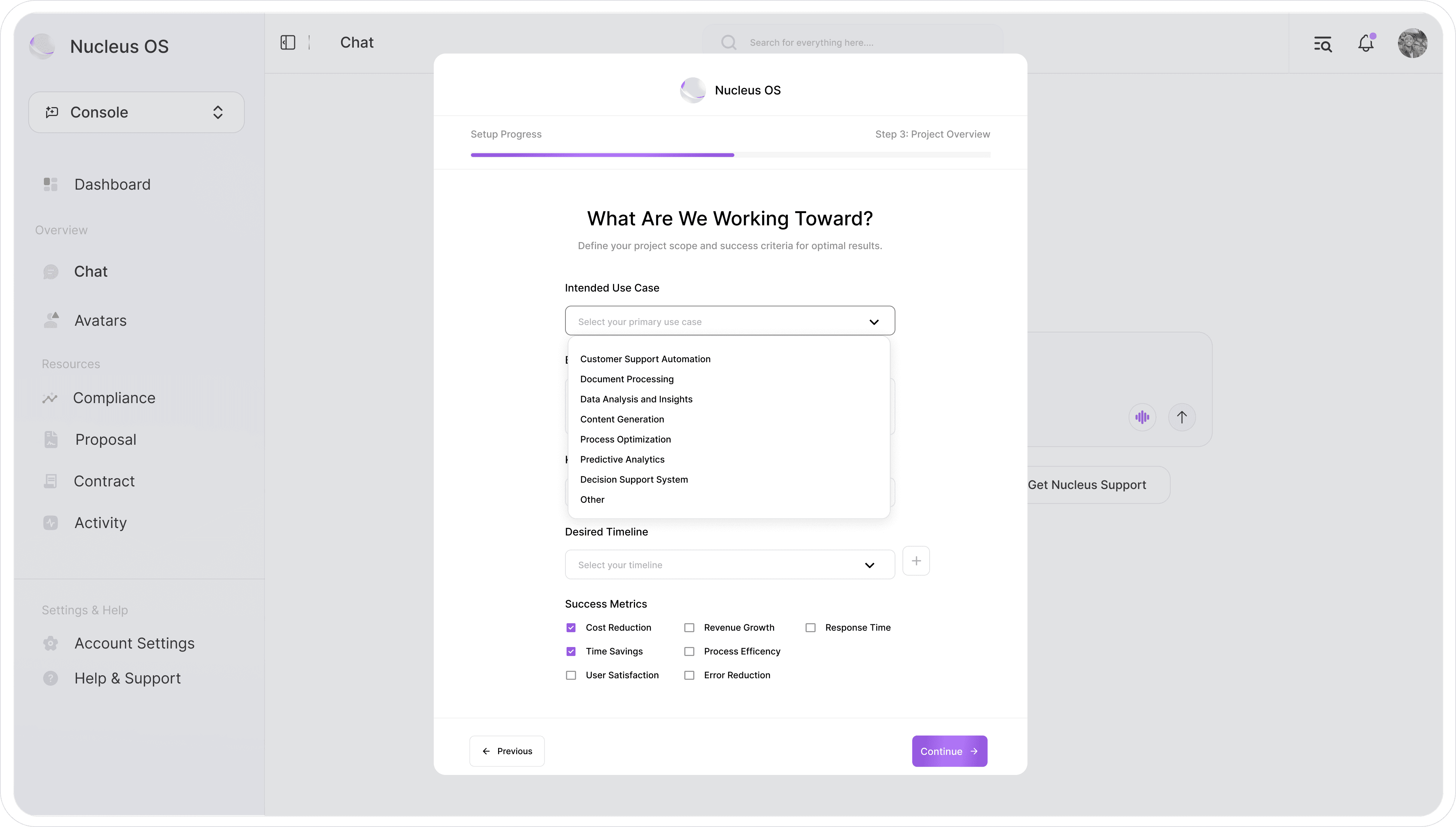
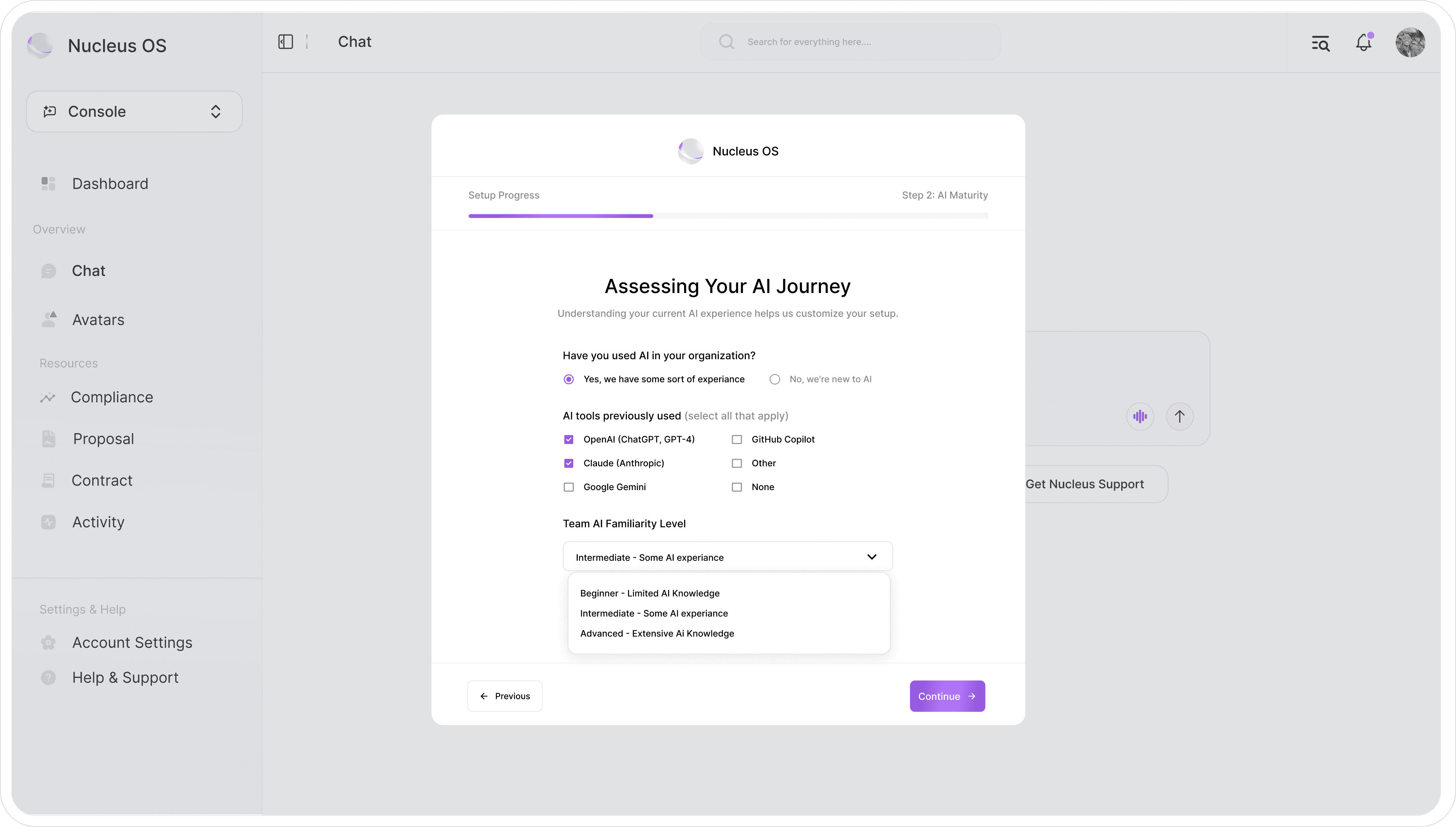
Nucleus OS is a client onboarding, communication, and project tracking platform designed to streamline how Nucleus collaborates with its clients throughout the entire lifecycle of an AI project.

While Nucleus Studio focuses on building and automating AI workflows, Nucleus OS focuses on the human and operational layer onboarding clients, managing proposals and contracts, tracking compliance, and maintaining transparent project communication.

The platform acts as a single source of truth where clients and internal teams stay aligned on progress, responsibilities, decisions, and next steps.

Overview

Project Overview

Nucleus OS is a client onboarding, communication, and project tracking platform designed to streamline how Nucleus collaborates with its clients throughout the entire lifecycle of an AI project.

While Nucleus Studio focuses on building and automating AI workflows, Nucleus OS focuses on the human and operational layer onboarding clients, managing proposals and contracts, tracking compliance, and maintaining transparent project communication.

The platform acts as a single source of truth where clients and internal teams stay aligned on progress, responsibilities, decisions, and next steps.

Key Features

Key Feature

  • Project overview & progress tracking

  • Client onboarding dashboard

  • Notifications, reminders & priority tasks

  • Chat, voice & avatar-based project assistance

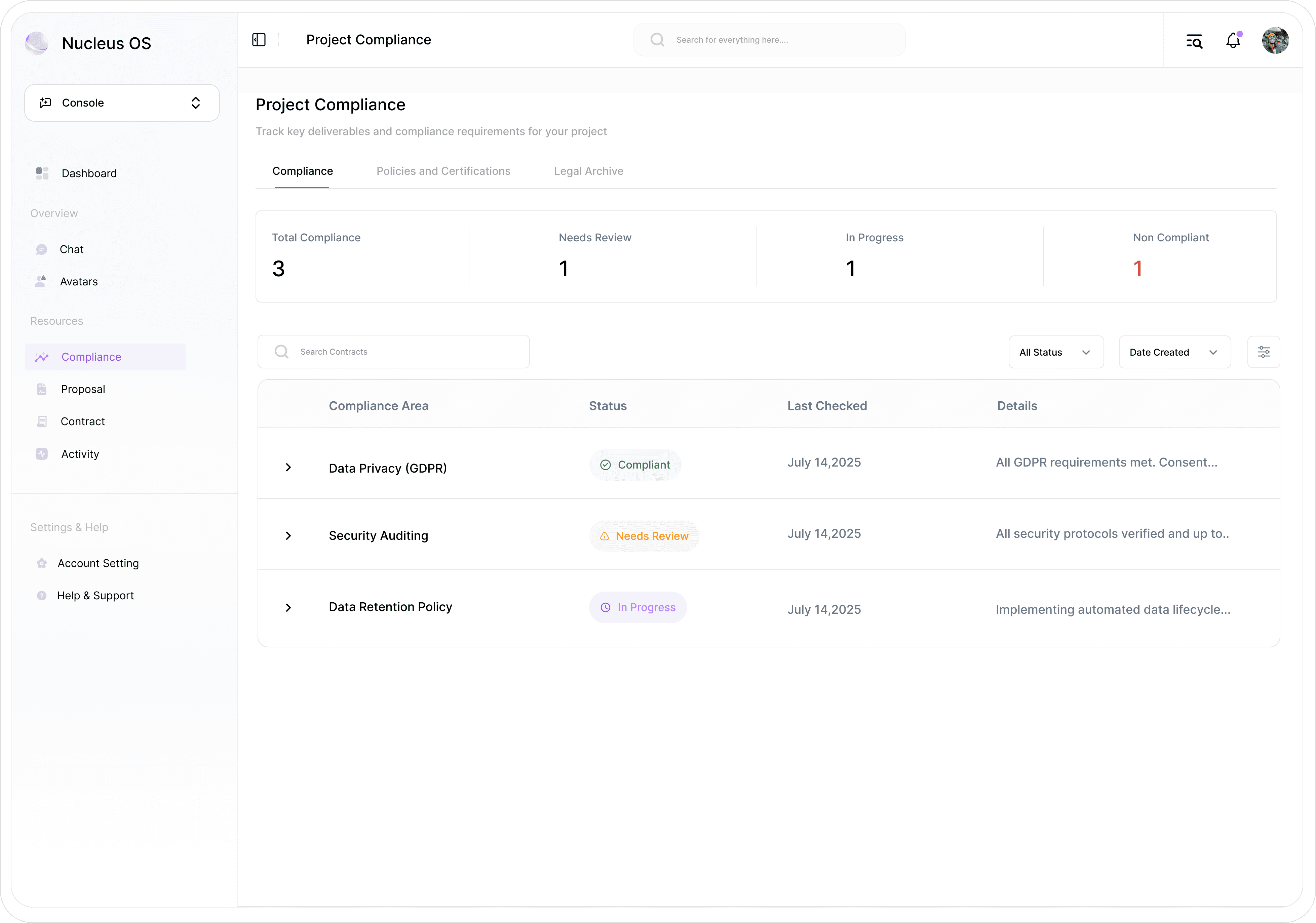
  • Compliance tracking (security, privacy, regulations)

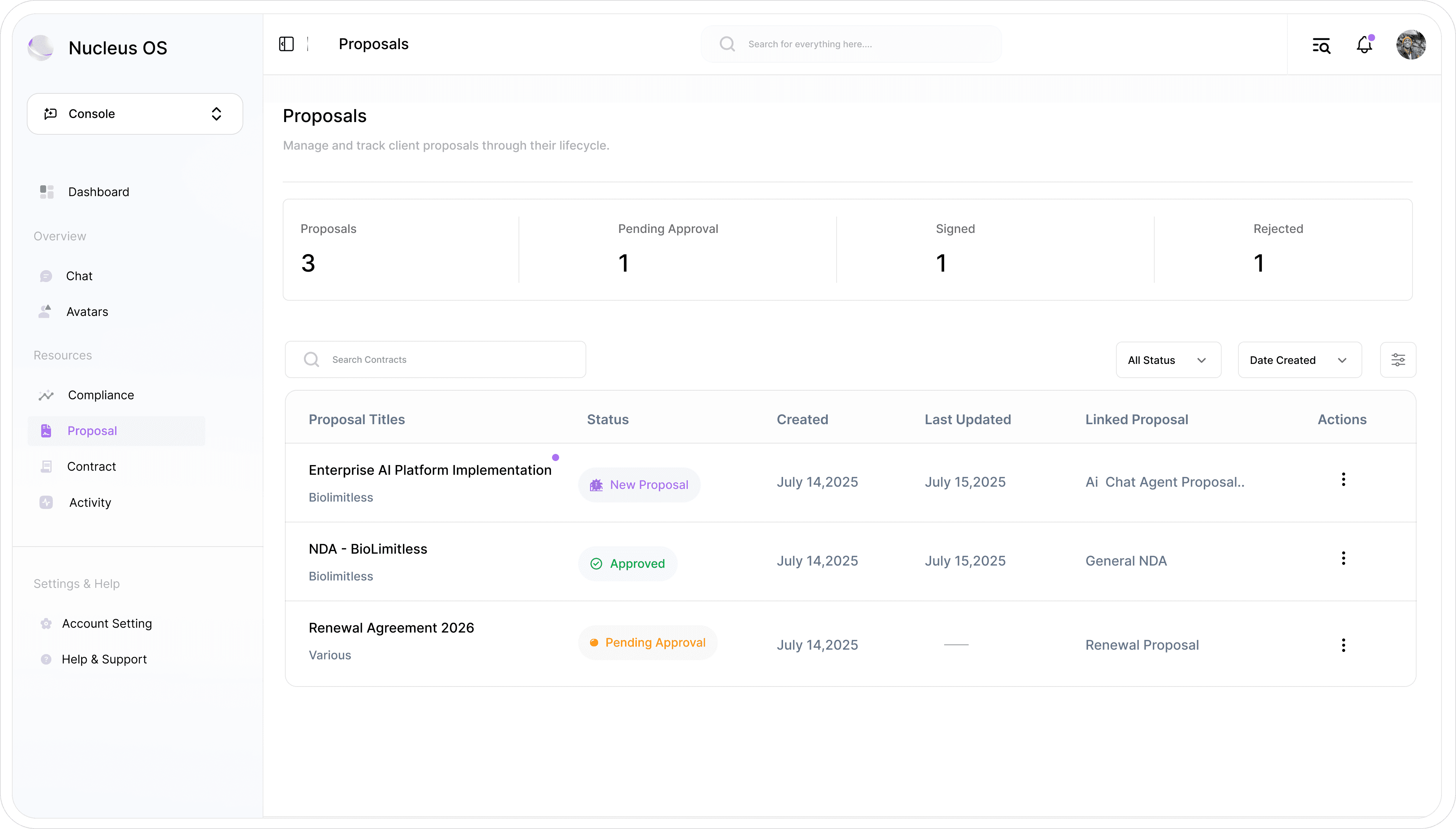
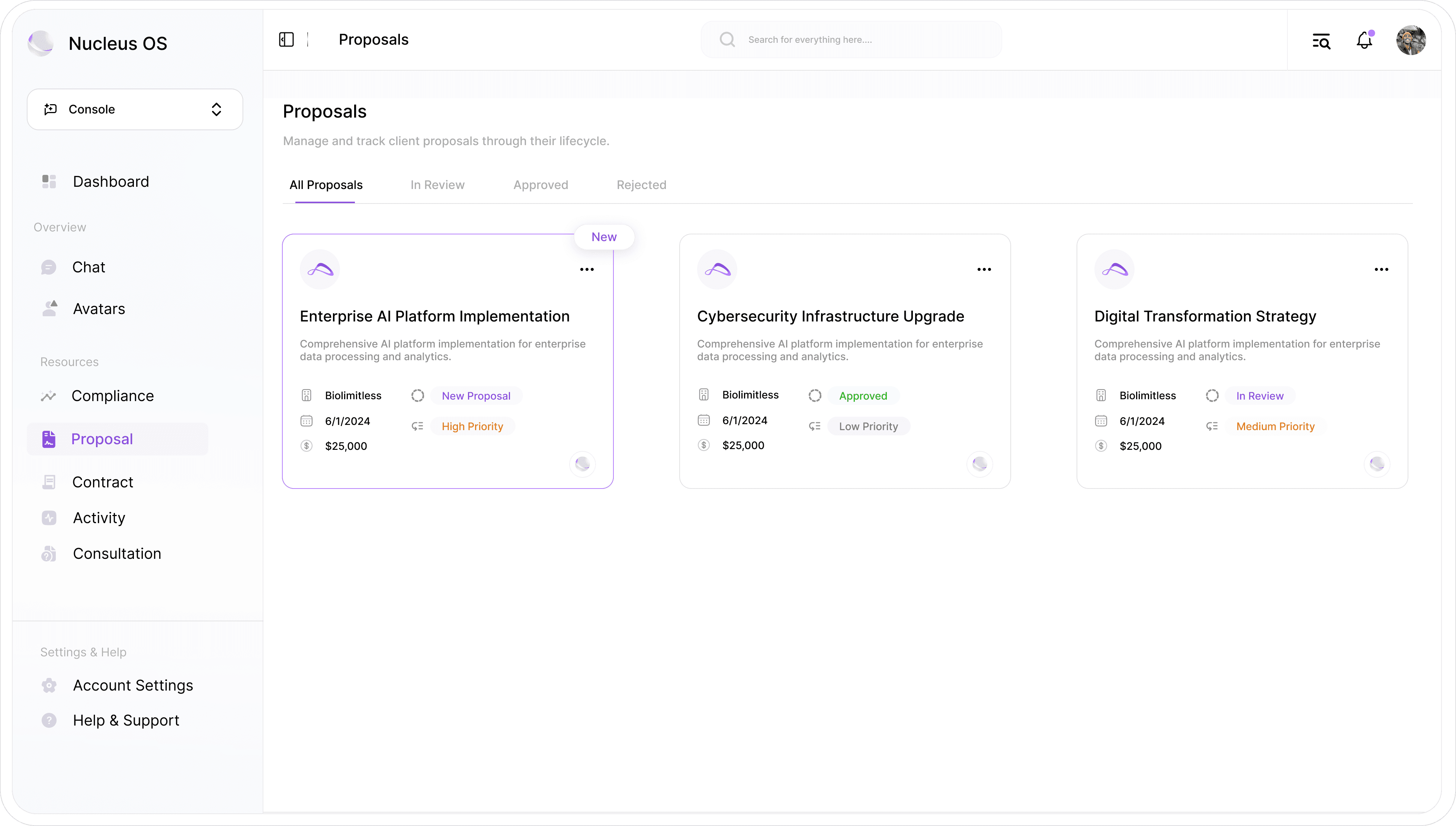
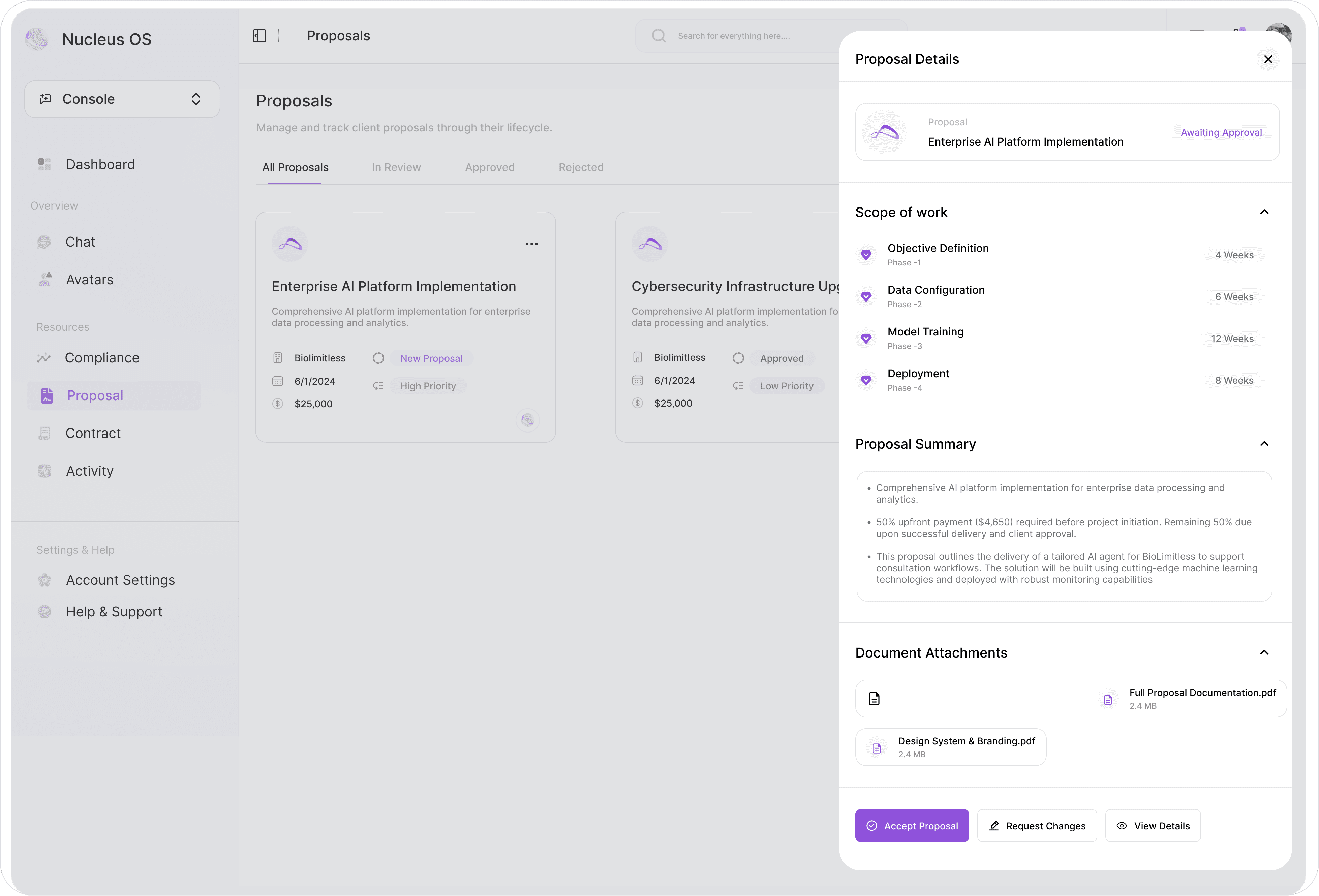
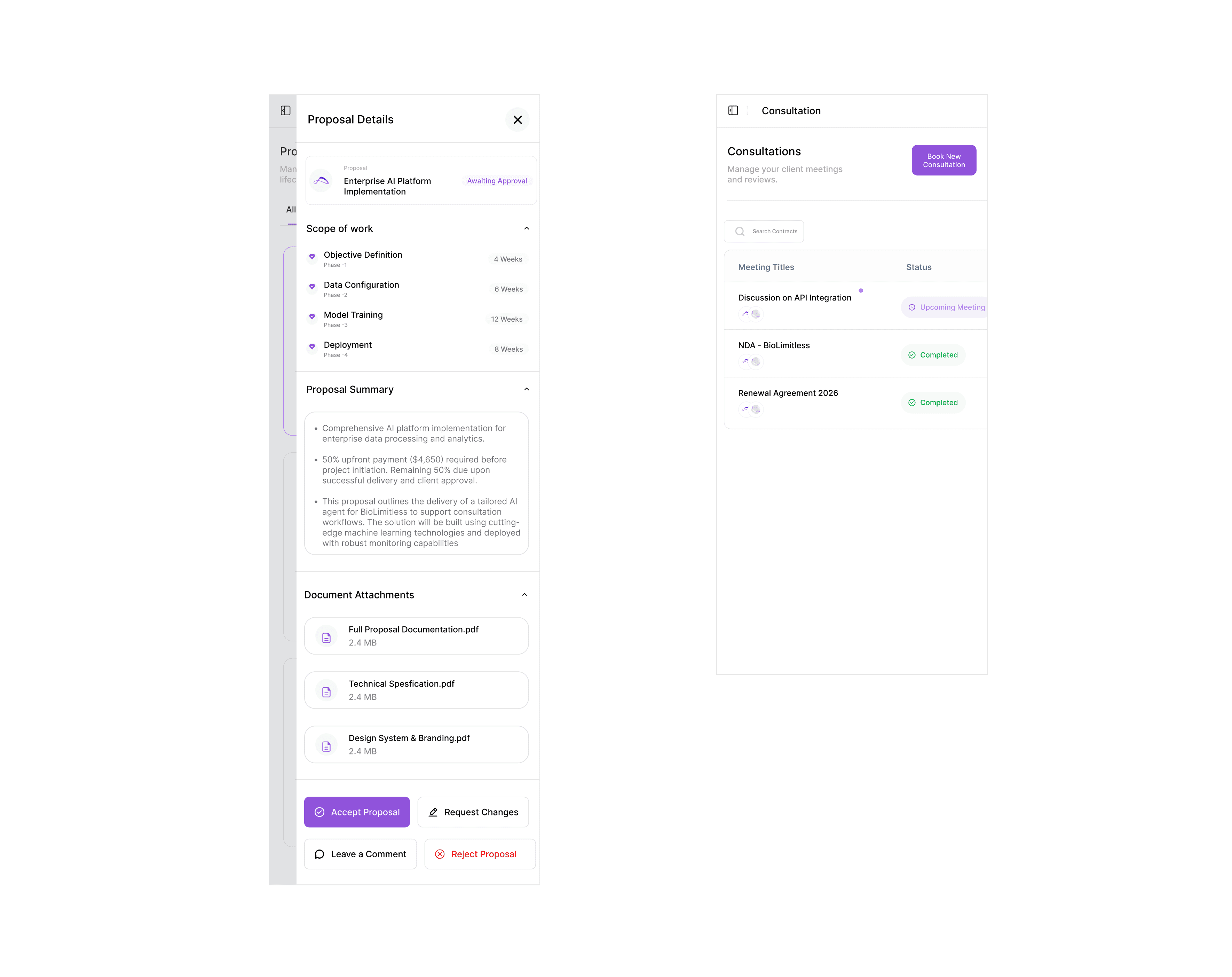
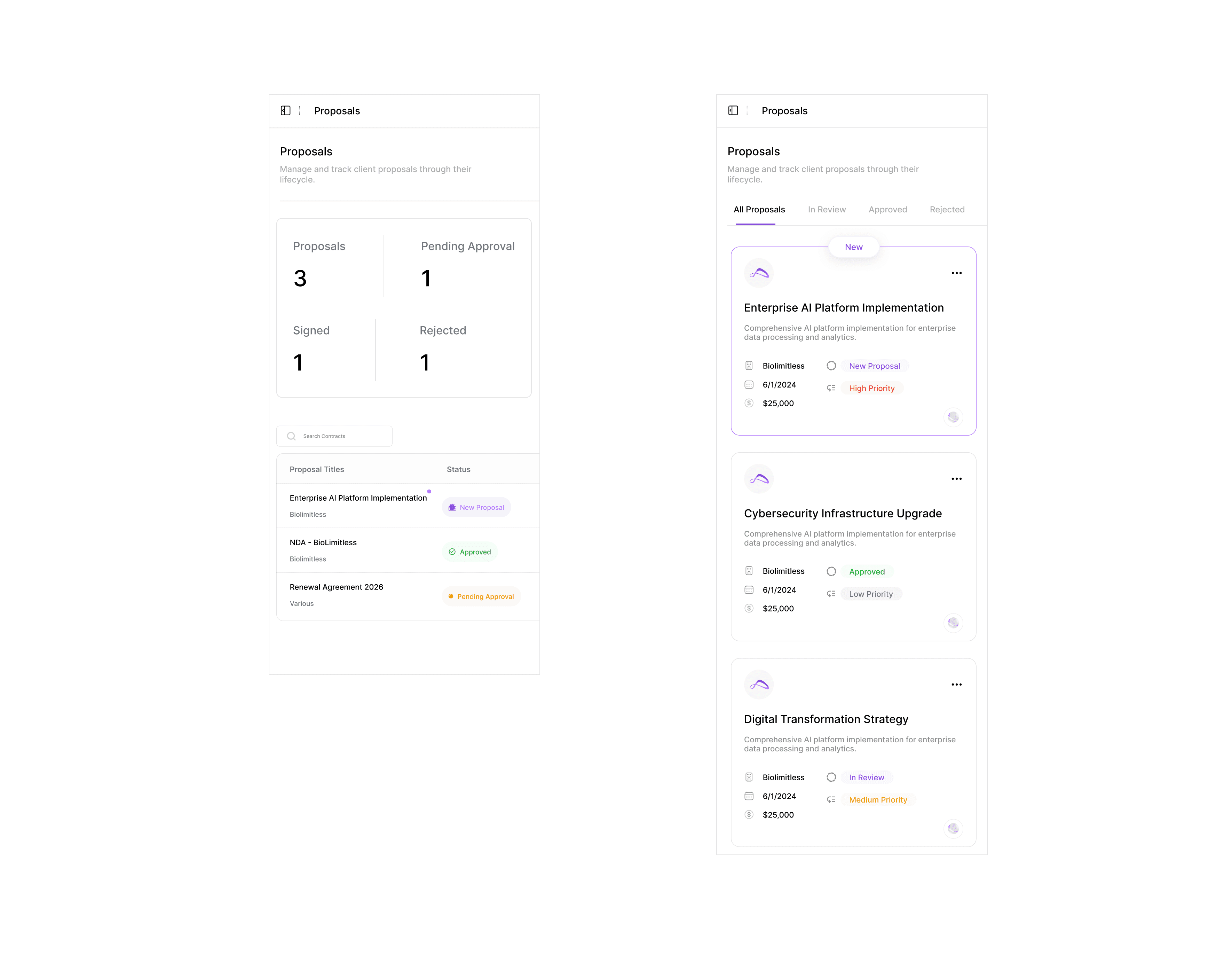
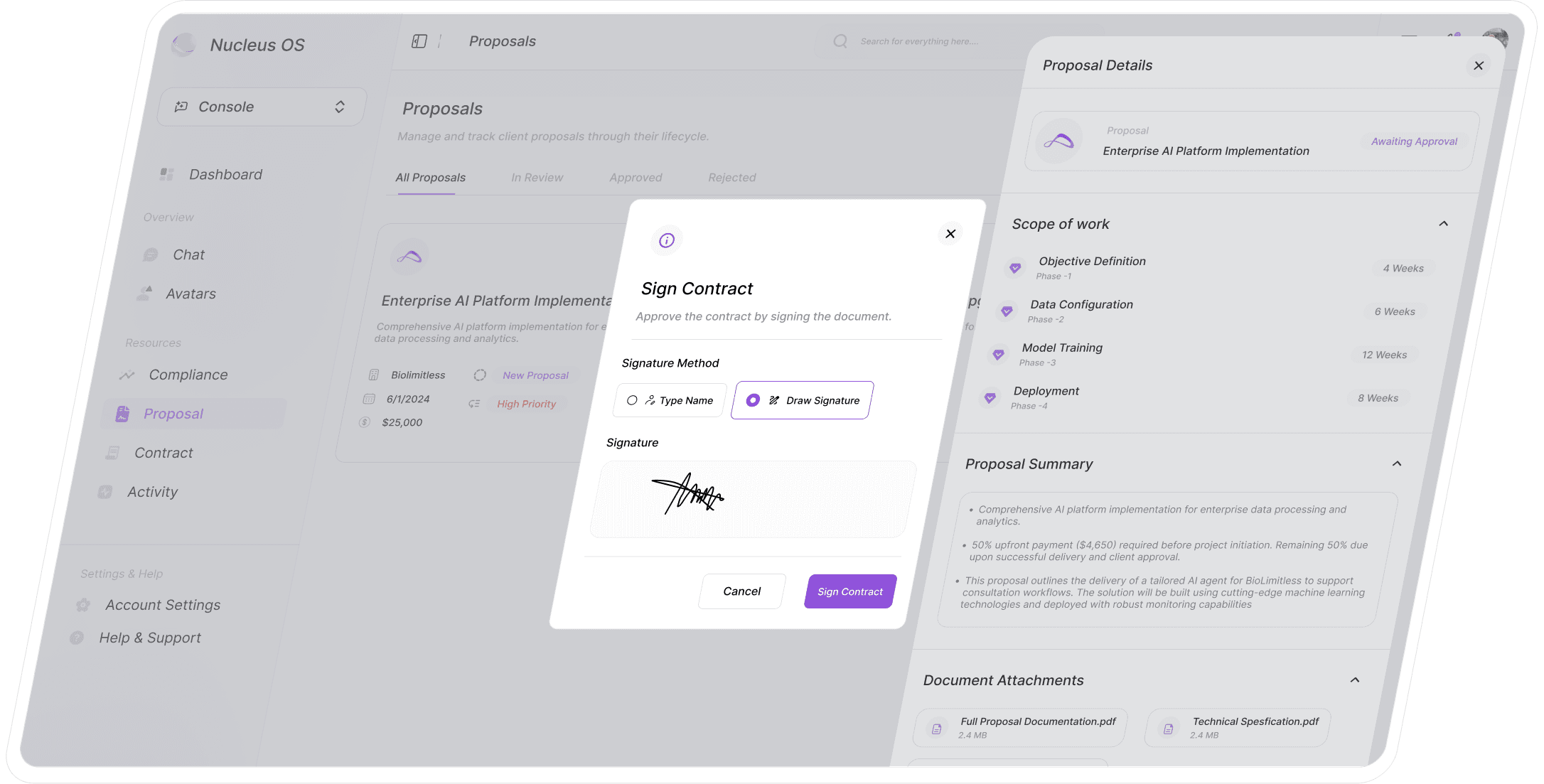
  • Proposal lifecycle management

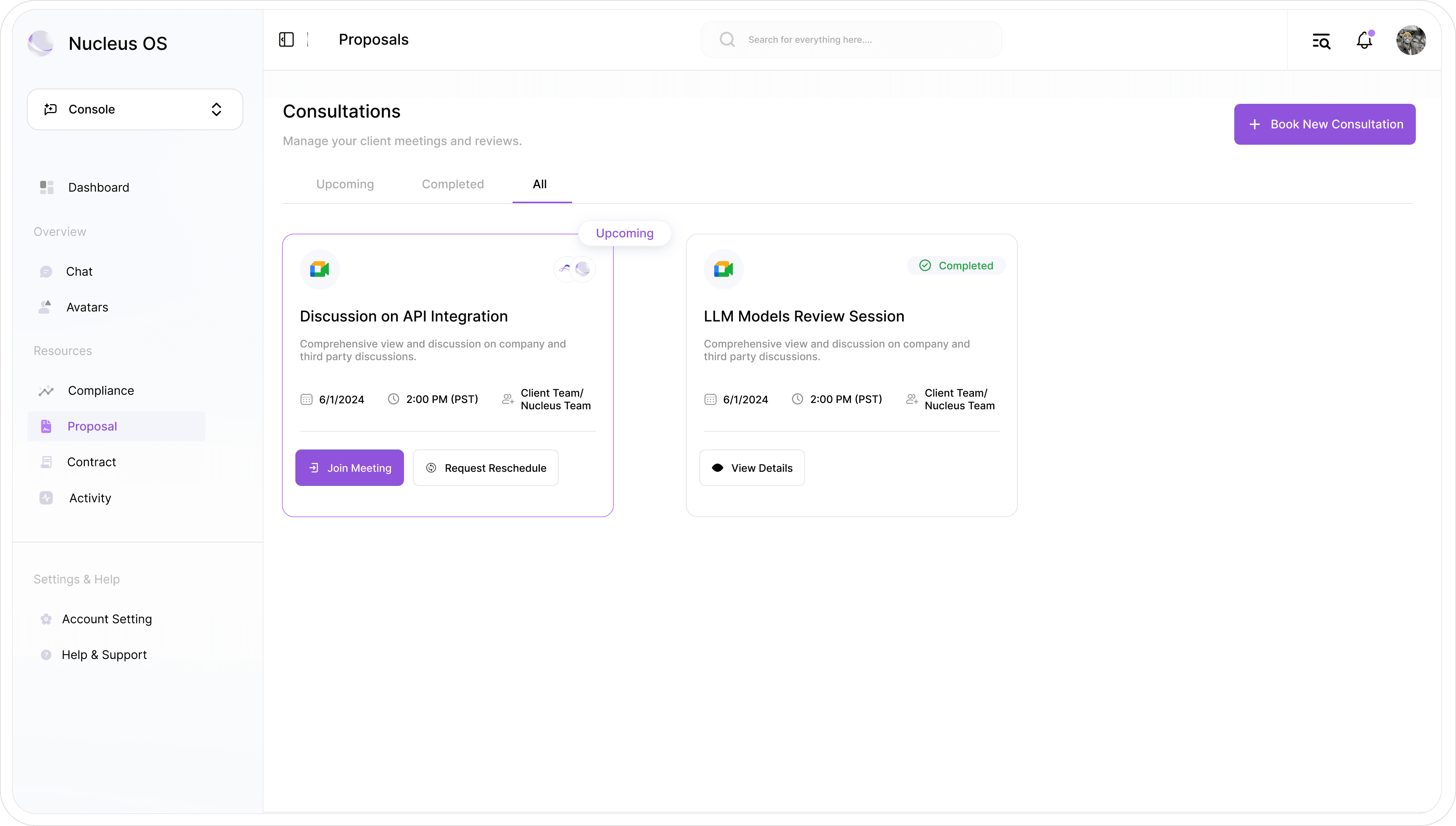
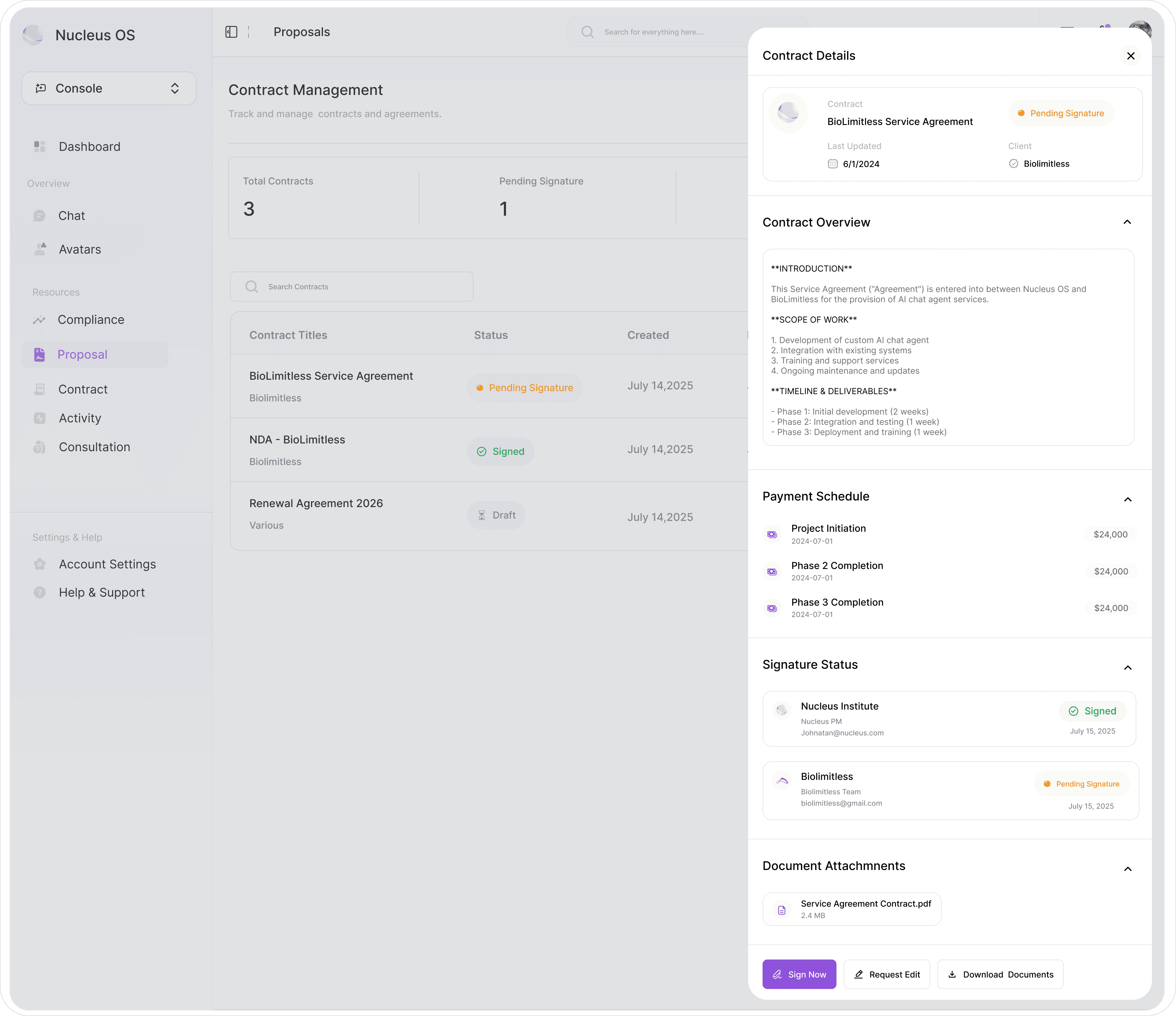
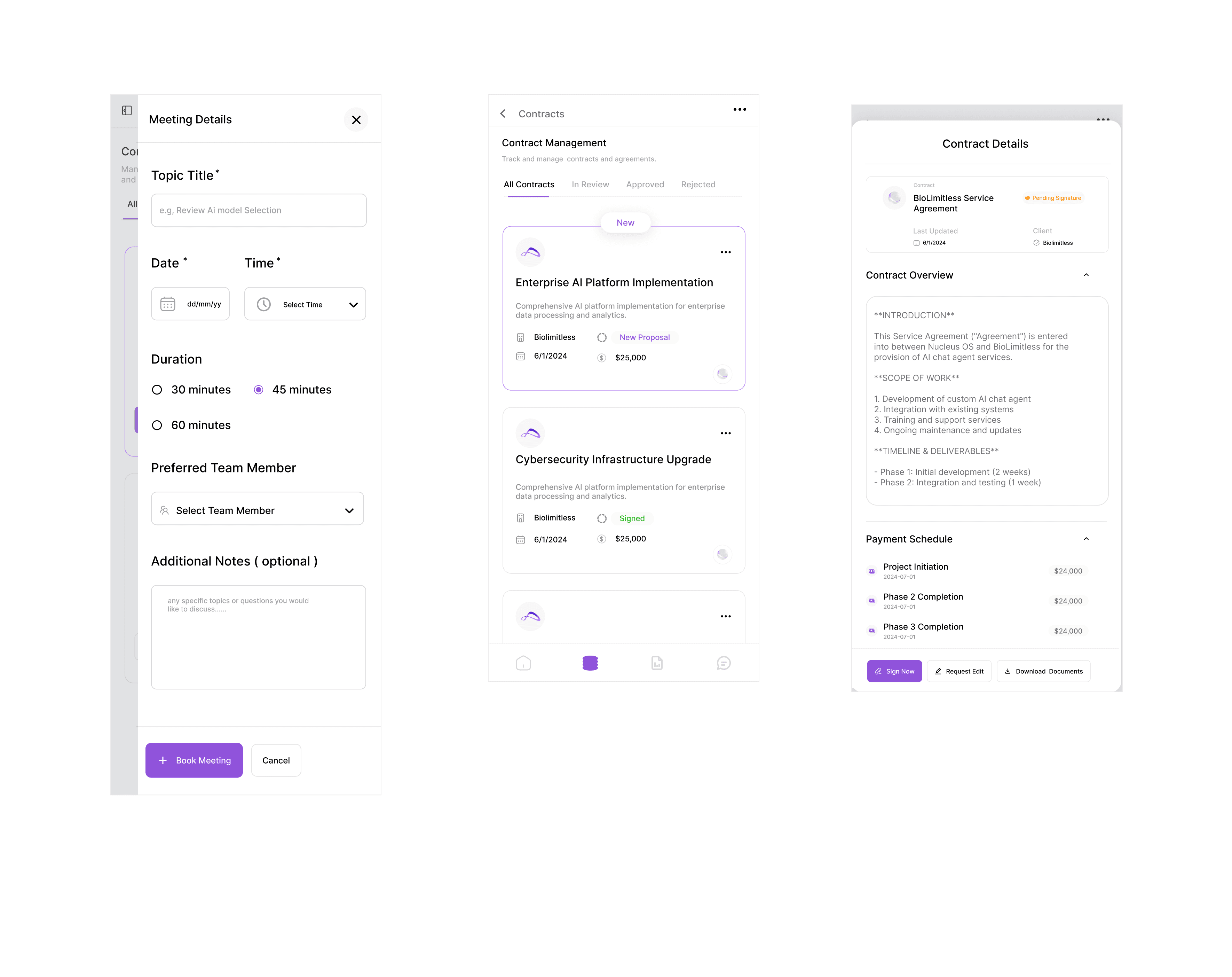
  • Contract tracking & management

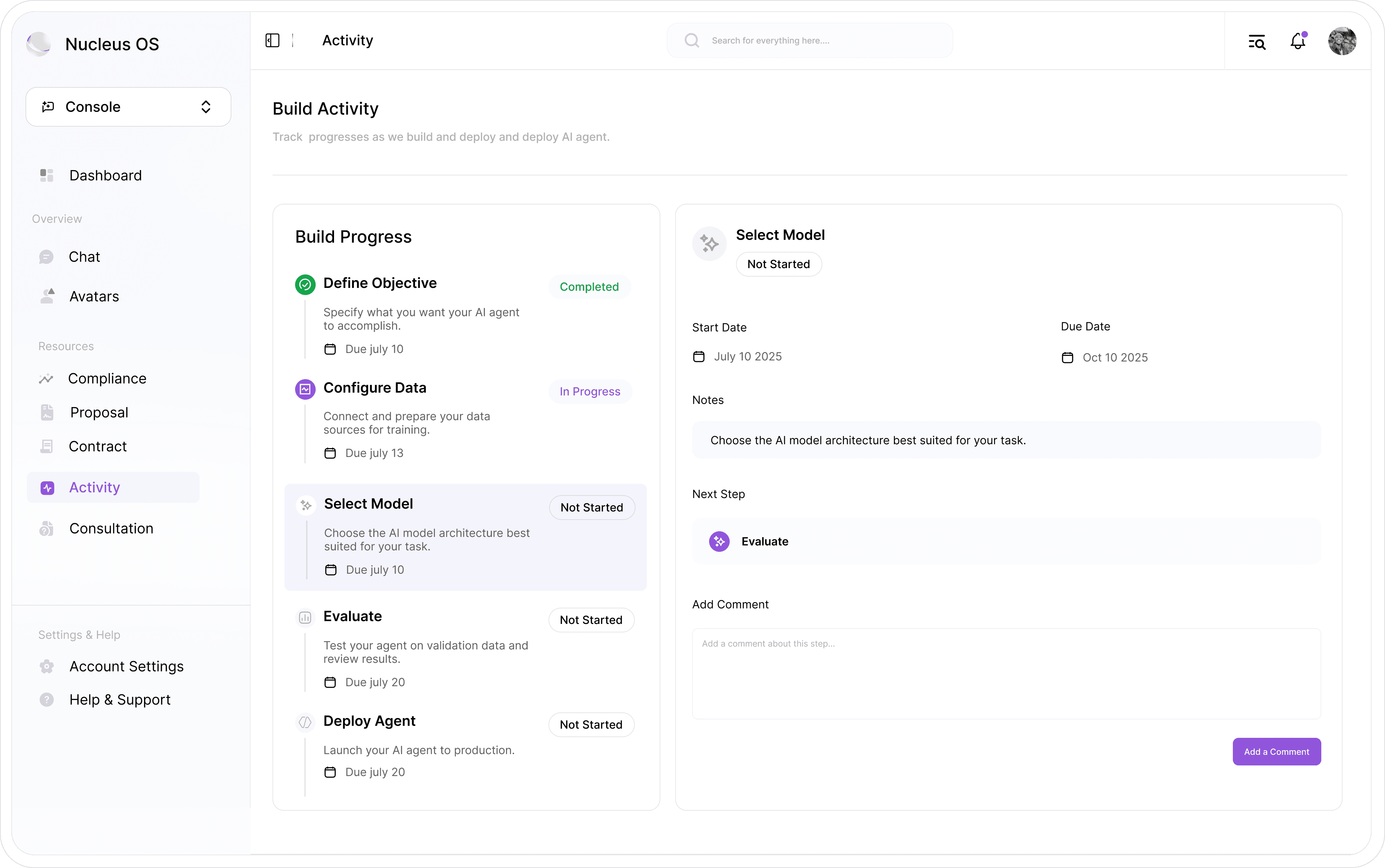
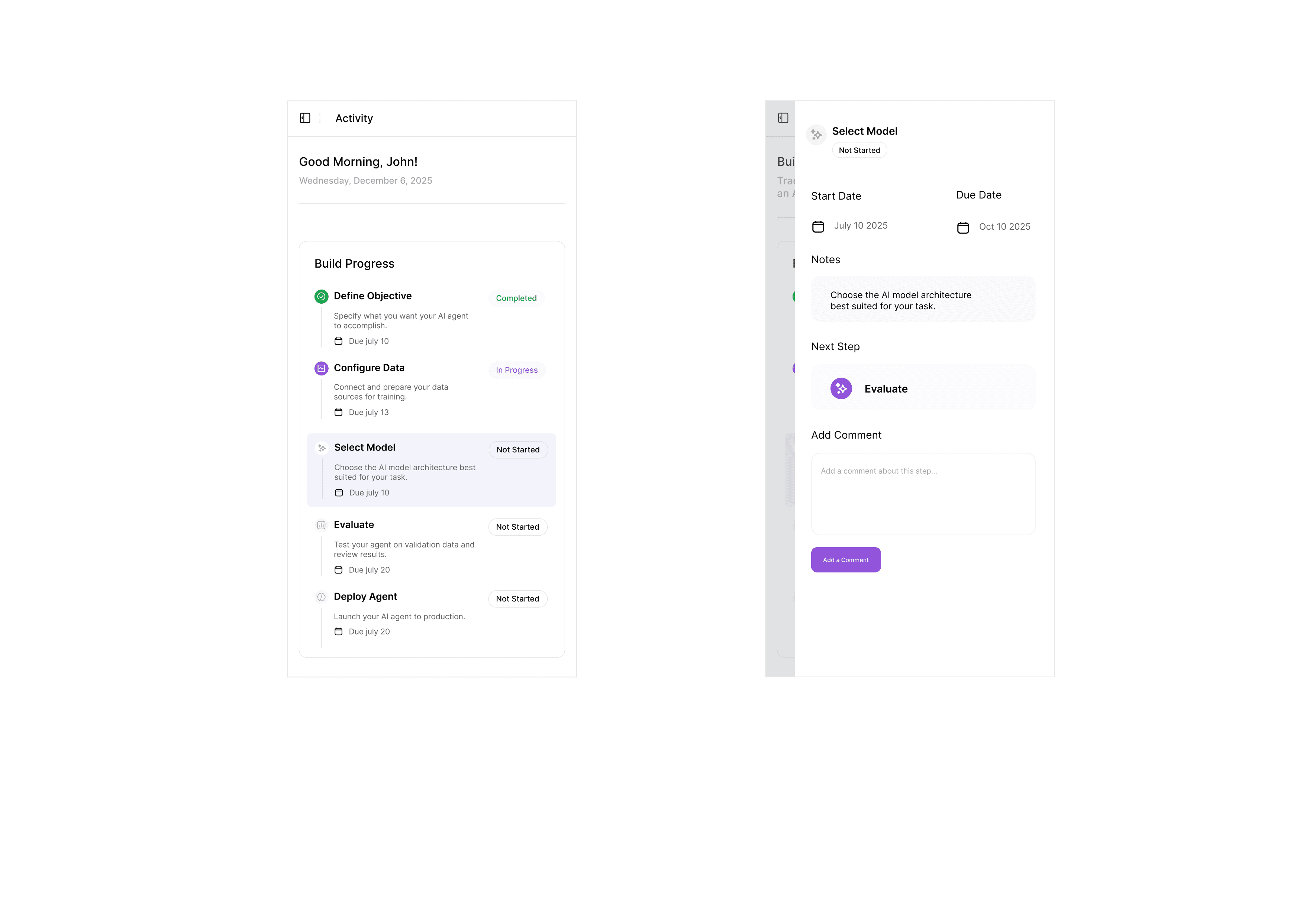
  • Activity & project phase tracking

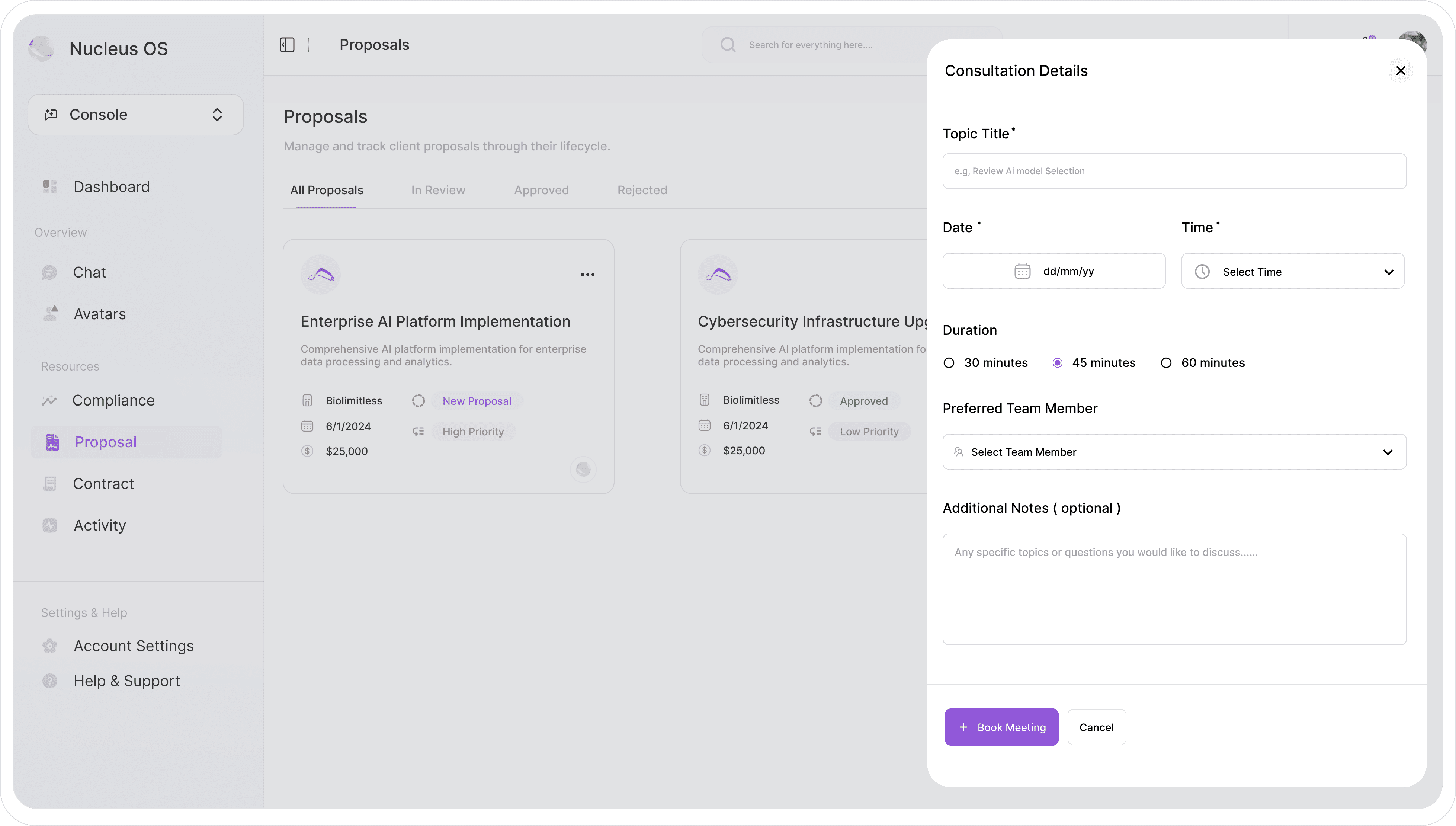
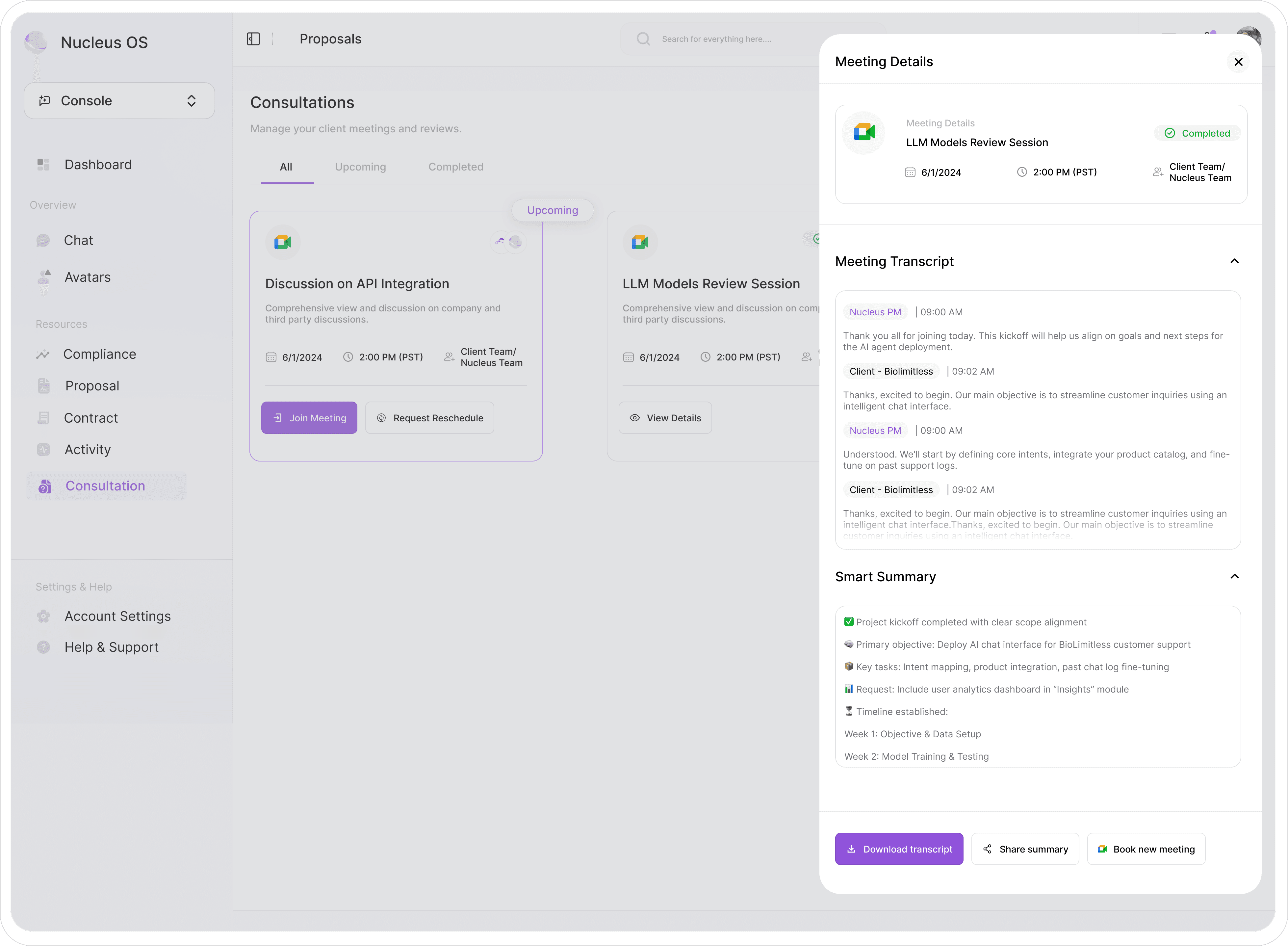
  • Consultation scheduling & meeting management

  • Scalable architecture for multi-company use

Project Goal

The main goal of Nucleus OS was to

  • Improve transparency between clients and the Nucleus team

  • Reduce friction in onboarding and communication

  • Centralize project-related information Replace fragmented tools (email, docs, chats)

  • Create a scalable system usable by other teams and companies

Project Goal

The main goal of Nucleus OS was to

  • Improve transparency between clients and the Nucleus team

  • Reduce friction in onboarding and communication

  • Centralize project-related information Replace fragmented tools (email, docs, chats)

  • Create a scalable system usable by other teams and companies

Challange

Core Challenges & Why Solving Them Matters
Some of the challanges

Designing Nucleus OS required addressing fundamental challenges around transparency, communication, and trust in long-running, complex AI projects. Clients are often involved at critical decision points, yet they lack continuous visibility into progress, dependencies, and responsibilities. This gap creates uncertainty, delays approvals, and weakens collaboration.

Some of the challanges

Designing Nucleus OS required addressing fundamental challenges around transparency, communication, and trust in long-running, complex AI projects. Clients are often involved at critical decision points, yet they lack continuous visibility into progress, dependencies, and responsibilities. This gap creates uncertainty, delays approvals, and weakens collaboration.

The Trust Gap

To prevent the erosion of client trust caused by fragmented communication, Nucleus OS was designed to prioritize transparency and real-time clarity. By centralizing project status, approvals, and compliance steps, the platform eliminates operational overhead and reduces the risk of misaligned expectations. This transformation shifts the focus from clarifying information to advancing work, fostering faster decision-making and more resilient client relationships.
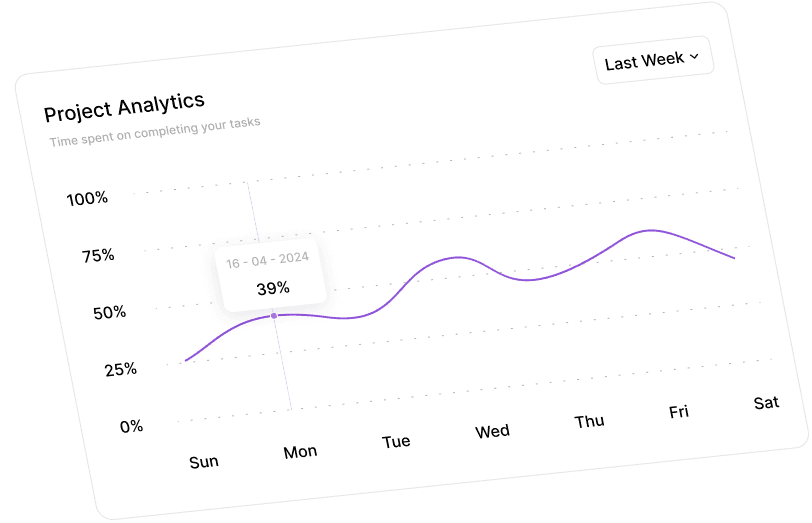
Addressing the core pain points

Addressing the core pain points

Pain point 1

Unclear Project Status and Progress

Clients often struggle to understand where their project currently stands. Updates are scattered across emails, meetings, and documents, making it difficult to get a real-time, reliable view of progress, milestones, or blockers.

Pain Point 2

Friction in Approvals and Decision-Making

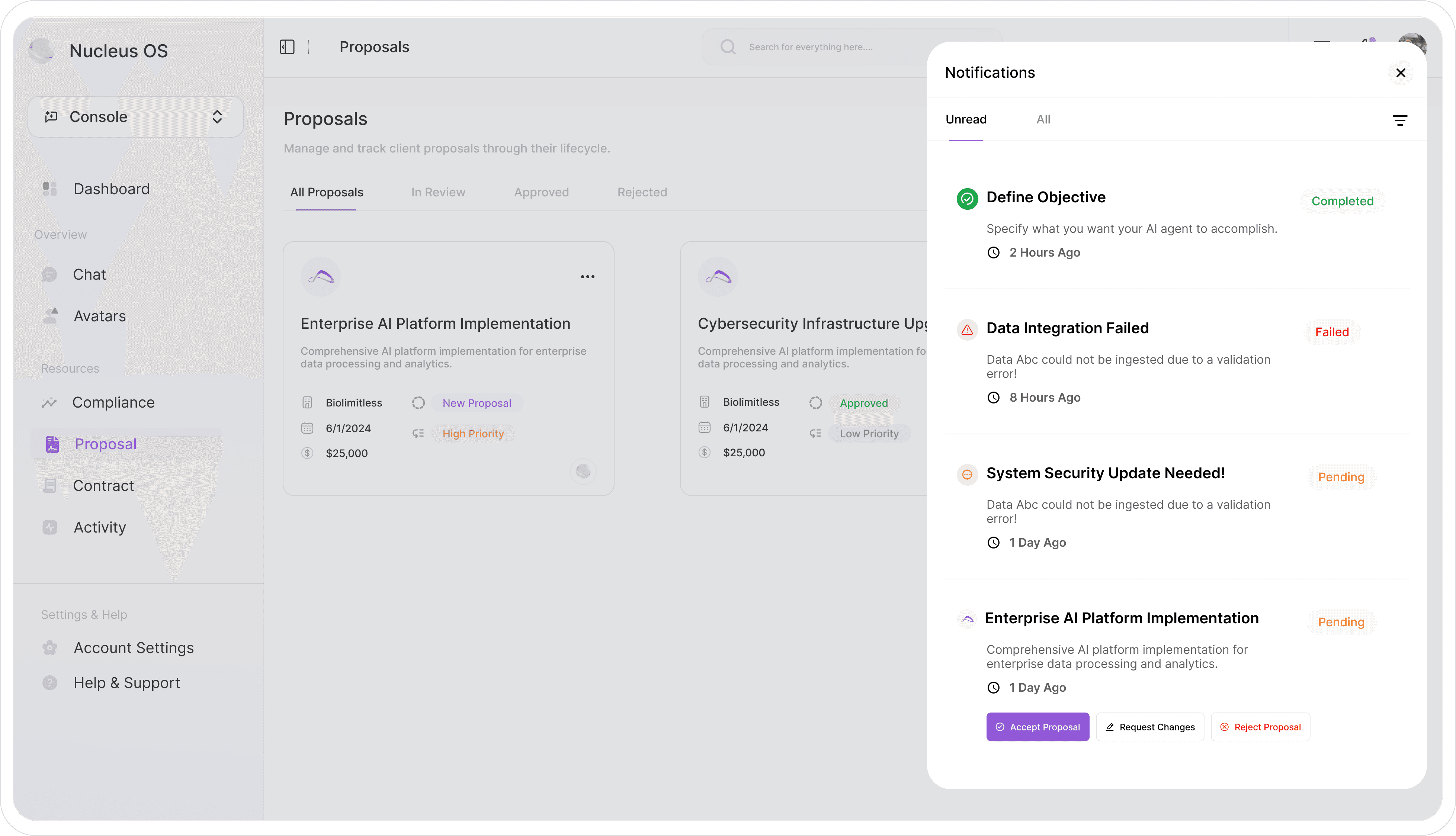
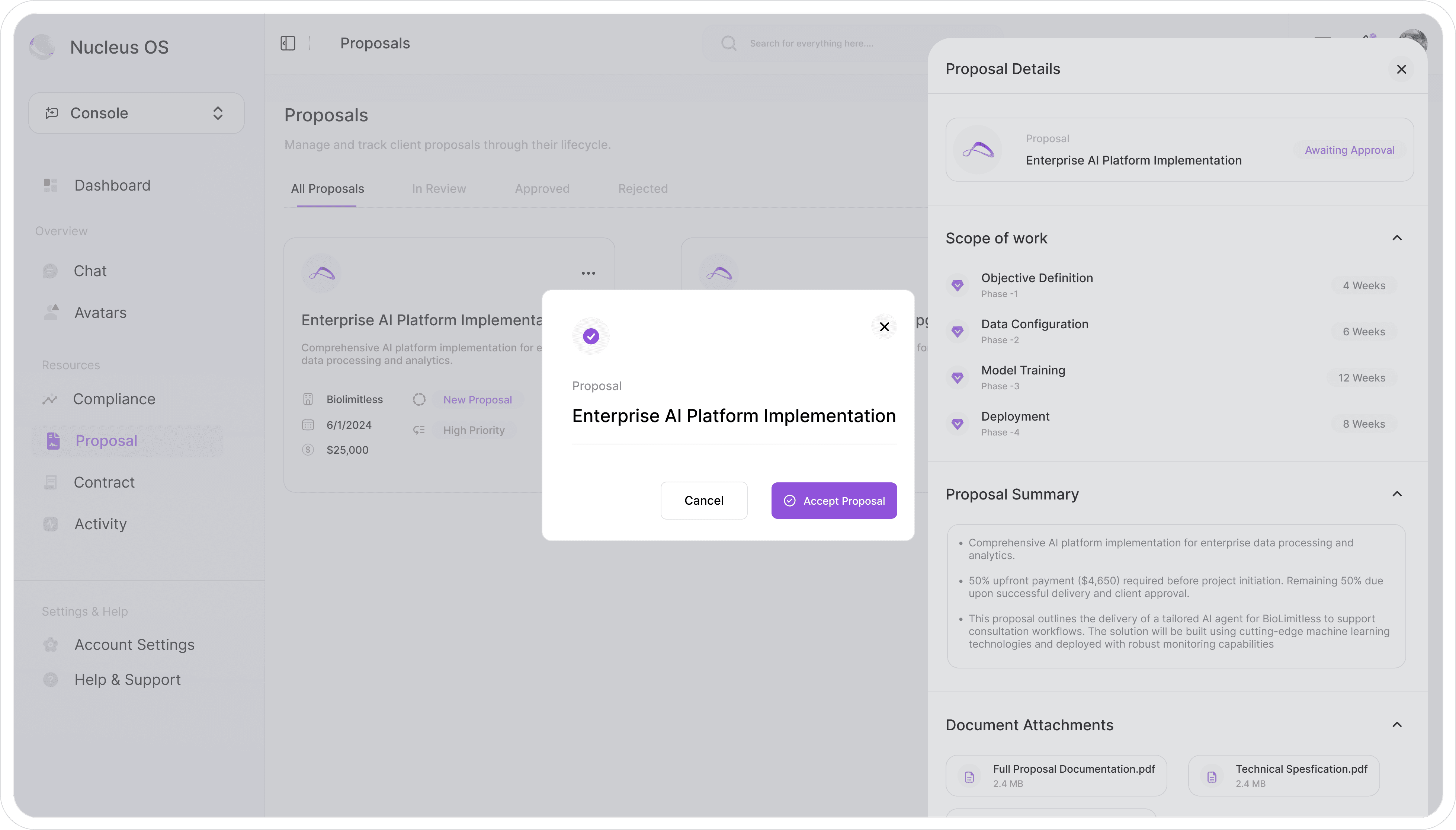
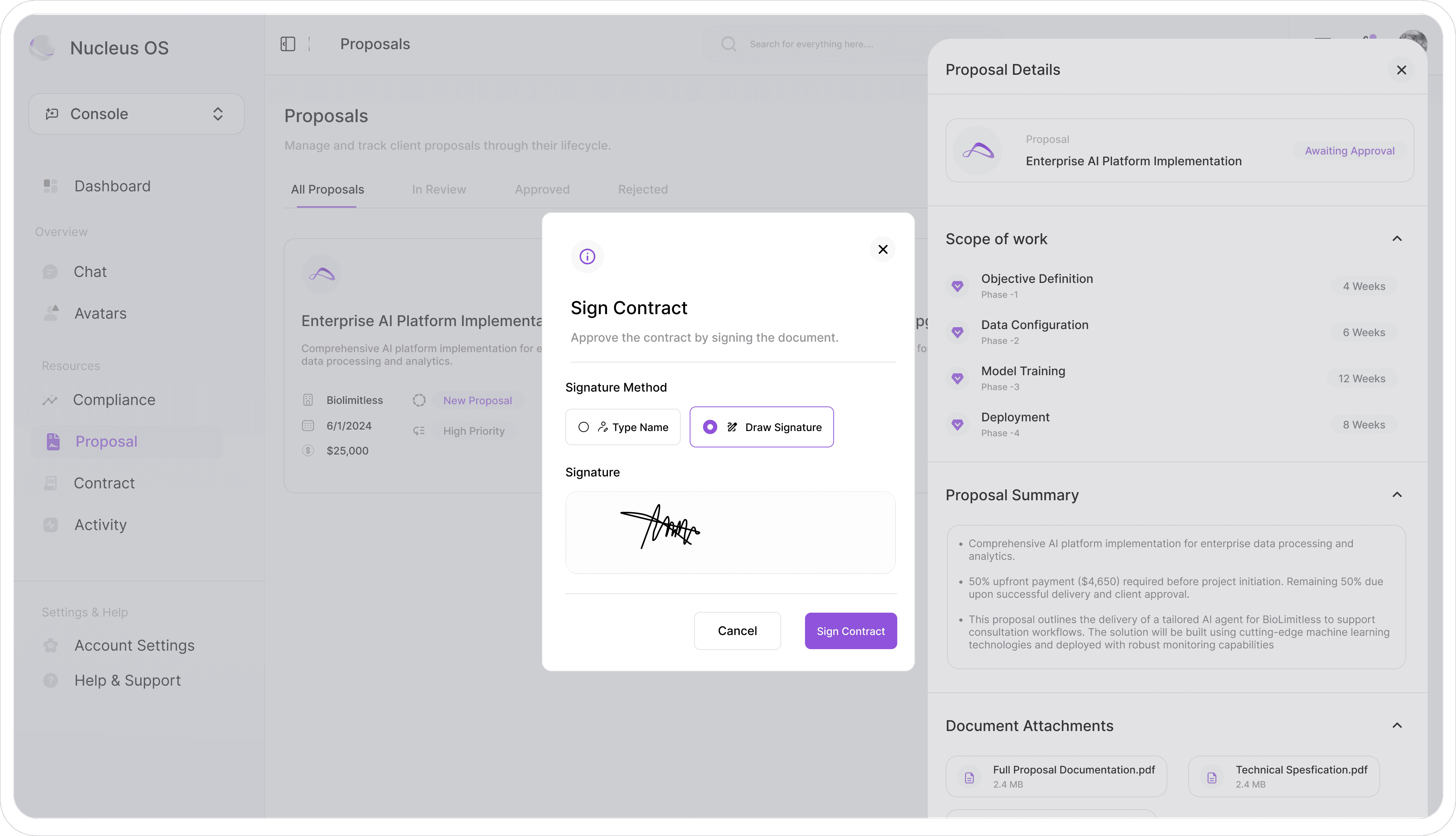
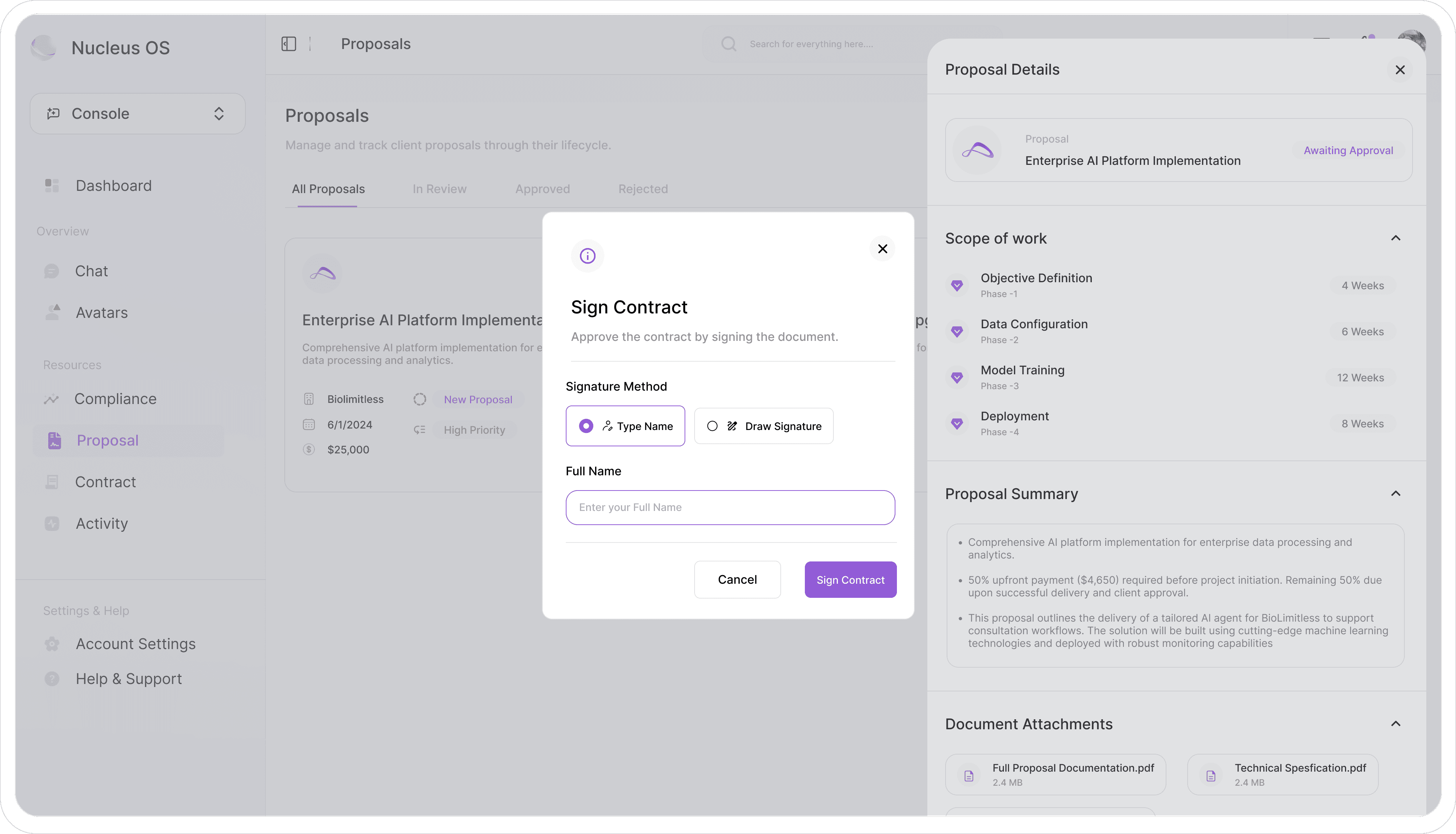
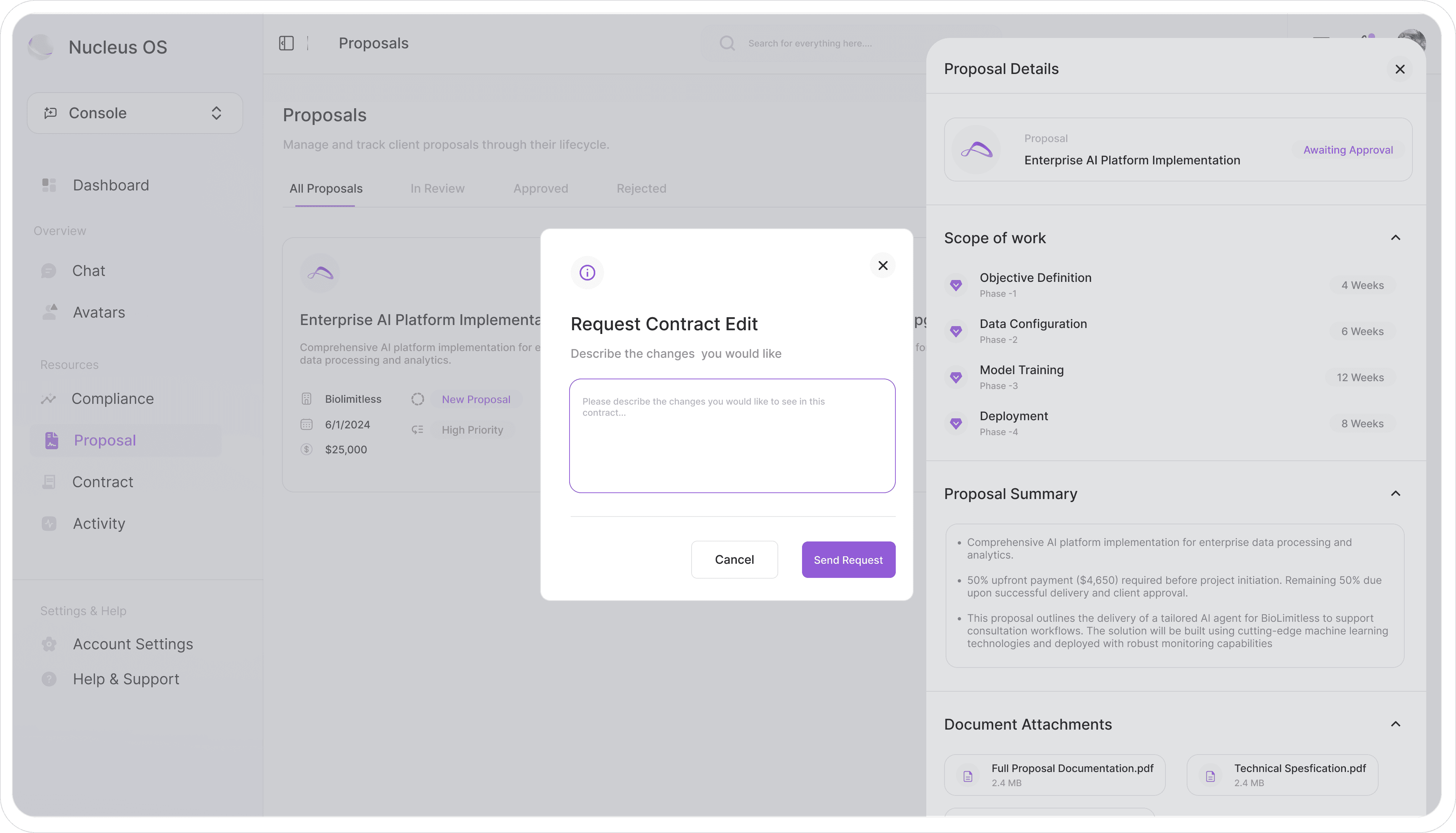
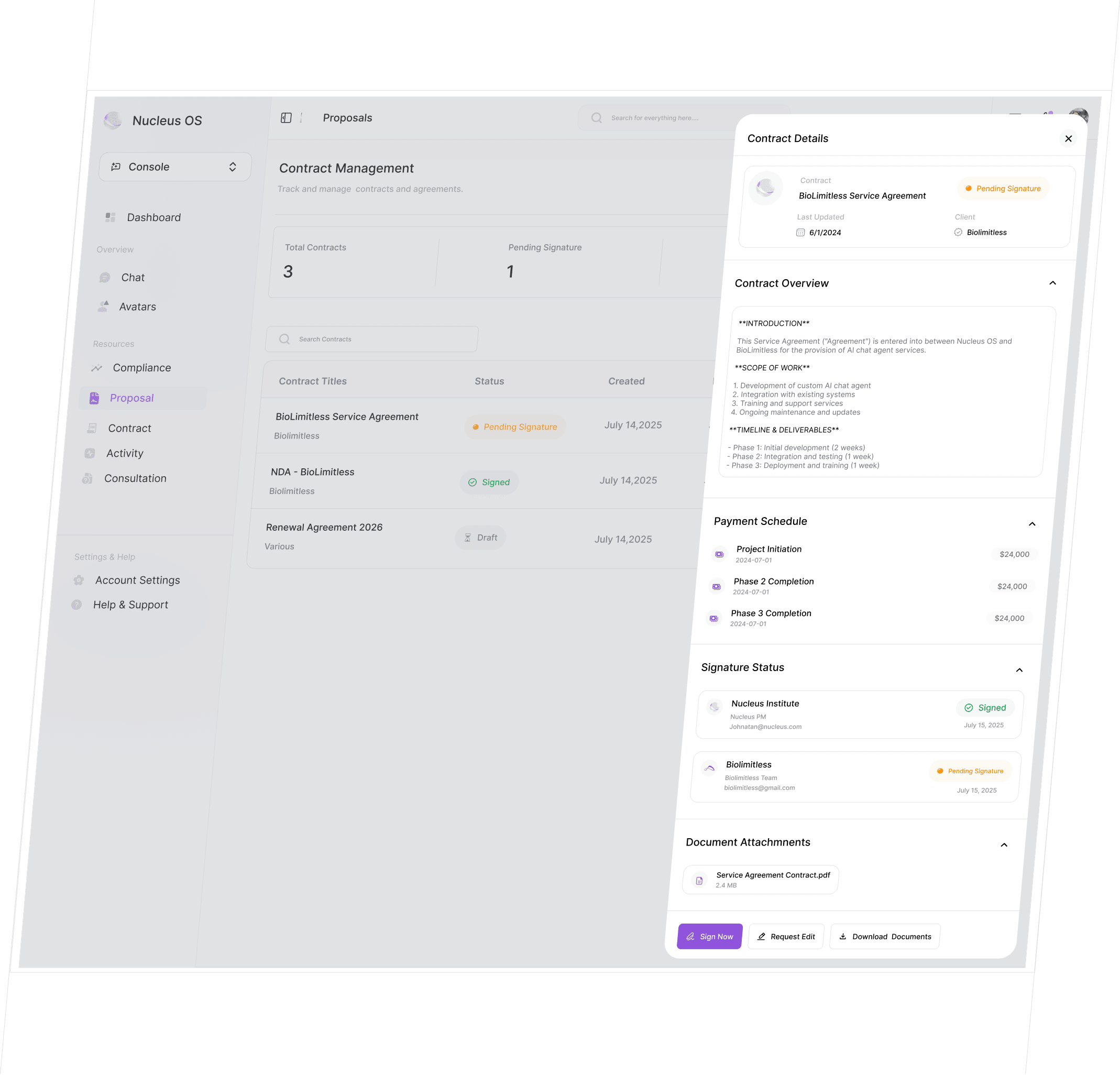
Proposal reviews, contract approvals, and compliance confirmations frequently happen across disconnected tools. This creates delays, version confusion, and uncertainty around what has been approved, what is pending, and what requires immediate attention.

Pain Point 3

Compliance & Legal Uncertainty

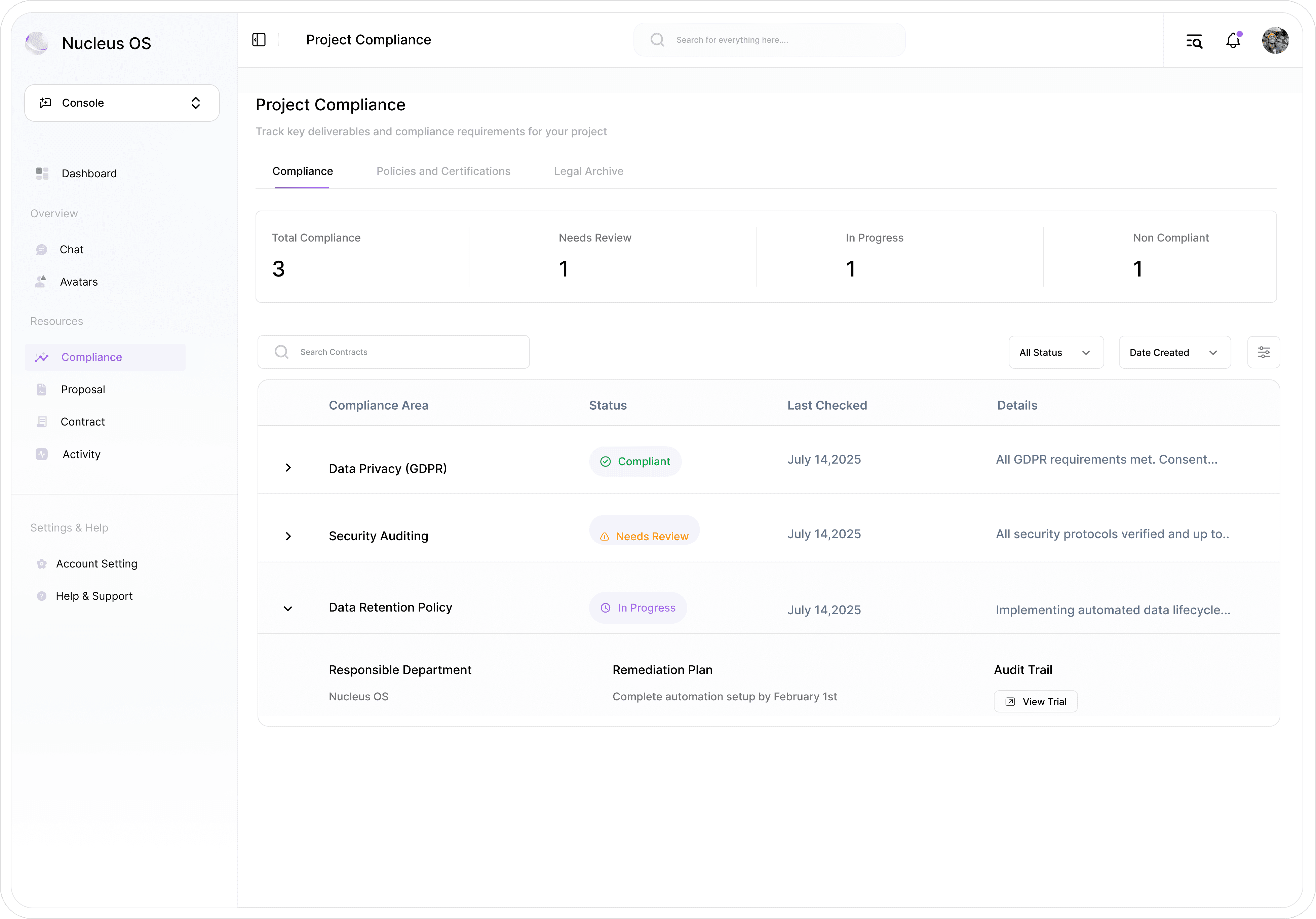
Clients need assurance that their projects meet security, data privacy, and regulatory requirements. However, compliance details are often buried in documentation, making it hard to track deliverables, audits, or policy adherence over time.

Pain point

Communication Gaps Between Technical Teams and Clients

AI projects involve complex technical processes that are difficult for non-technical stakeholders to interpret. Without clear explanations or guided interaction, clients may feel disconnected from the work being done or unsure how to ask the right questions.
Solution

Nucleus OS brings together

By centralizing tracking, documentation, and approvals into a single dashboard, the system reduces decision friction and provides clients with immediate insight into project milestones. Integrated AI—featuring chat, voice, and avatar interfaces—bridges the gap between technical teams and stakeholders, transforming complex project data into an accessible, transparent dialogue.
Centralized Project Visibility & Accountability

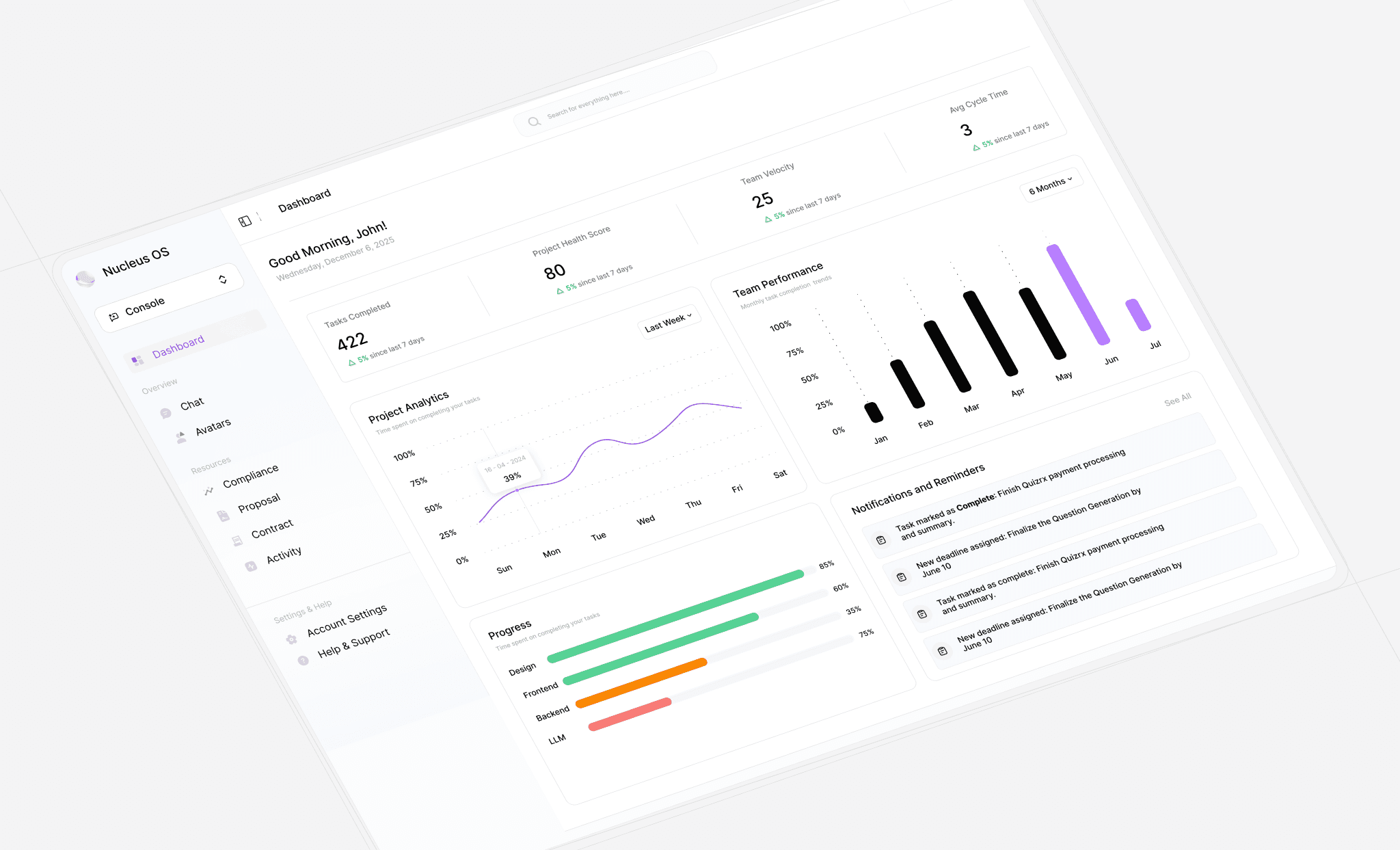
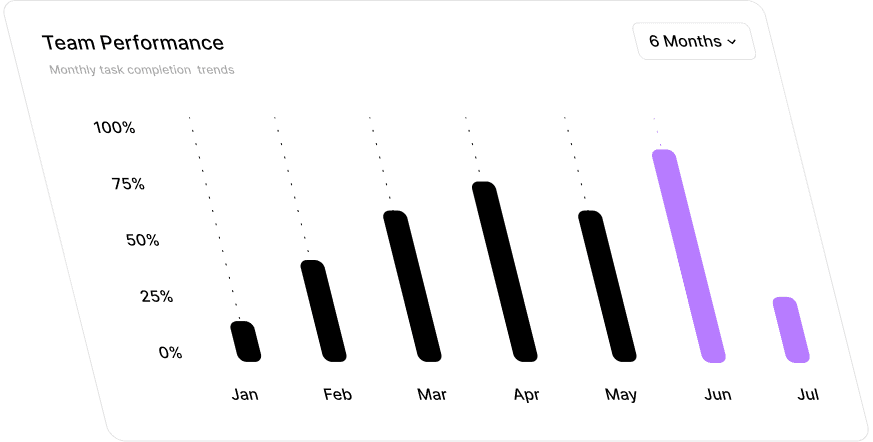
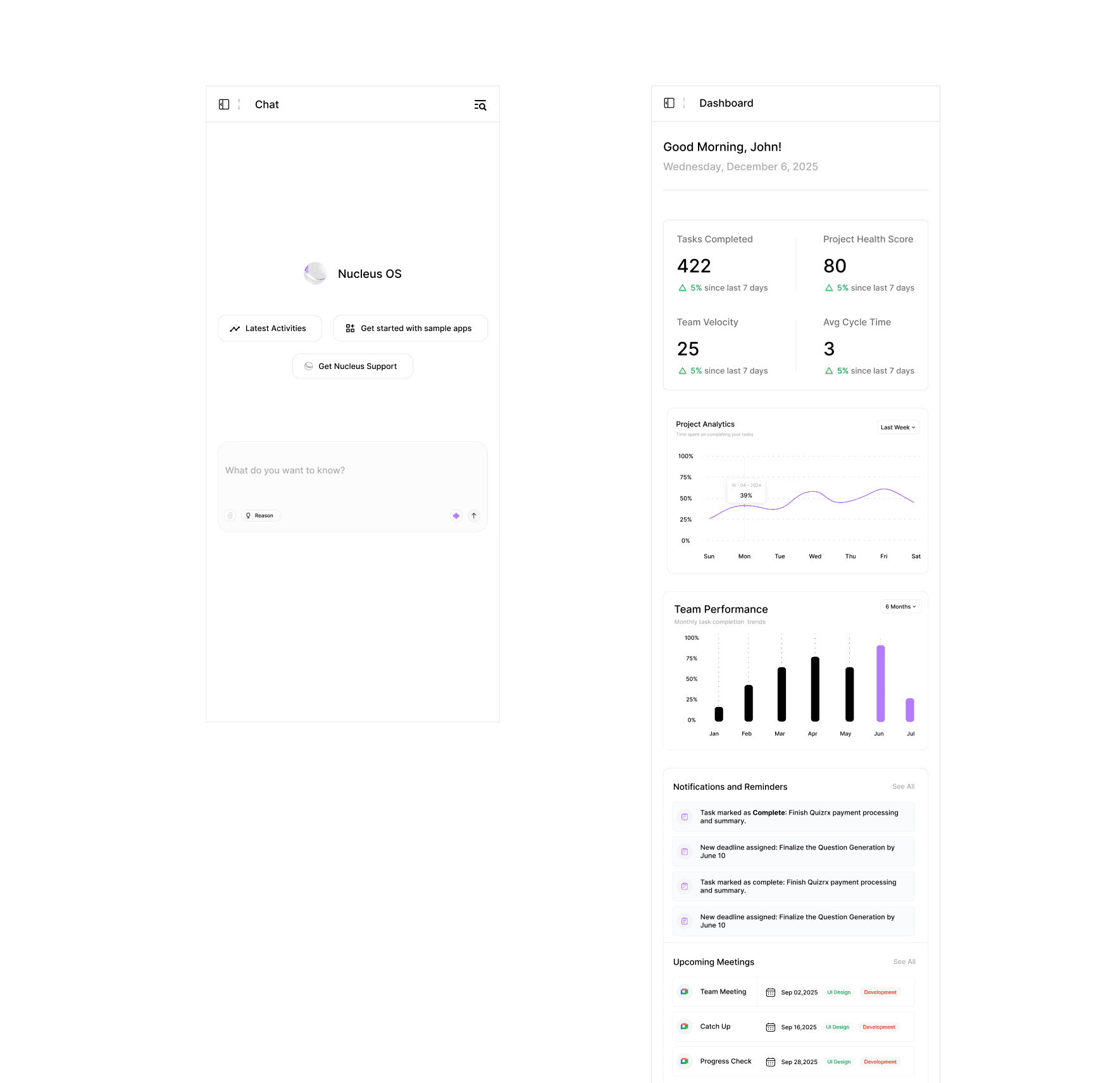
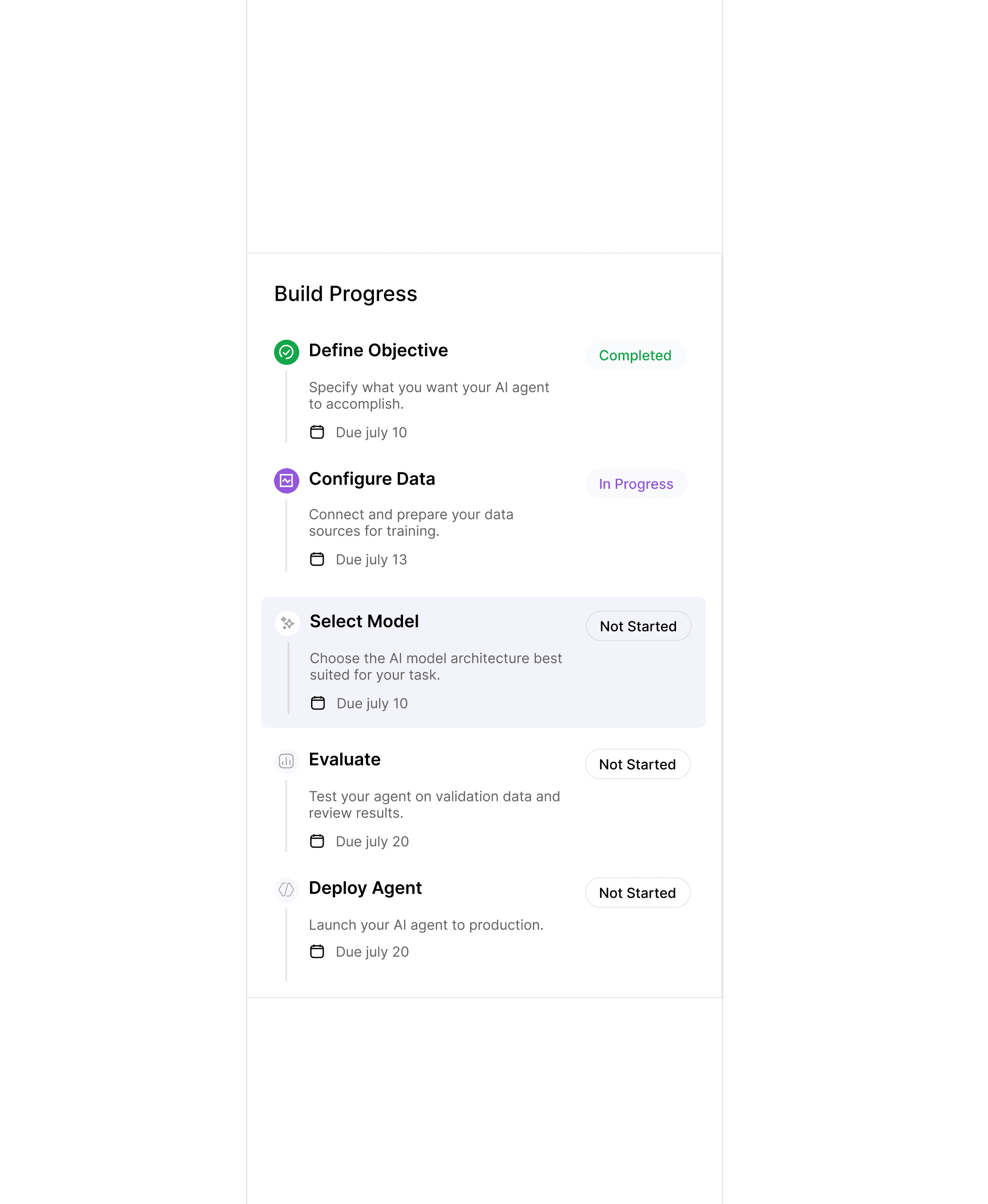
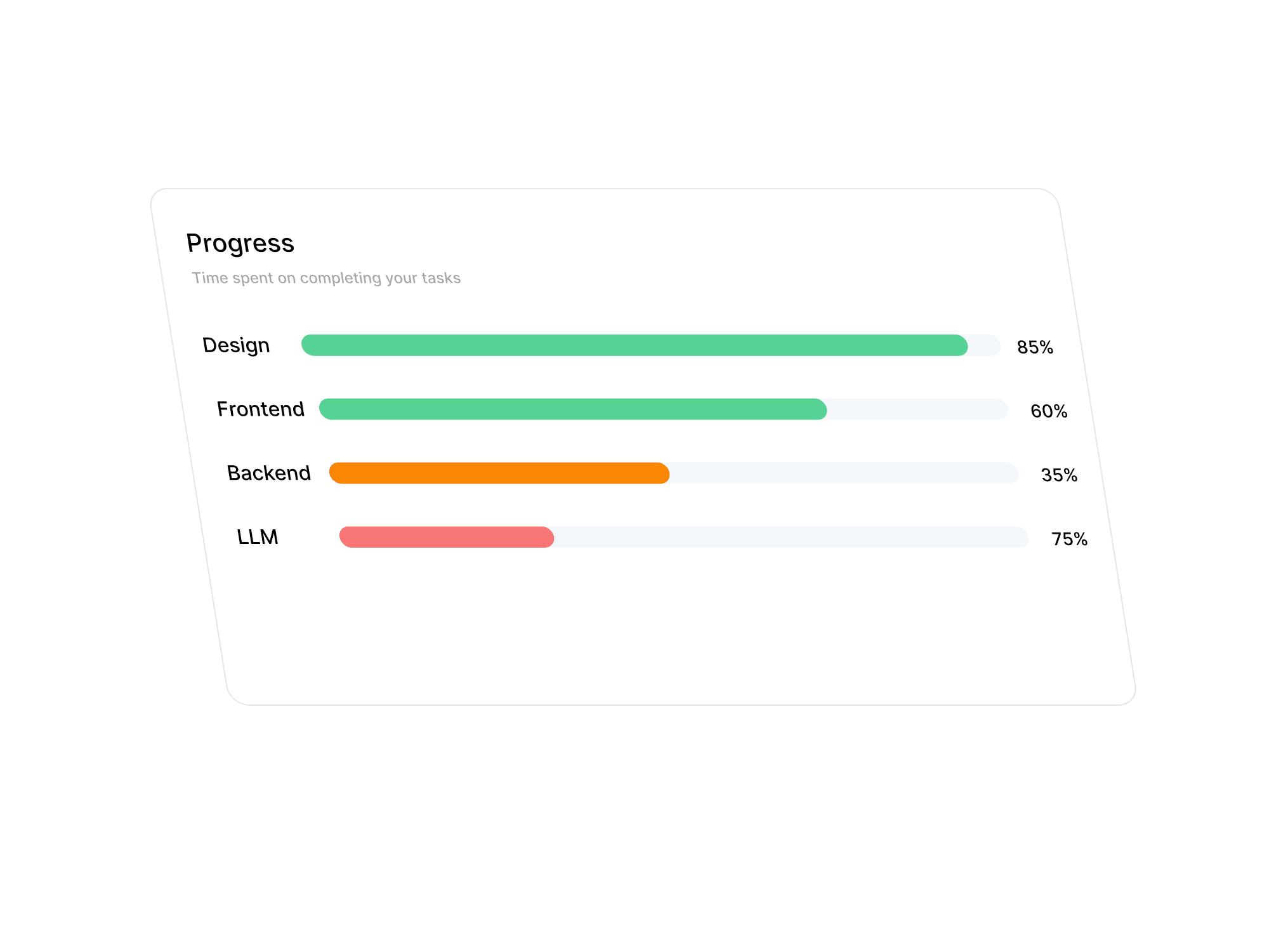
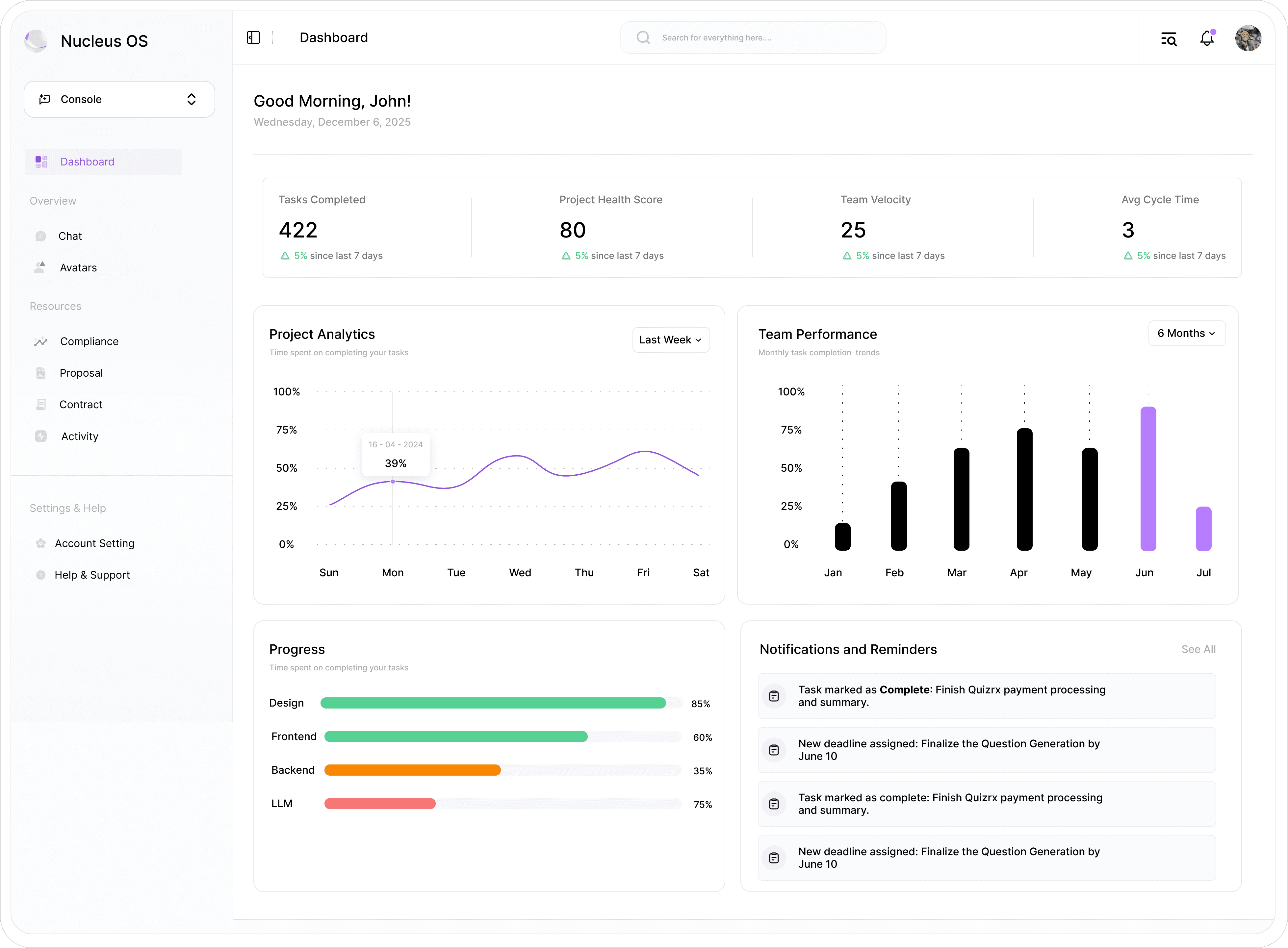
The unified project dashboard serves as a single source of truth, replacing fragmented updates with real-time visibility into milestones, deadlines, and priorities. By incorporating clear progress indicators and automated reminders, the interface ensures clients always understand their required actions and project status.

Centralized Project Visibility & Accountability

The unified project dashboard serves as a single source of truth, replacing fragmented updates with real-time visibility into milestones, deadlines, and priorities. By incorporating clear progress indicators and automated reminders, the interface ensures clients always understand their required actions and project status.

Structured Governance for Proposals, Contracts, and Compliance

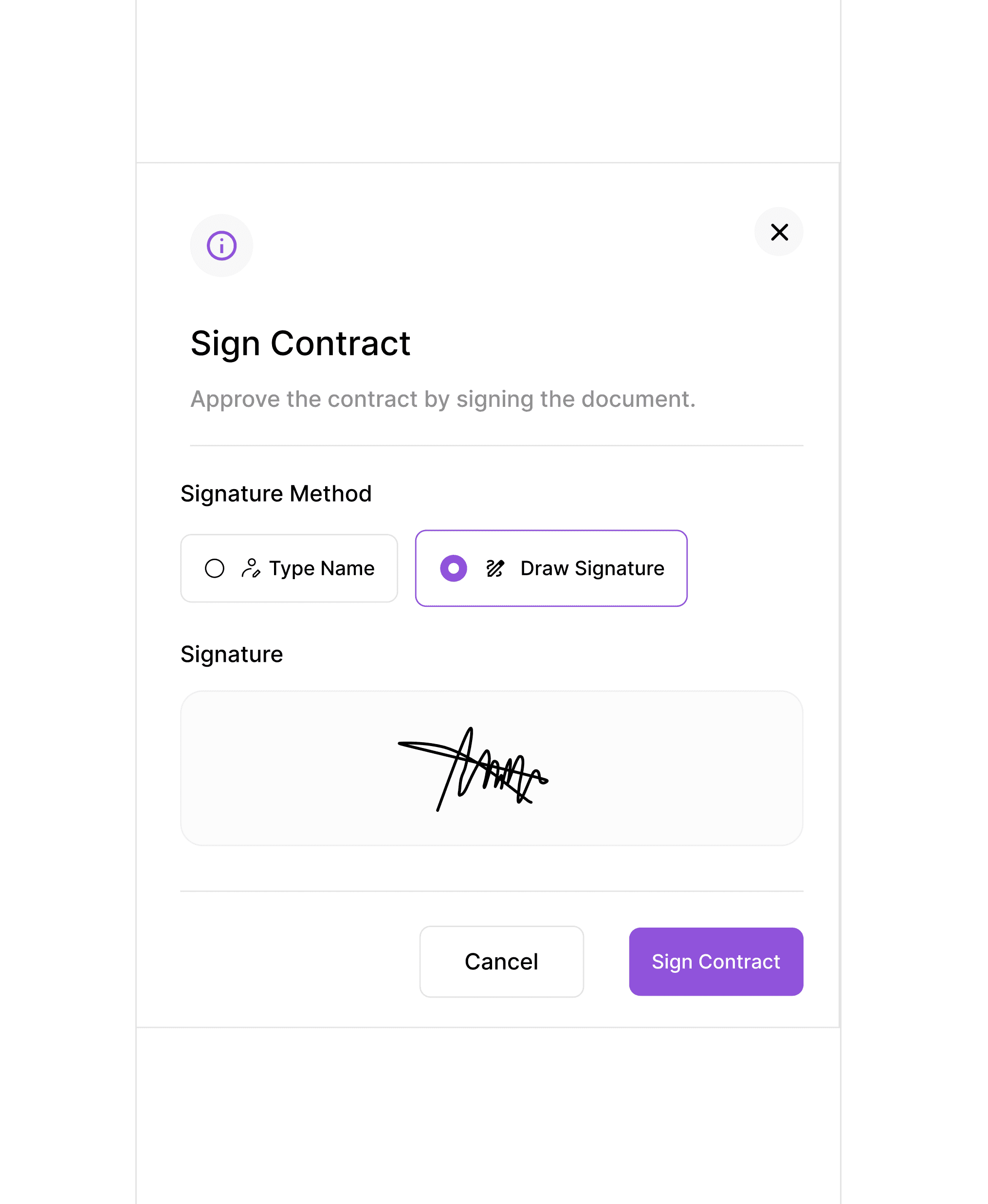
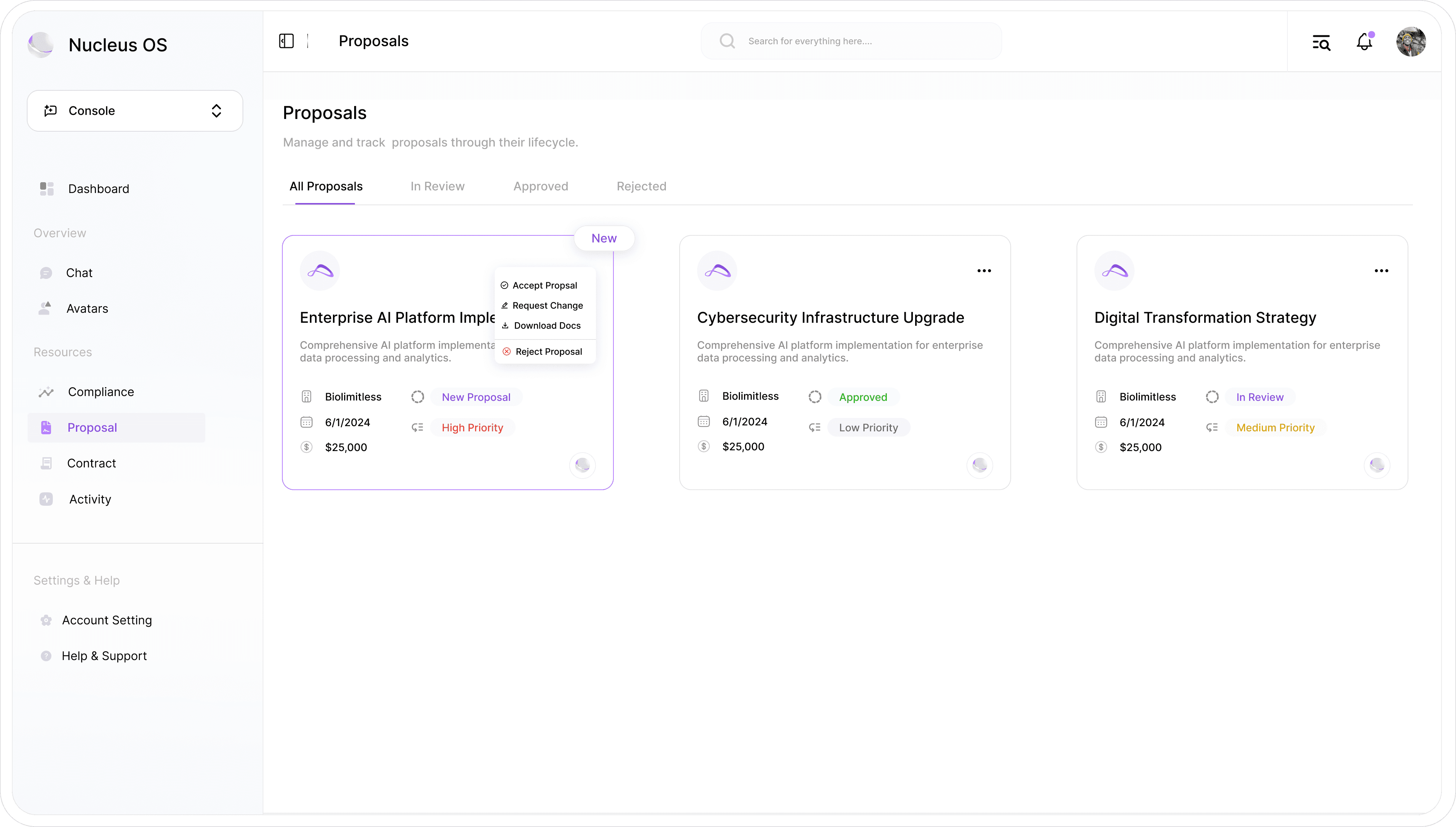
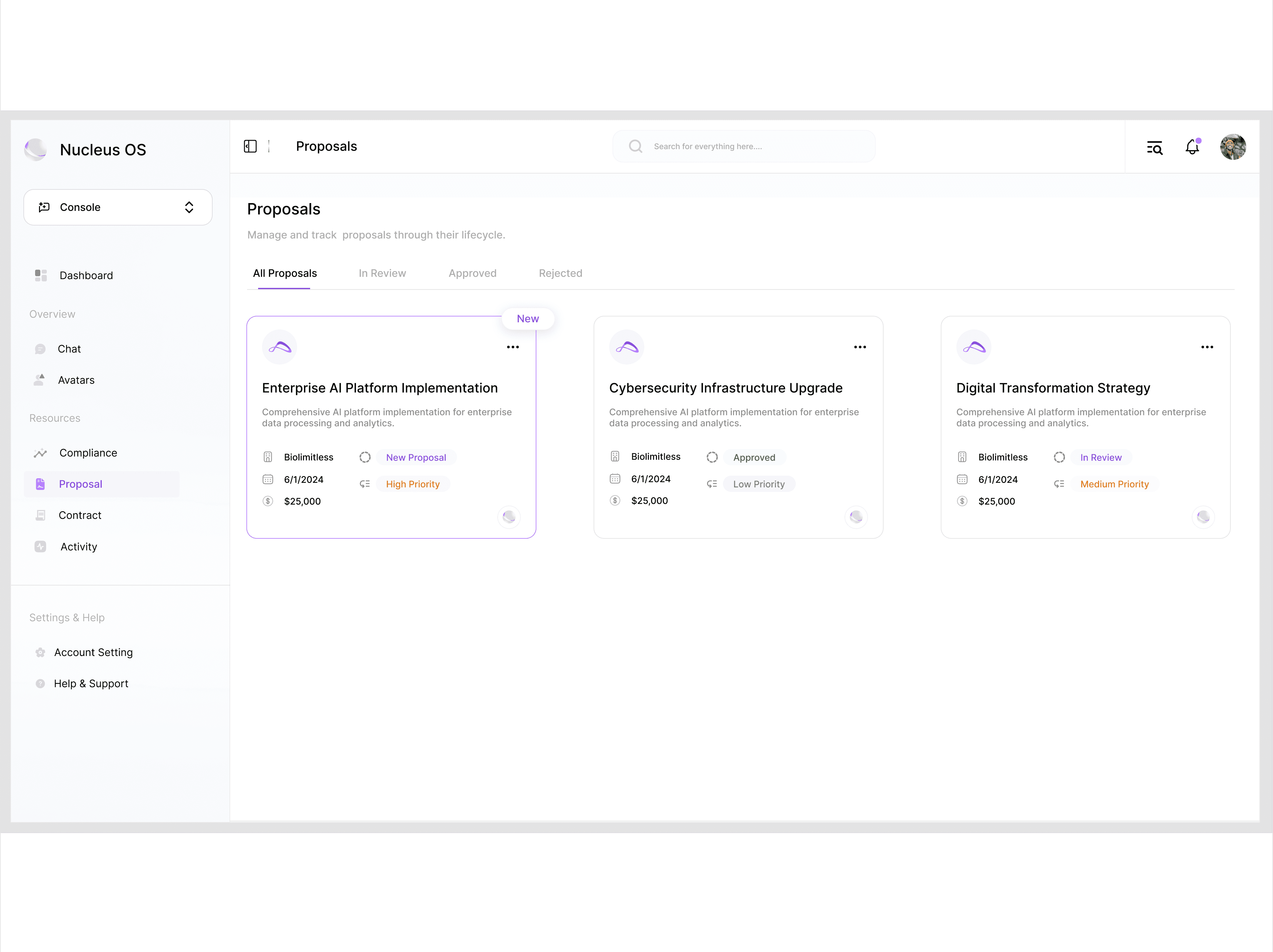
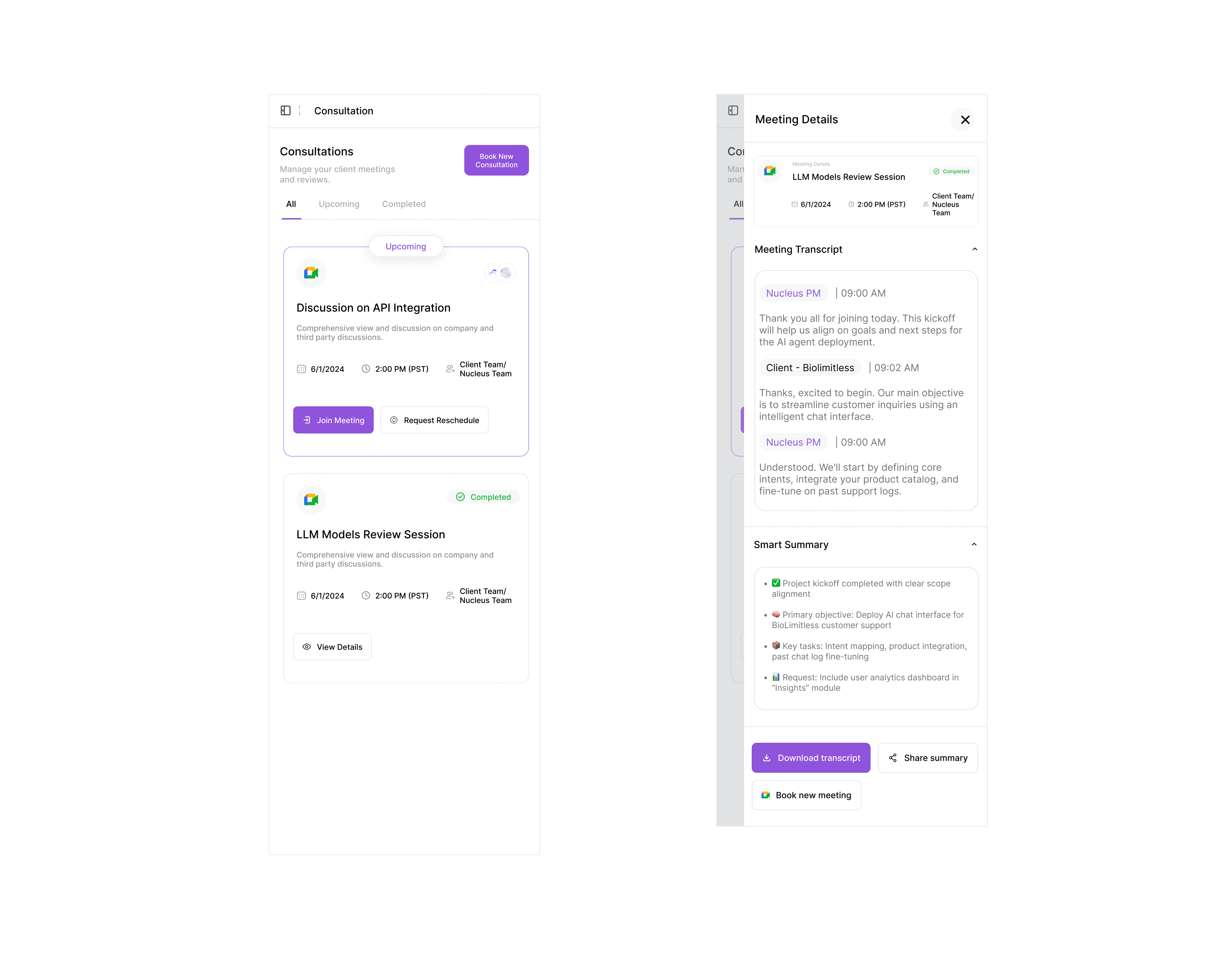
The platform centralizes formal governance by housing proposals, contracts, and compliance requirements in dedicated, easy-to-navigate modules. By surfacing data privacy and regulatory obligations with clear status indicators, the system eliminates version conflicts and manual tracking.
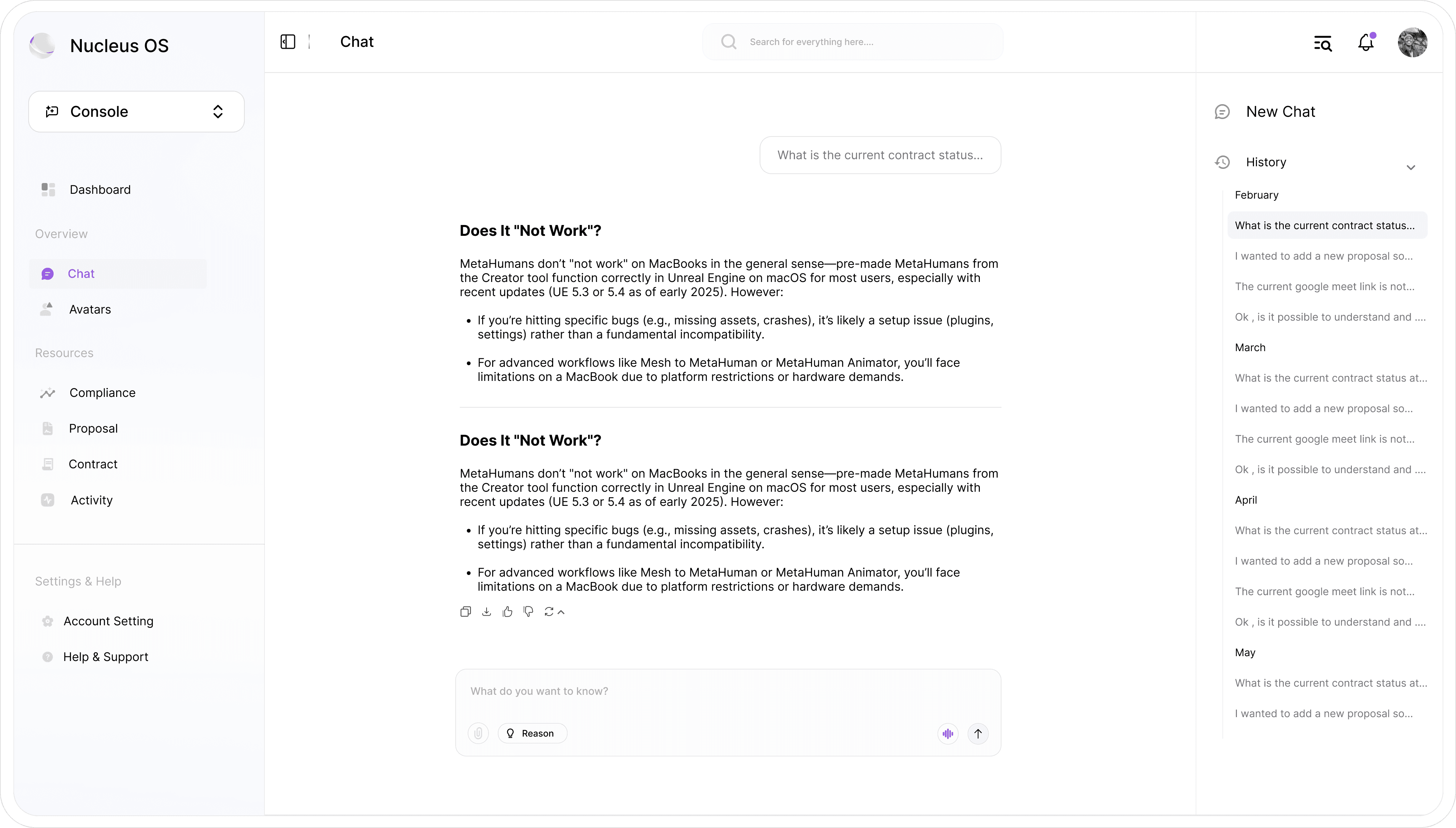
AI-Assisted Communication Through Chat, Voice, and Avatar

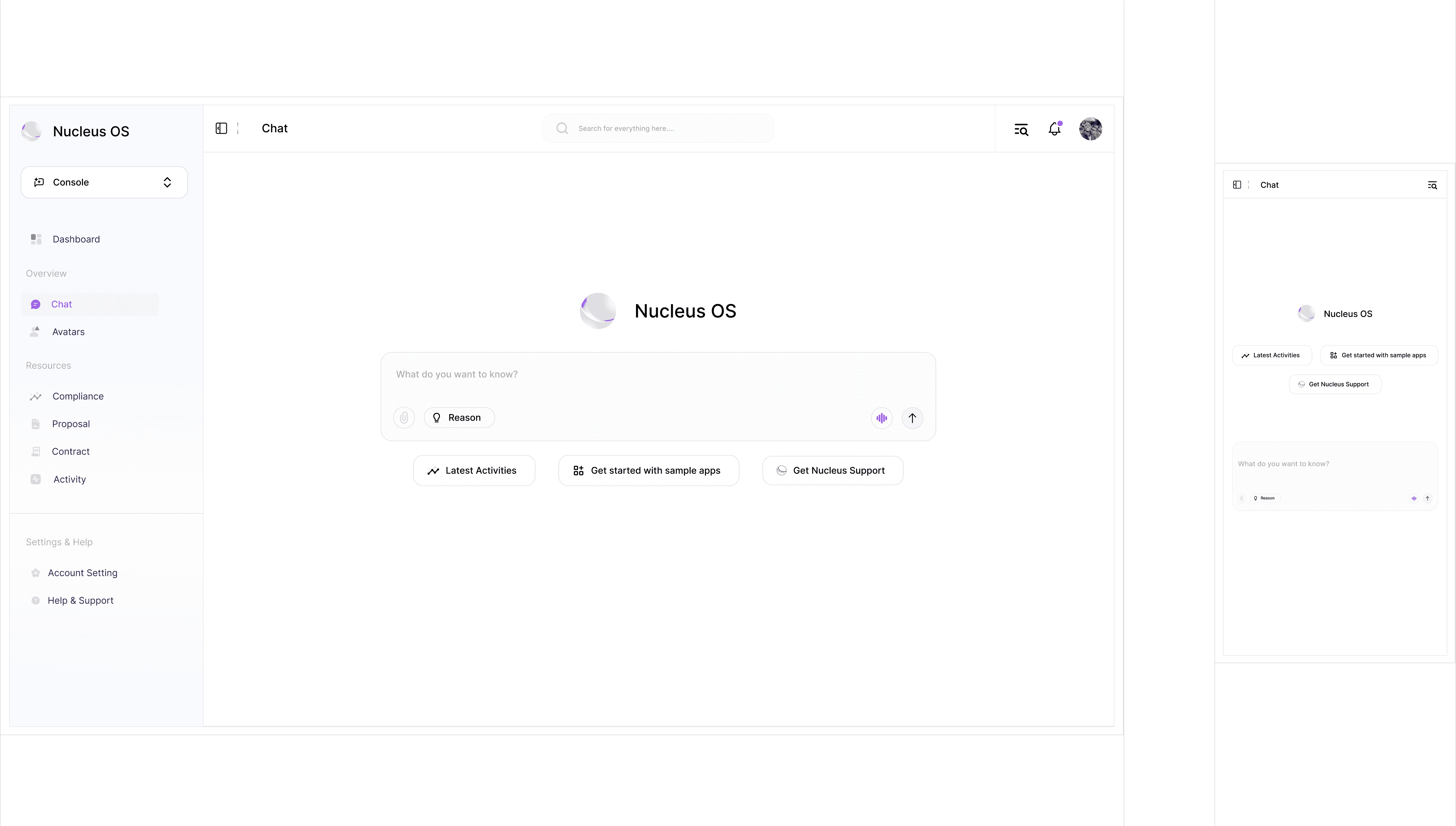
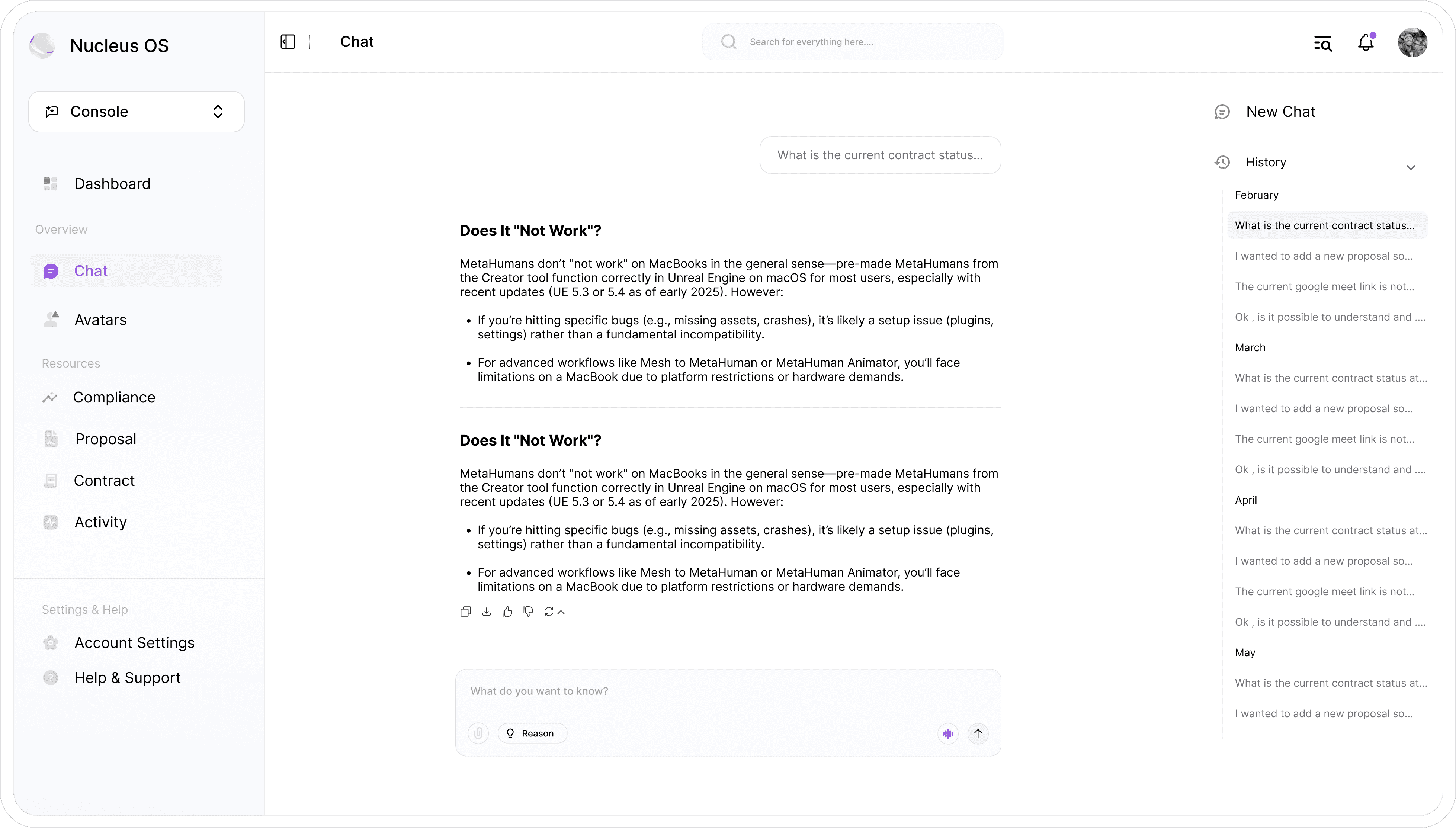
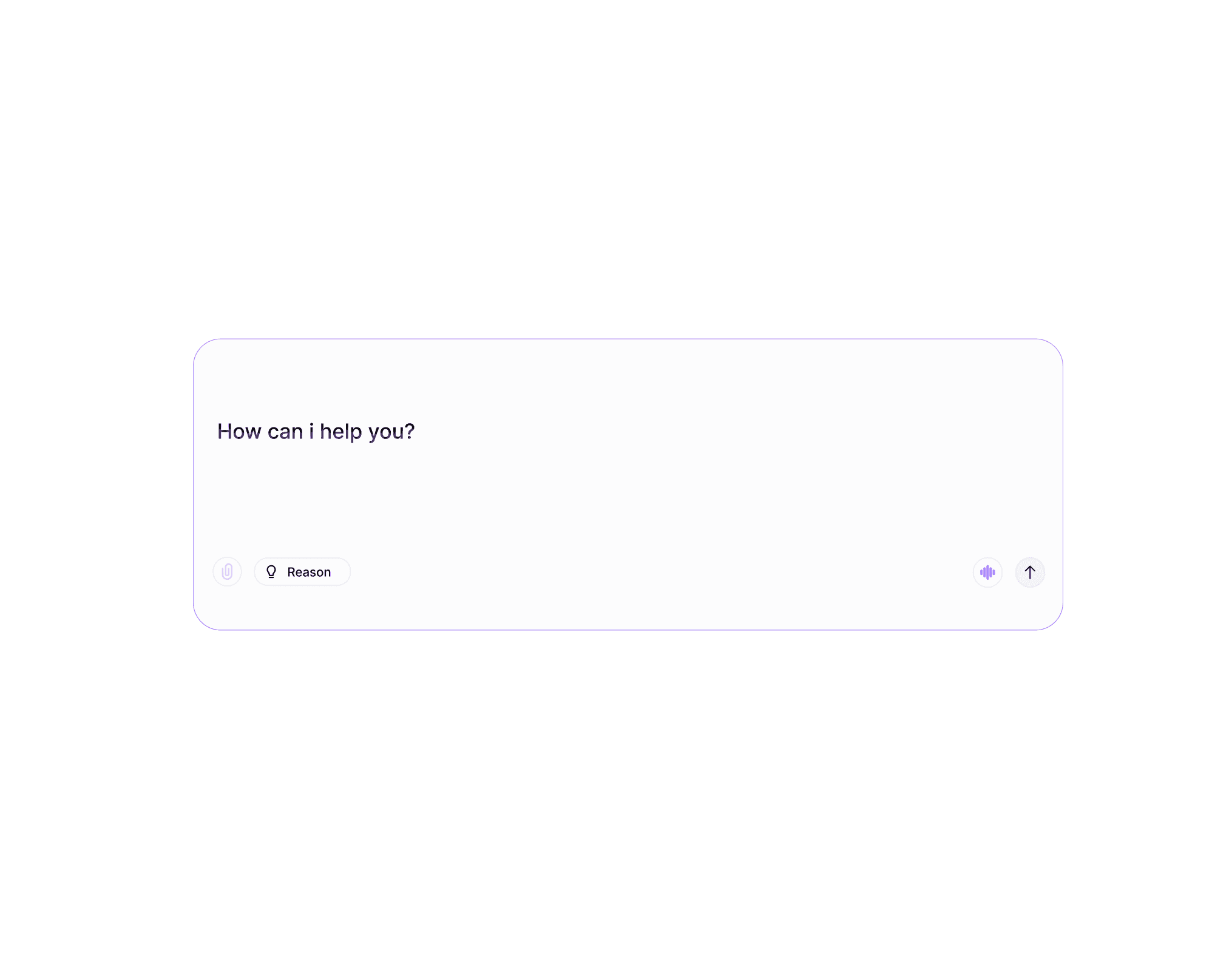
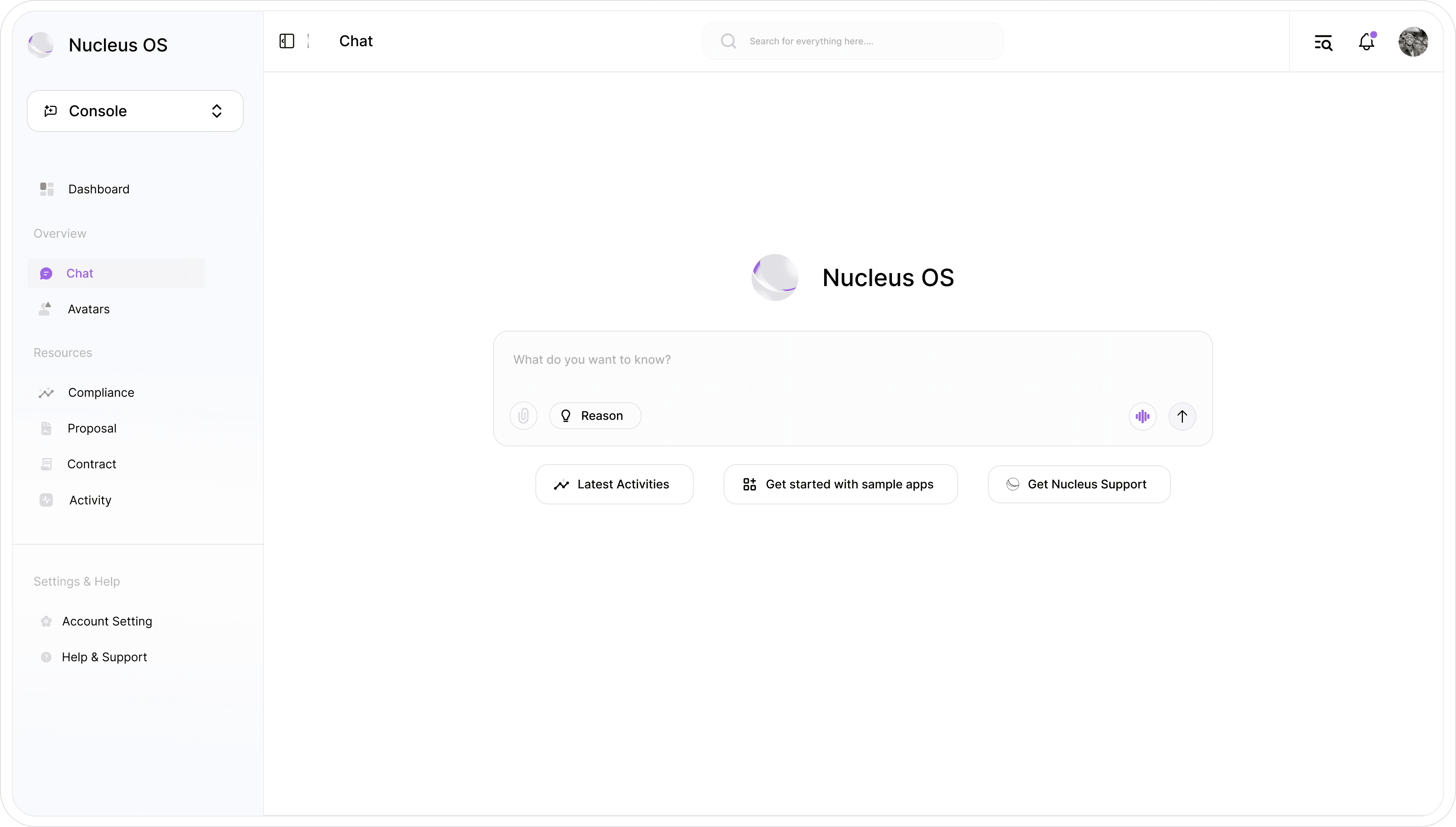
The AI-assisted interaction layer enables clients to query project timelines, clarify technical concepts, and prepare for upcoming phases through chat, voice, or avatar interfaces. By providing instant, 24/7 access to project data, the system bridges the knowledge gap between technical teams and stakeholders while reducing manual communication overhead.

AI-Assisted Communication Through Chat, Voice, and Avatar

The AI-assisted interaction layer enables clients to query project timelines, clarify technical concepts, and prepare for upcoming phases through chat, voice, or avatar interfaces. By providing instant, 24/7 access to project data, the system bridges the knowledge gap between technical teams and stakeholders while reducing manual communication overhead.

Results & Imapct

Transforming how teams automate

Nucleus OS significantly improved how clients engage with and understand complex AI projects. By centralizing project visibility, governance workflows, and communication into a single platform, the system reduced friction and increased clarity across the entire project lifecycle.

Clients gained continuous access to real-time project status, milestones, and required actions, which reduced uncertainty and minimized the need for manual updates. This transparency led to faster approvals, clearer feedback cycles, and stronger alignment between clients and internal teams.

Final Design
Reflection

Design Learnings & Strategic Takeaways
Designing Nucleus OS highlighted how critical transparency and structure are in long-running, high-stakes projects. Clients do not just need updates—they need confidence that progress is being made, responsibilities are clear, and decisions are being tracked accurately. This project reinforced the importance of designing systems that reduce uncertainty and support informed participation rather than passive observation.

One of the key learnings was the impact of accessible communication in technical domains. By embedding AI-assisted chat, voice, and avatar interactions directly into the platform, Nucleus OS lowers the barrier for non-technical stakeholders to ask questions and understand complex project details. This shift transformed communication from reactive to continuous and contextual.

From a product design perspective, the project strengthened my approach to system-level thinking. Balancing governance-heavy workflows such as compliance and contracts with intuitive UX required careful abstraction and prioritization. The result is a platform that supports operational rigor without sacrificing usability or trust.

Reflection

Design Learnings & Strategic Takeaways
Designing Nucleus OS highlighted how critical transparency and structure are in long-running, high-stakes projects. Clients do not just need updates—they need confidence that progress is being made, responsibilities are clear, and decisions are being tracked accurately. This project reinforced the importance of designing systems that reduce uncertainty and support informed participation rather than passive observation.

One of the key learnings was the impact of accessible communication in technical domains. By embedding AI-assisted chat, voice, and avatar interactions directly into the platform, Nucleus OS lowers the barrier for non-technical stakeholders to ask questions and understand complex project details. This shift transformed communication from reactive to continuous and contextual.

From a product design perspective, the project strengthened my approach to system-level thinking. Balancing governance-heavy workflows such as compliance and contracts with intuitive UX required careful abstraction and prioritization. The result is a platform that supports operational rigor without sacrificing usability or trust.
Thank You

Nucleus OS

2025