Magically
Summary
Magically lets parents and children co-create personalized storybooks, replacing open-ended AI prompting with a guided, selection-based hero-creation flow built for both age groups.
Role
Client
Magically
Year
2025
0
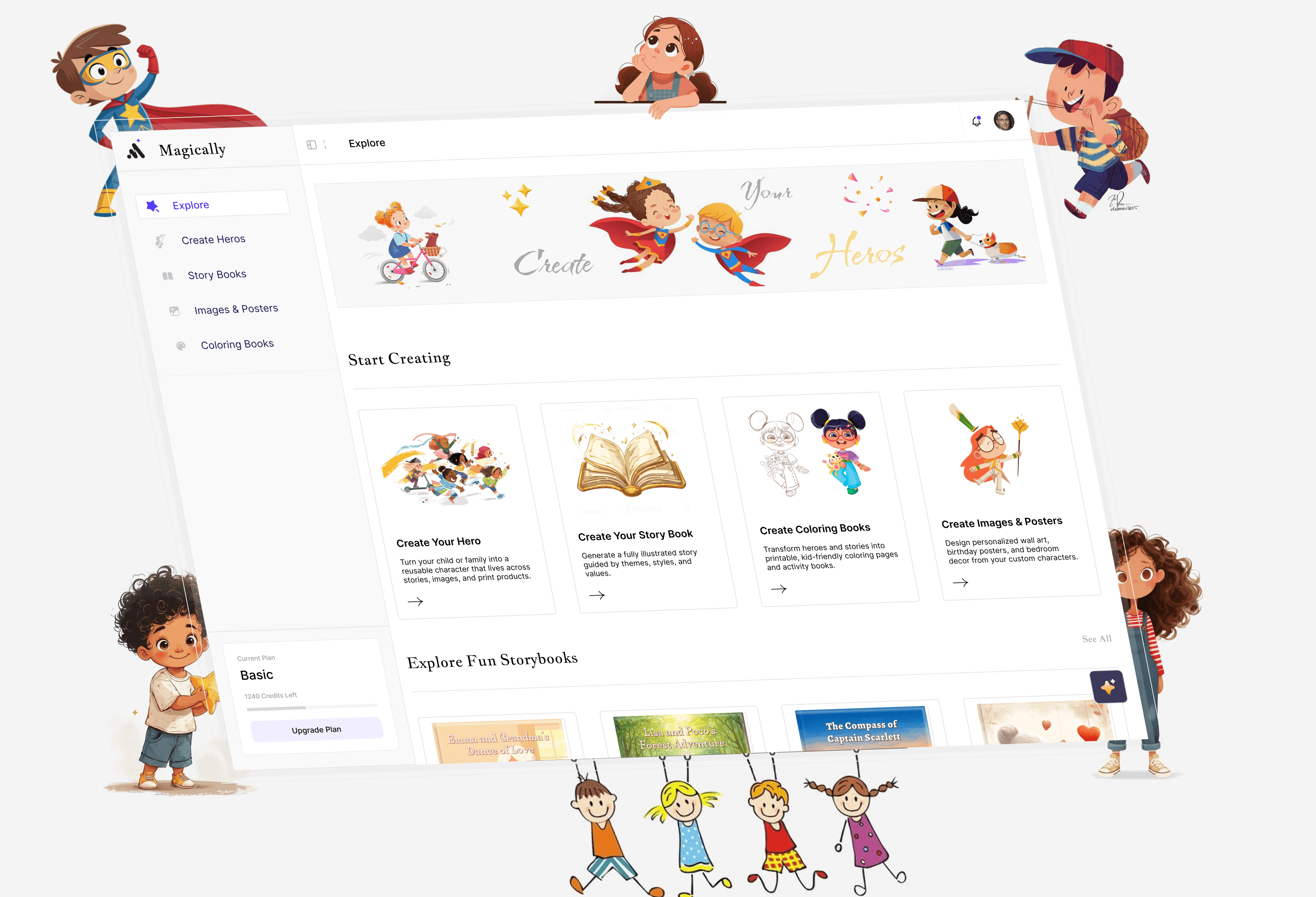
Reusable Hero System
4+
Creative Experiances
100%
Prompt free creation

Pain Point 2
A Split Audience
The same flow had to work for a 6-year-old choosing a hero and a parent making a purchase decision — two very different mental models, one product.

[002]
Solutions
01
-66% tool switching (3→1)
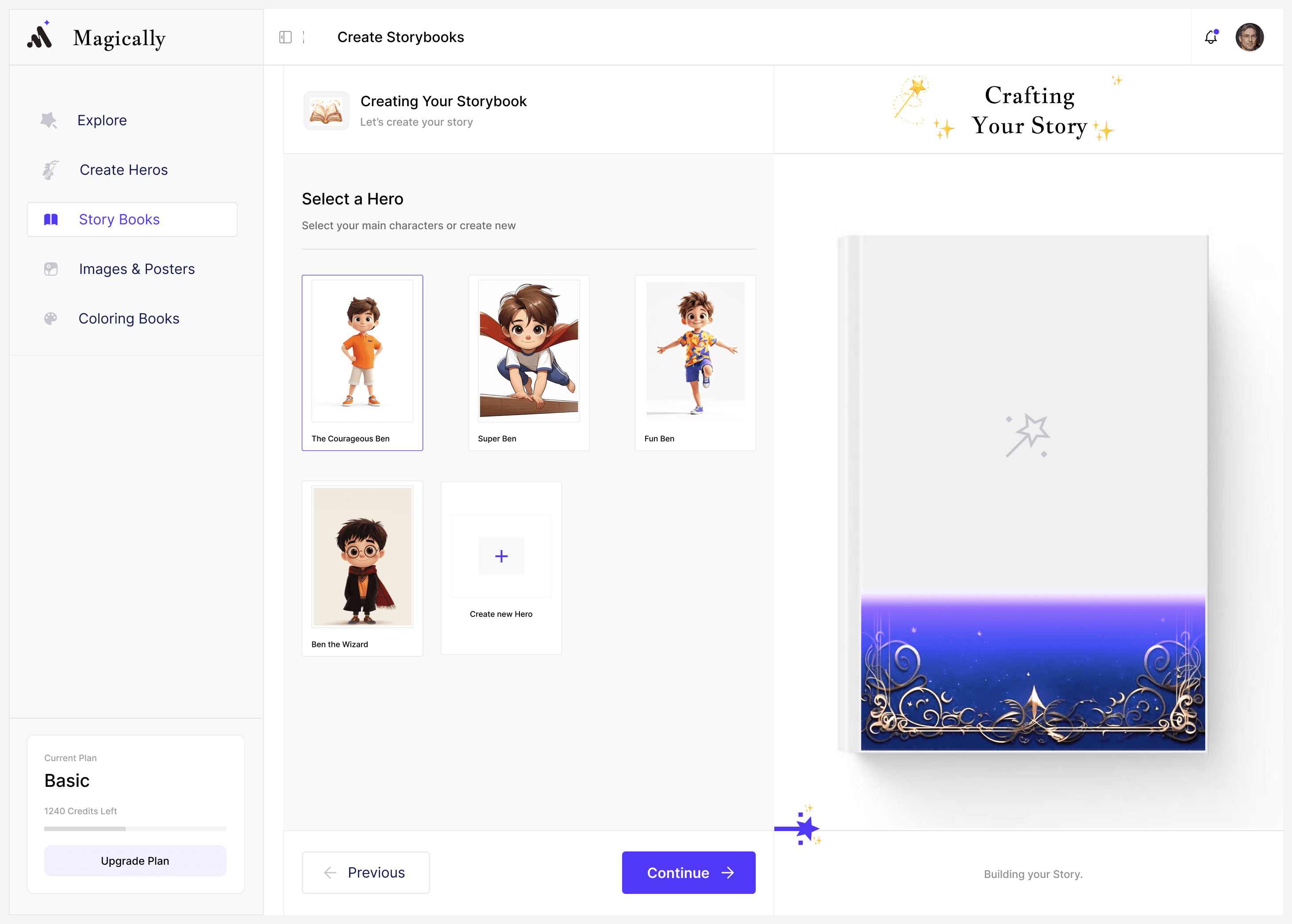
Guided Hero Creation
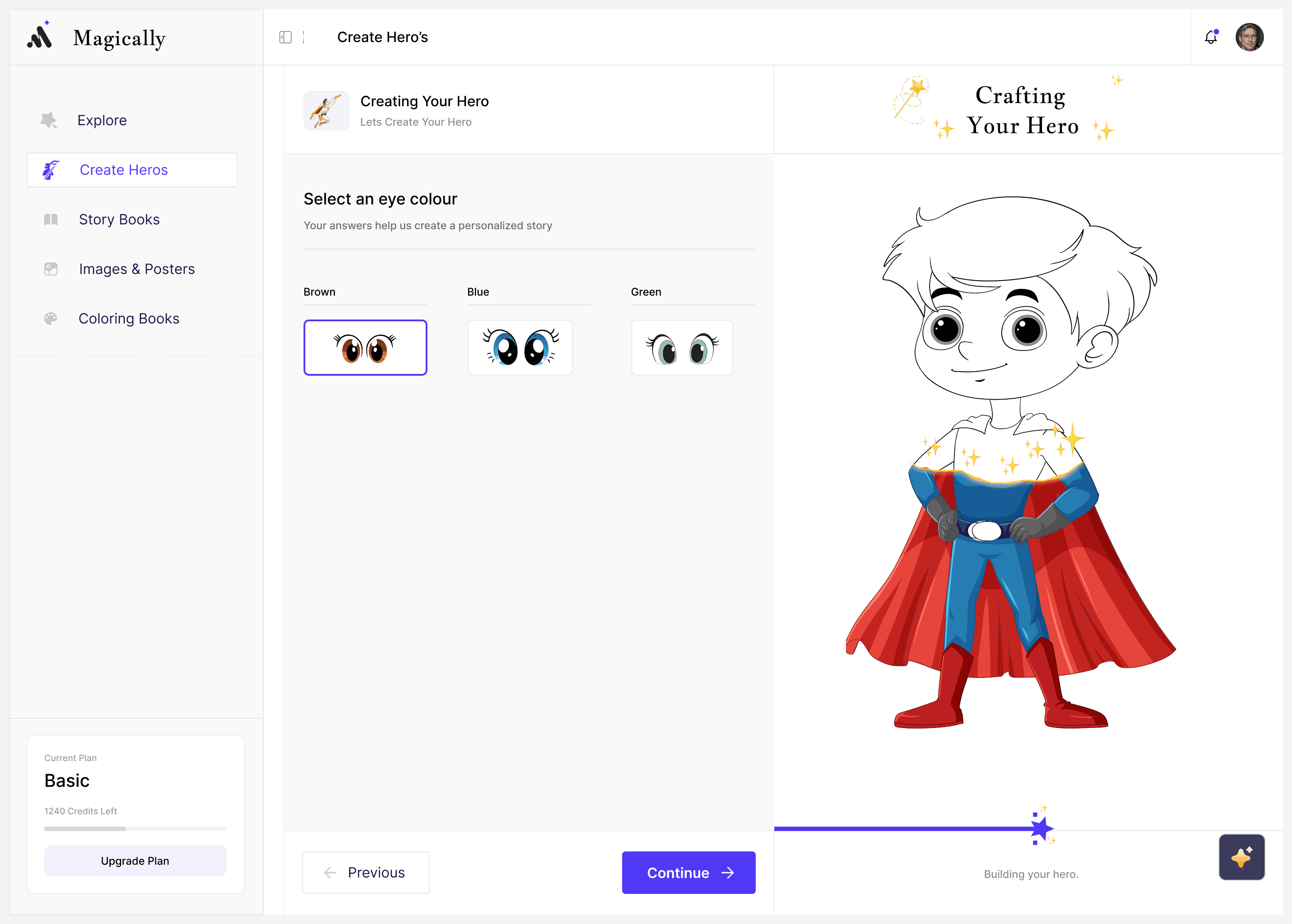
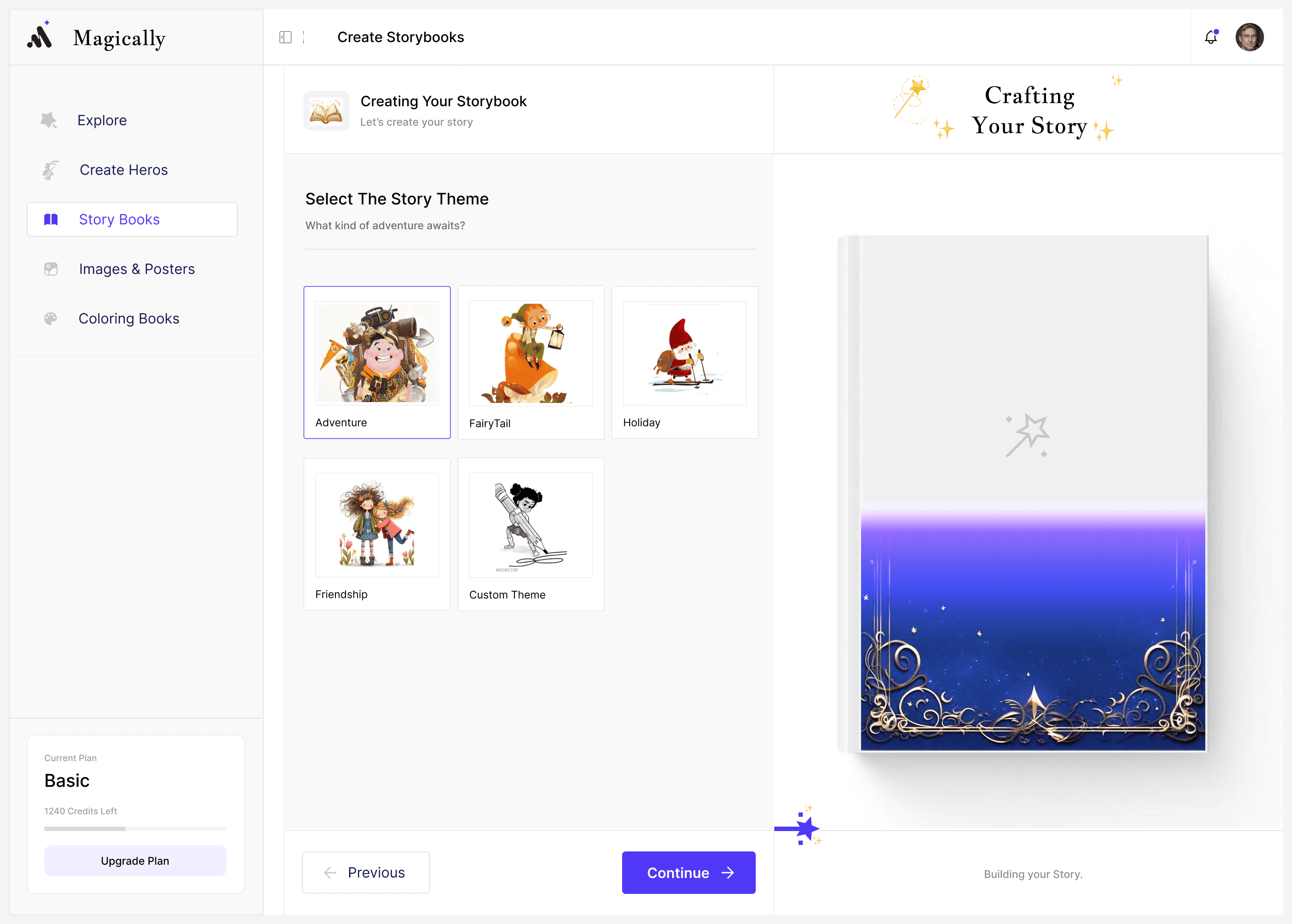
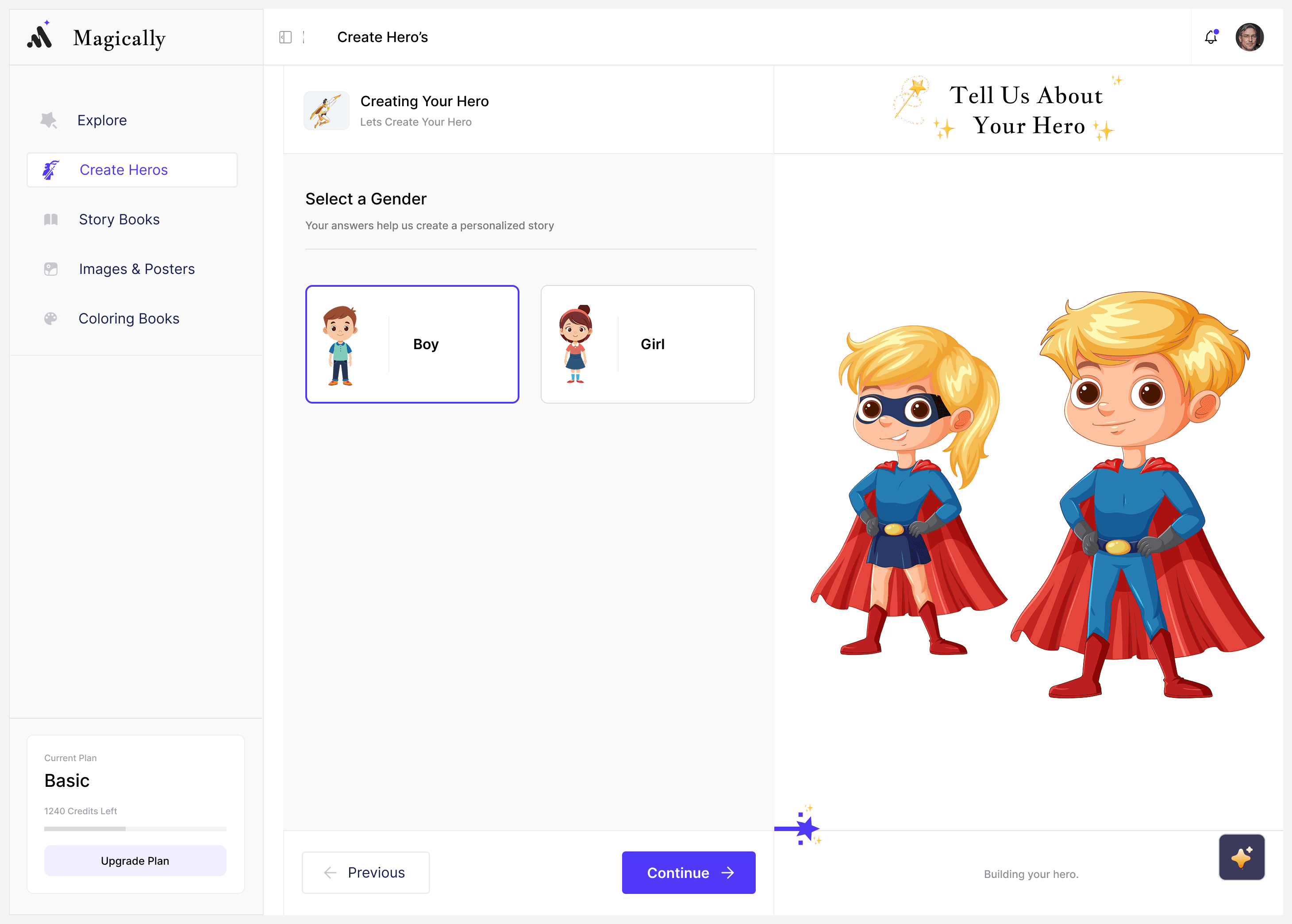
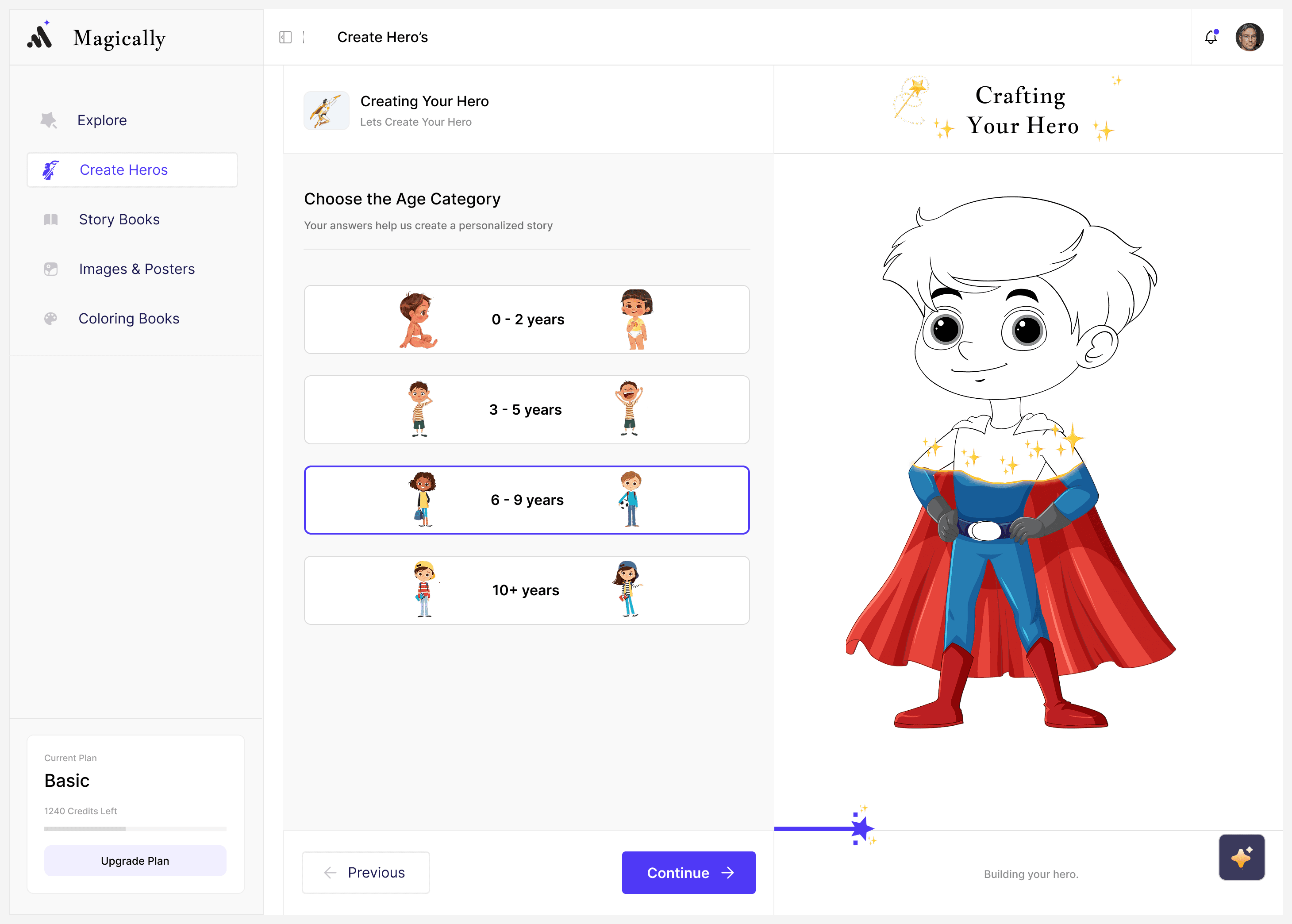
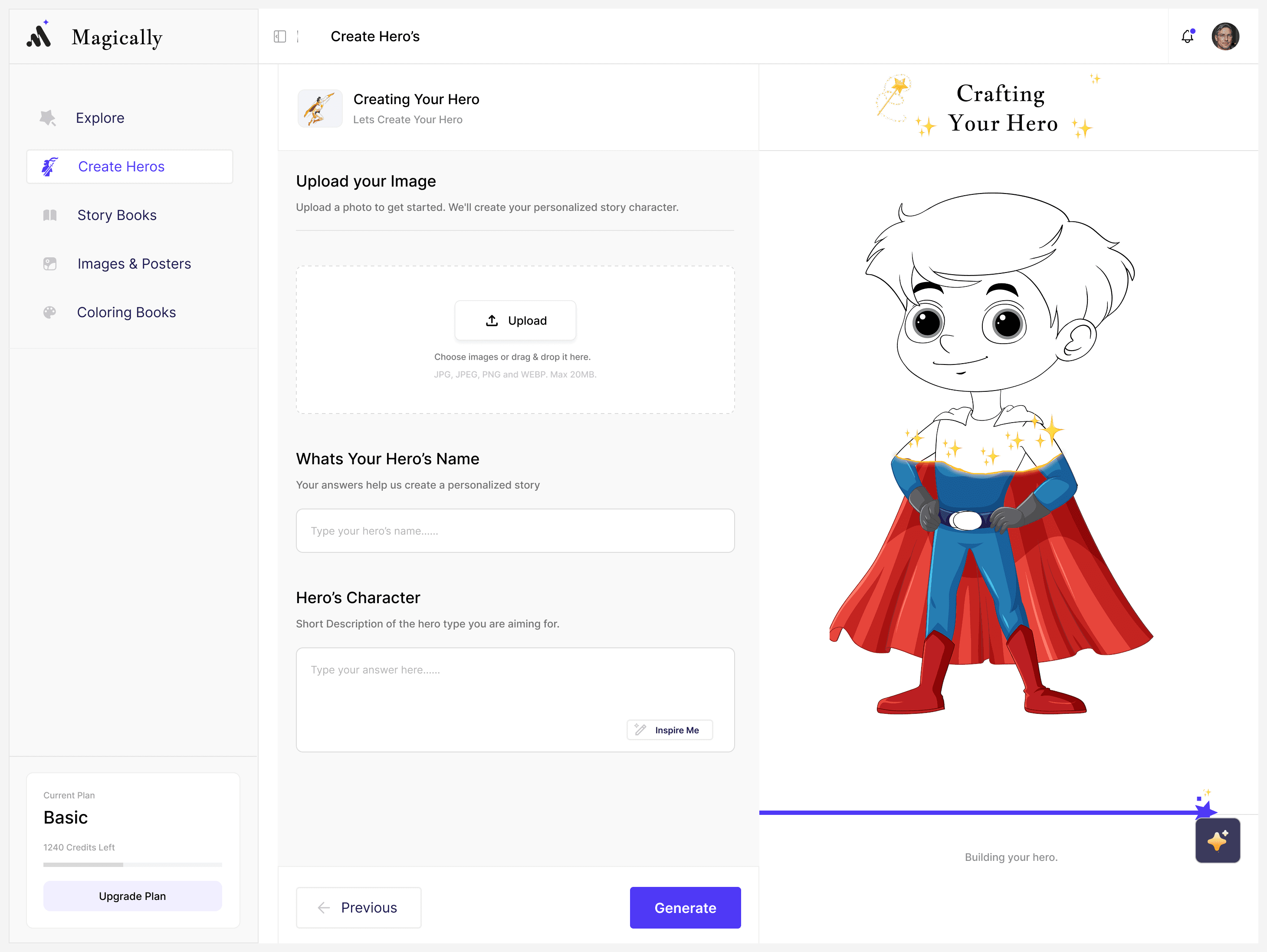
Open prompting was replaced with a visual, step-by-step selection flow — kids and parents move through choices instead of typing into a blank field.
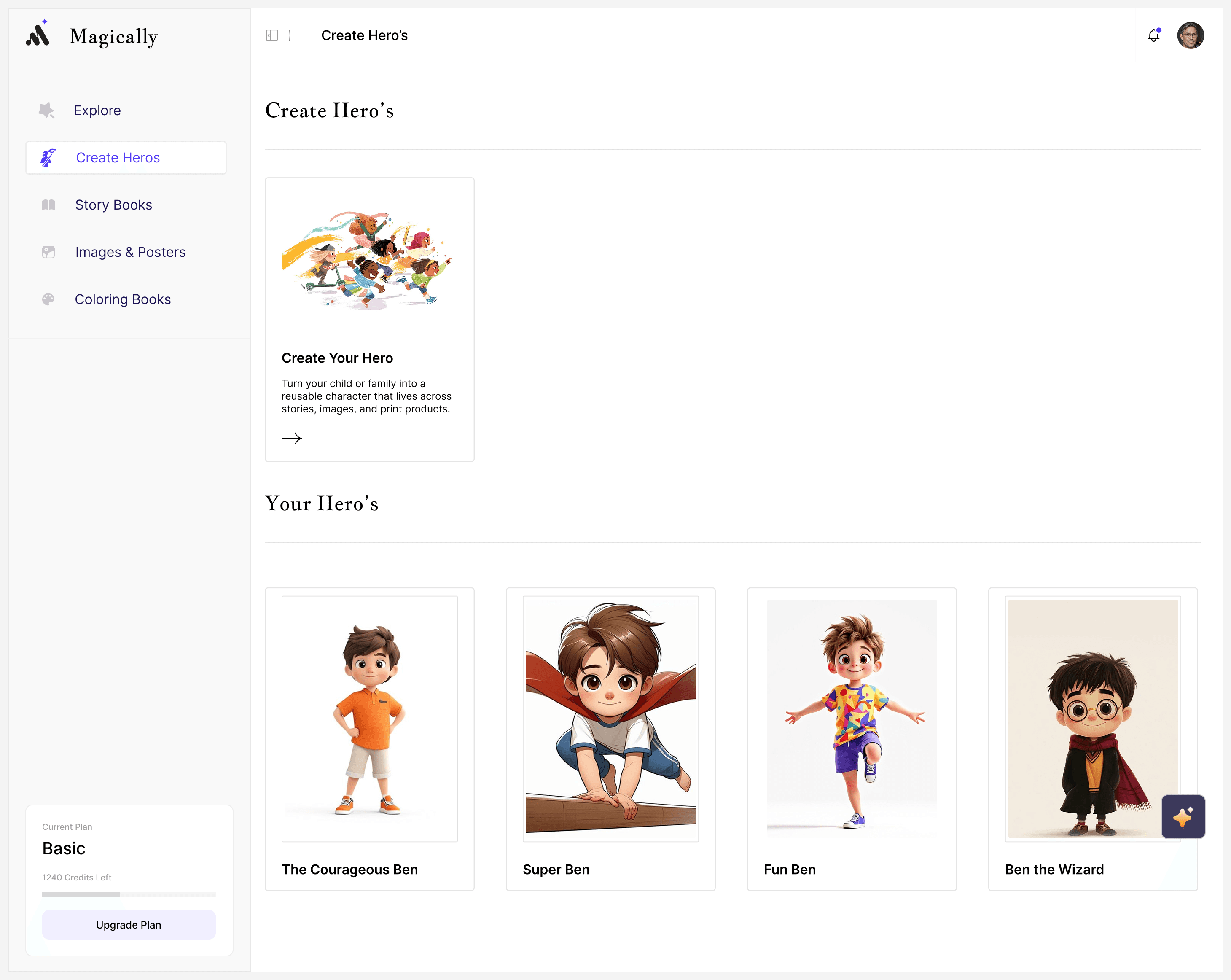
hero-creation selection flow — step-by-step visual choices
02
Refined over 3+ cycles
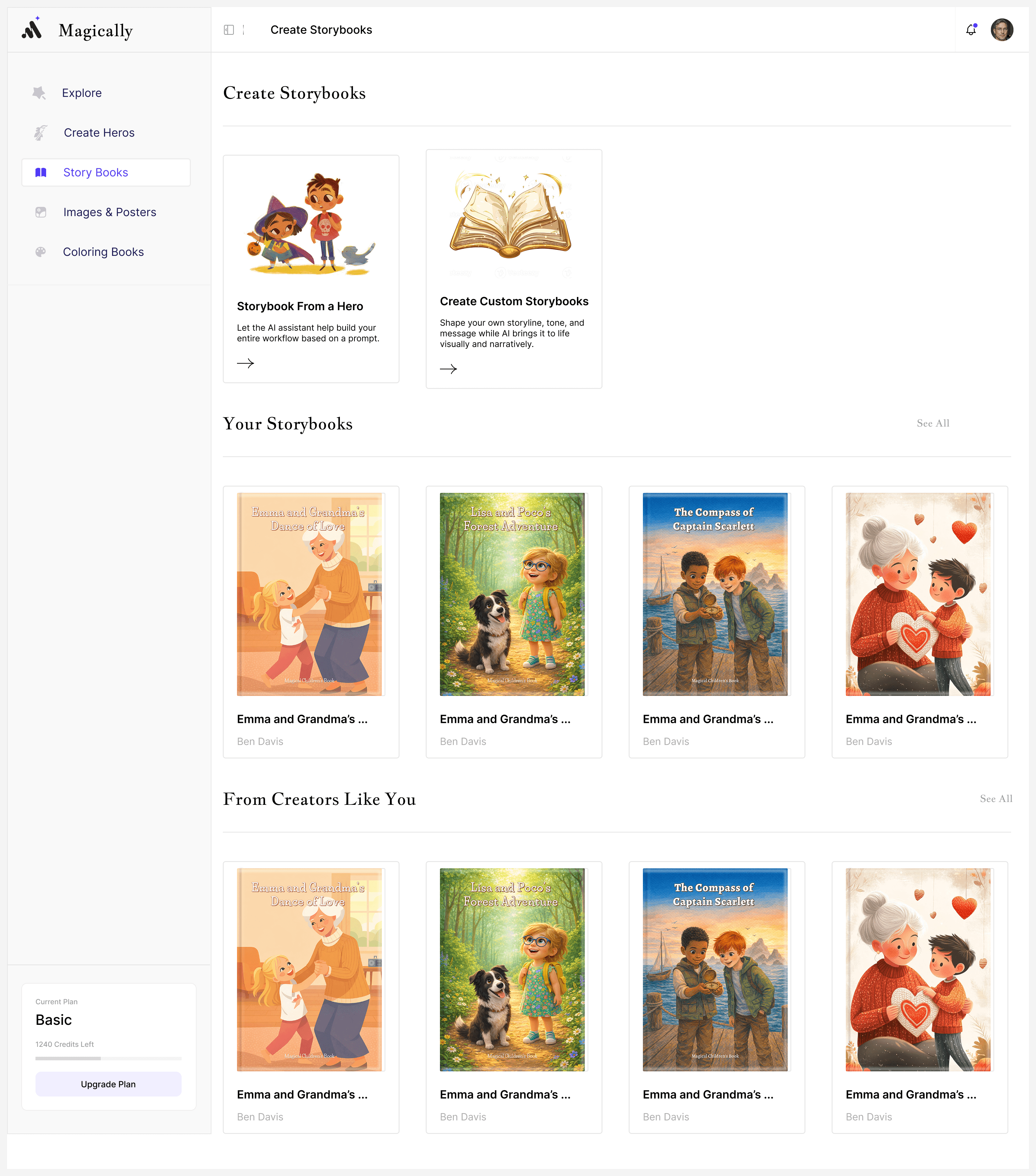
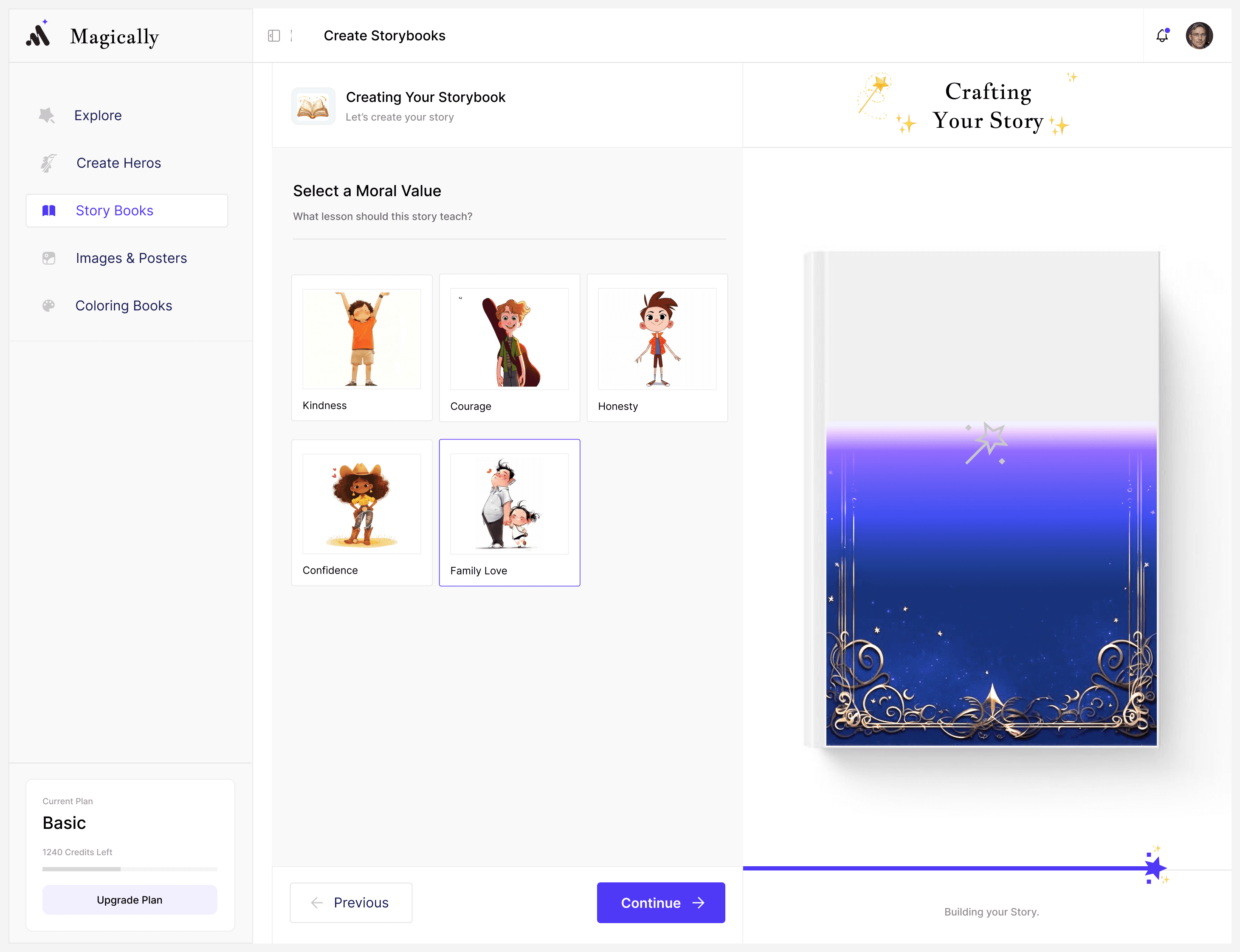
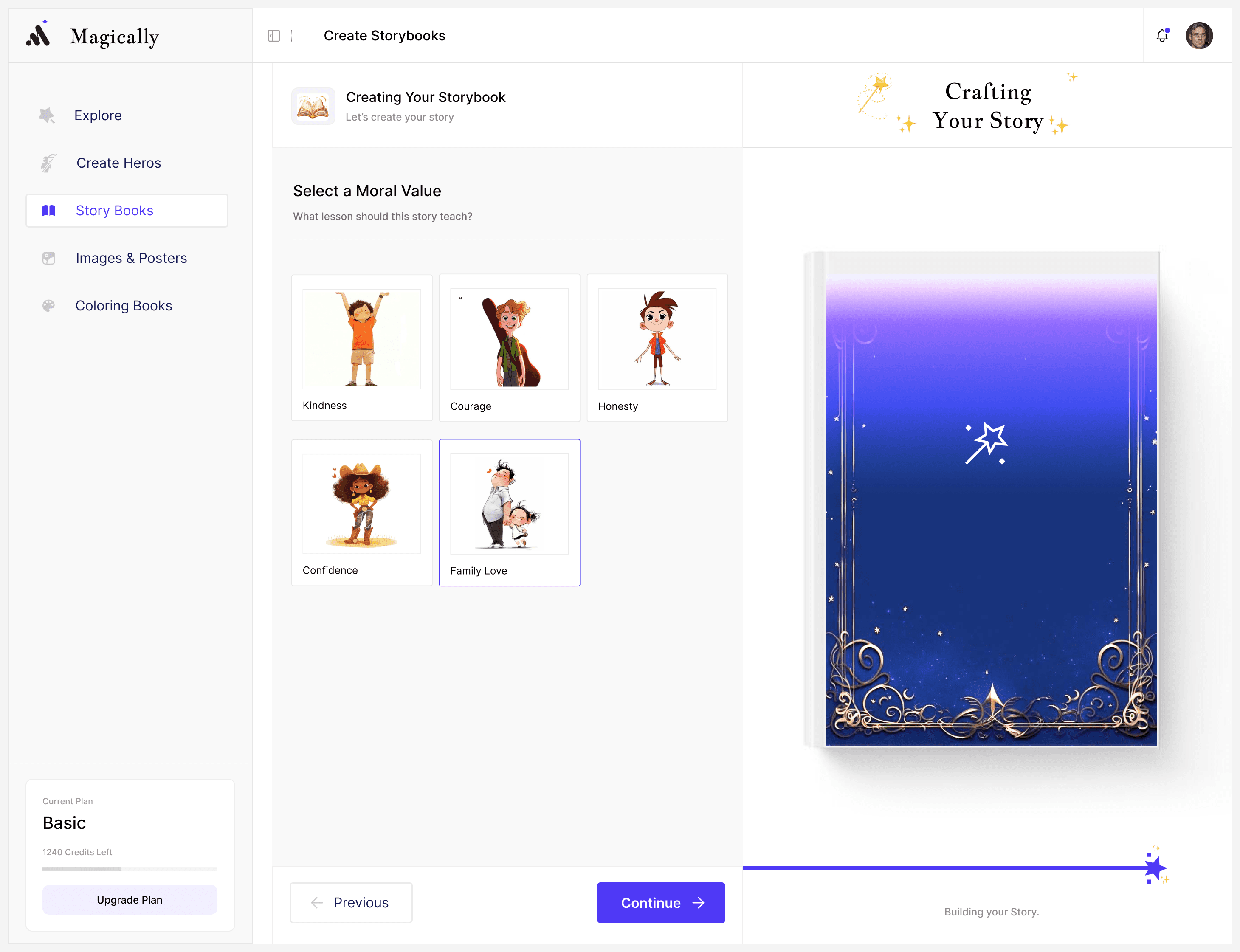
Wizard-Based Storybook Flow
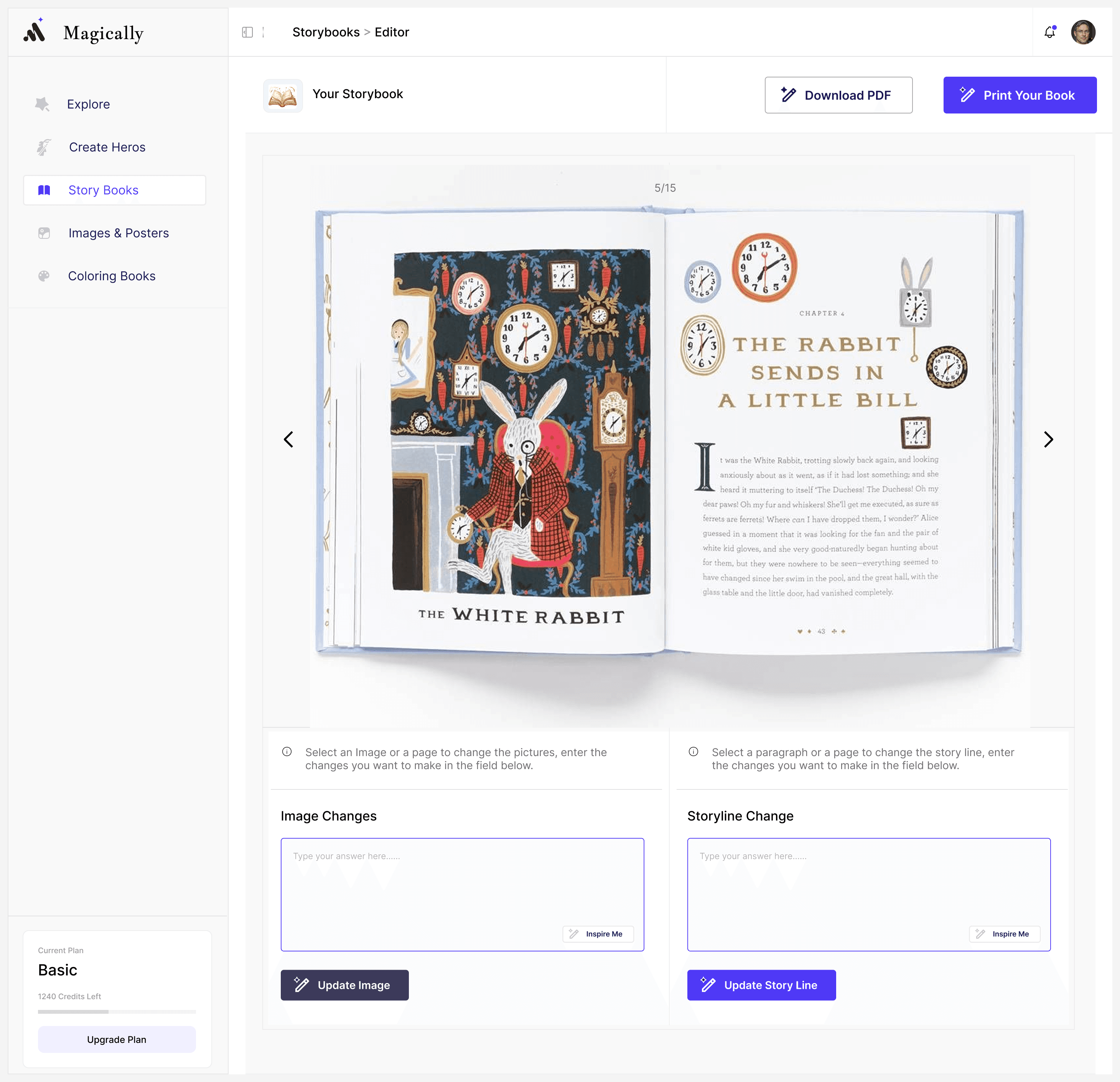
The story-creation process was broken into a guided wizard so both age groups could complete it without needing to understand the underlying AI generation.
storybook wizard — step indicator & guided prompts
[003]
Design Process
Design Process
From research to refined solution
Unified data ingestion, transformation, and synthetic generation. Handle structured and unstructured data with automatic schema detection and quality validation.

Ran informal sessions with 6–10 parent/child pairs (friends and family) during design development to observe real reactions.

Friction Mapping
Identified the blank-prompt hesitation as the core drop-off point for both parents and children.

Guided Flow Design
Replaced open prompting with the visual, selection-based hero-creation wizard.

Emotional Framing Pass
Rewrote the print/purchase flow around memory-keeping language after observing parents' reactions to transactional framing.

Re-walkthrough & Refinement
Validated the revised flow with the same informal group before finalizing.

[004]
Results & Impact
4
Prompt free creation
100%
Prompt free creation
Throughout the design process, we conducted informal walkthroughs with 15–30 parent–child pairs, using early concepts and flows to understand where families hesitated and what made the experience feel approachable.
One of the clearest findings was that open-ended creation created uncertainty. Parents and children were more comfortable when the experience provided direction without removing creativity, which led to a more guided, selection-based creation flow.
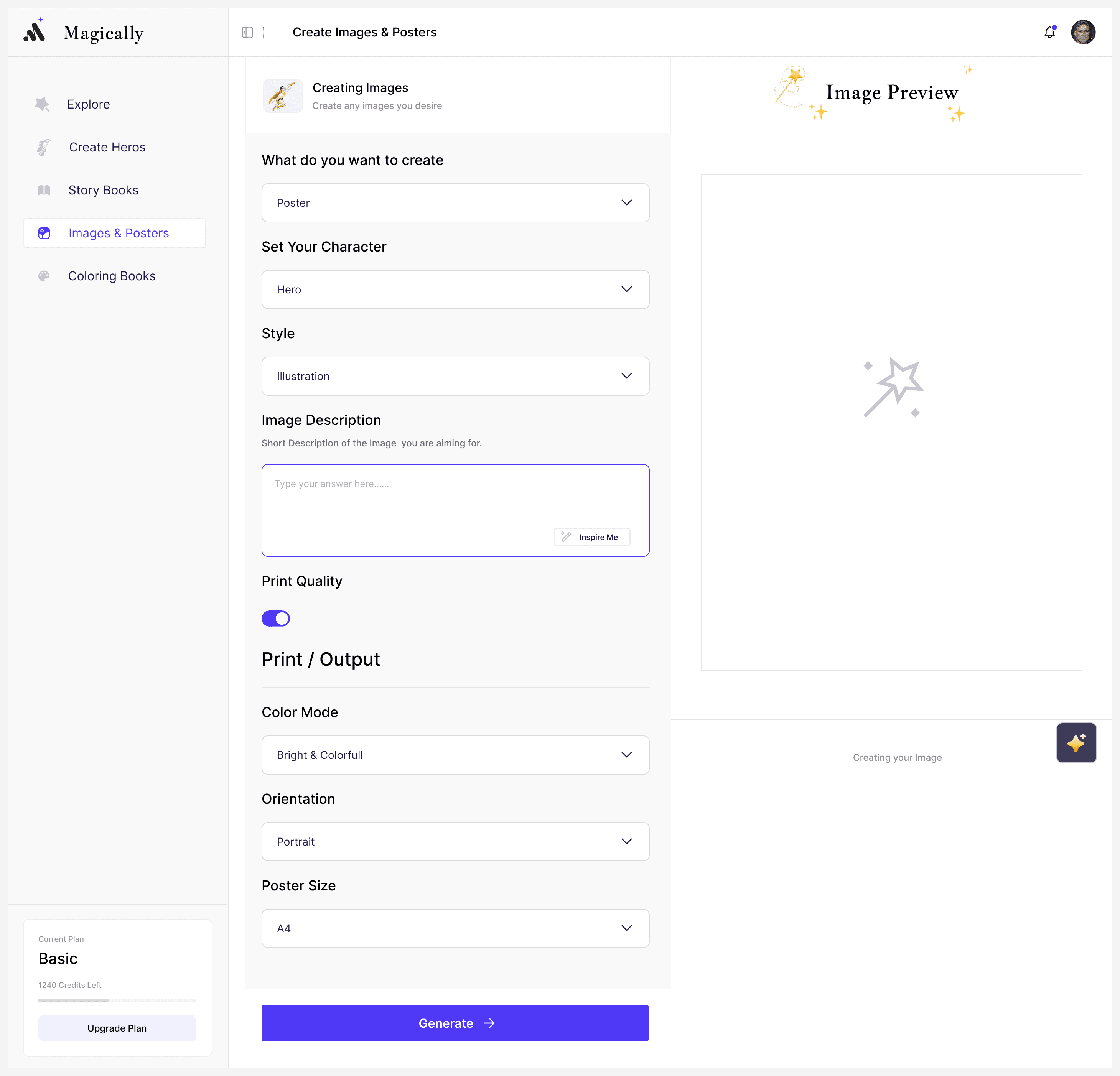
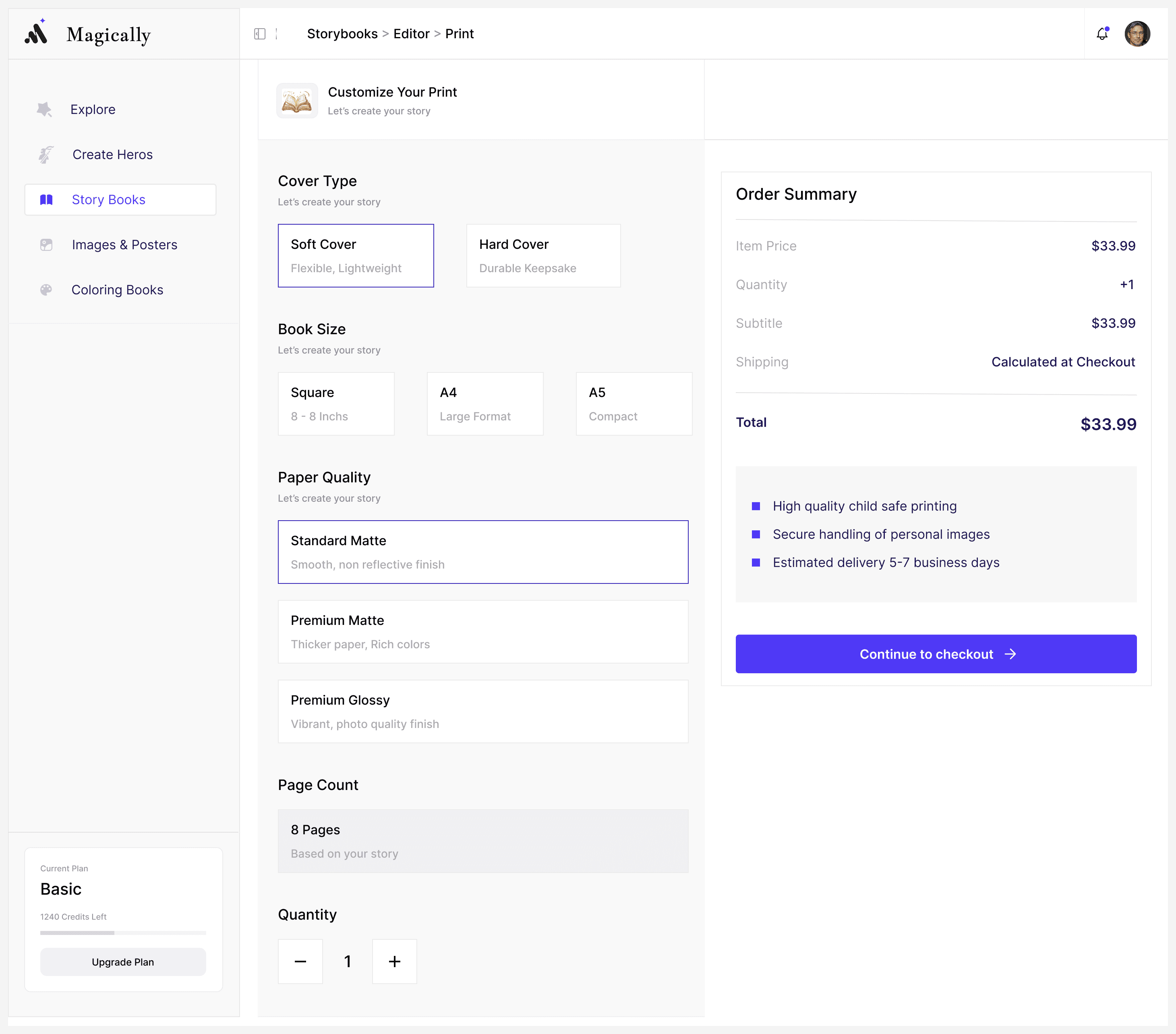
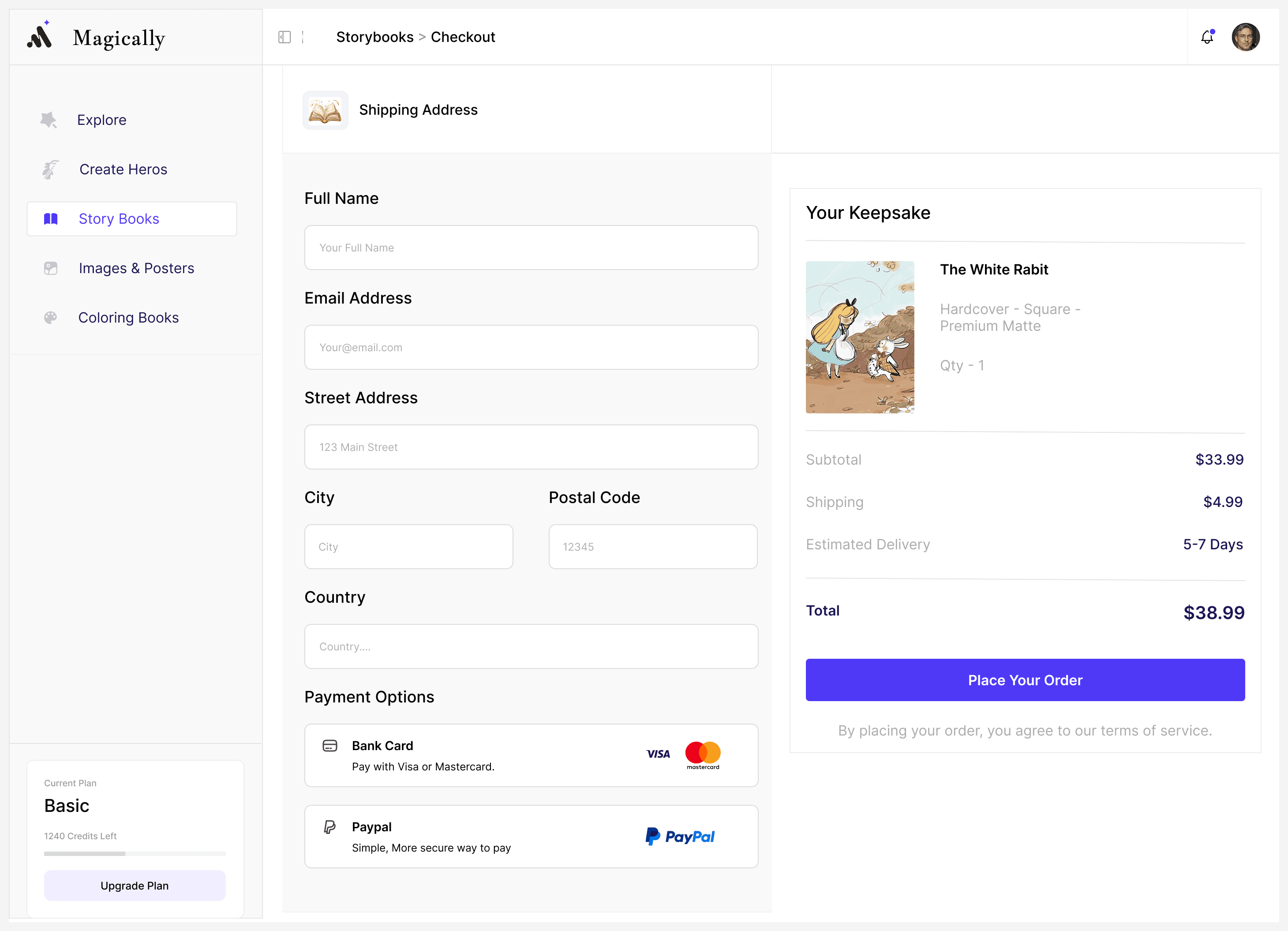
The walkthroughs also shaped how the final output was positioned. Rather than treating printing as a transactional checkout step, we framed it as turning shared memories into something families can keep.